

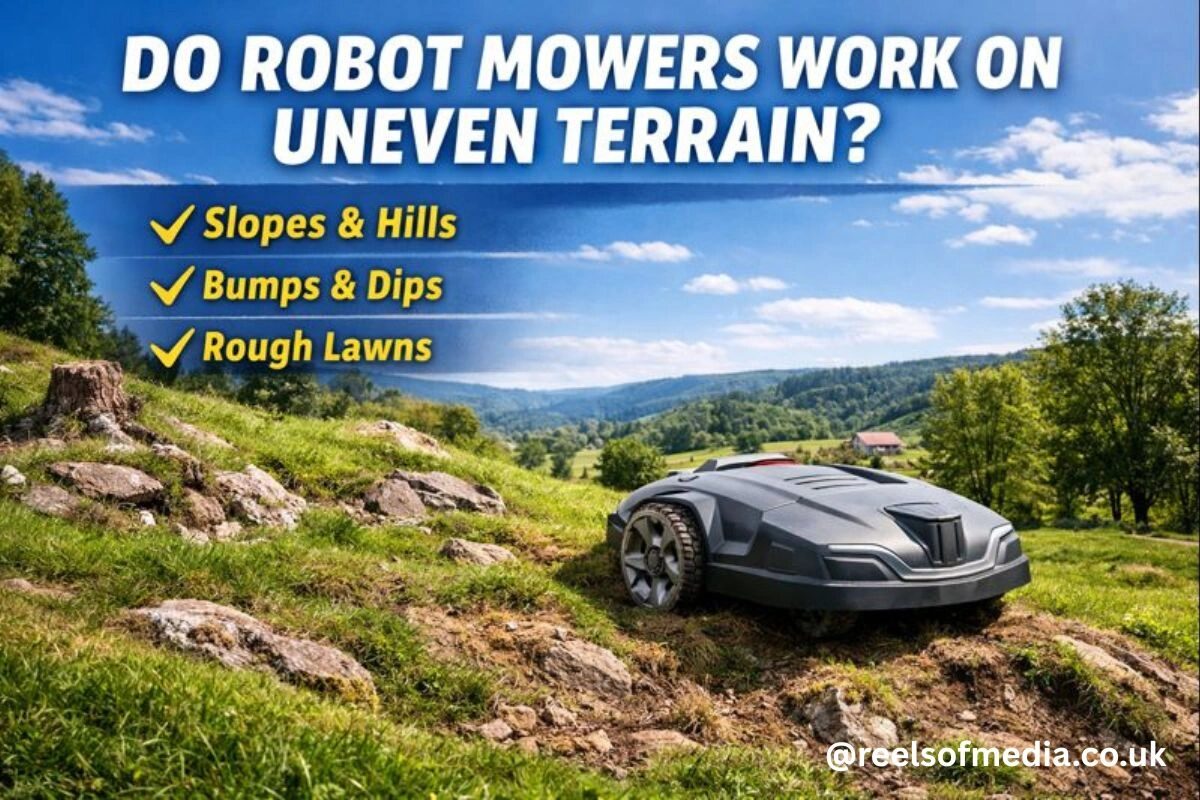
Robot lawn mowers are often marketed as hands-off solutions for modern lawns, but terrain quickly becomes the deciding factor in how well they actually perform. One of the most common questions buyers and users ask is do robot mowers work on uneven terrain, especially in yards with slopes, bumps, dips, or inconsistent ground conditions. The answer is not a simple yes or no, because performance depends on how uneven the lawn is and how the mower is designed to handle it.
Understanding whether do robot mowers work on uneven terrain requires looking beyond marketing claims and focusing on real-world factors like slope grades, traction, sensor systems, and lawn preparation. Uneven ground introduces challenges that affect stability, cutting quality, battery efficiency, and long-term durability. Knowing how these factors interact helps set realistic expectations and avoids costly mistakes when choosing or installing a robotic mower.
What Counts as Uneven Terrain in Robotic Mowing
Uneven terrain refers to any lawn surface where slope, surface irregularities, or ground instability affect traction, balance, or cutting consistency.
This goes beyond steep hills and includes subtle conditions that disrupt robotic movement.
-
Includes slopes, dips, ruts, soft soil, and inconsistent grass density
-
Affects navigation accuracy, wheel grip, and cutting height
-
Often underestimated by homeowners during purchase decisions
Slopes vs bumps, dips, and rough ground
Slopes impact climbing ability, while bumps and dips affect stability and cutting accuracy.
Each type creates different operational challenges.
-
Slopes stress motors and traction systems
-
Bumps cause momentary wheel lift and uneven cuts
-
Dips and ruts increase the risk of the mower getting stuck



Common lawn conditions that cause problems
Certain real-world lawn features consistently reduce robotic mower performance.
-
Tree roots pushing soil upward
-
Drainage channels or erosion paths
-
Compacted soil next to soft or muddy areas
-
Transitions between turf and hard edges
How manufacturers define “uneven” terrain
Manufacturers define uneven terrain mainly through slope percentages, not surface texture.
This creates gaps between specs and real use.
-
Slope ratings focus on incline angle only
-
Surface roughness is rarely quantified
-
Marketing images often show ideal conditions
How Robot Mowers Navigate Uneven Terrain
Robot mowers rely on traction systems, sensors, and navigation logic to stay upright and moving.
Performance depends on how these systems work together.
-
Mechanical grip keeps wheels moving
-
Sensors detect unsafe angles or obstacles
-
Software adjusts pathing and speed
Drive systems and traction mechanics
Traction is controlled by motor torque, wheel grip, and weight distribution.
These determine whether the mower climbs or slips.
-
Higher torque improves uphill movement
-
Balanced weight reduces rear-wheel lift
-
Poor traction leads to repeated retries or shutdowns
Sensors used for balance, tilt, and obstacle detection
Tilt and lift sensors stop operation when stability thresholds are exceeded.
This protects the machine and surroundings.
-
Tilt sensors detect unsafe angles
-
Lift sensors stop blades if wheels lose contact
-
Obstacle sensors prevent collisions on uneven ground
Navigation technologies and terrain awareness
Navigation systems help mowers adapt routes to avoid repeated problem areas.
-
GPS or RTK improves positional accuracy
-
Pattern logic reduces stress on steep zones
-
Some systems slow down automatically on inclines
Slope Handling Capabilities Explained
Slope handling is defined by maximum incline limits, but real lawns add complexity.
Not all slopes behave the same in practice.
-
Grass type changes traction
-
Moisture alters grip
-
Direction of travel matters
Percentage grades vs real-world hills
Percentage grades describe rise over distance, not surface difficulty.
A 30% slope can behave very differently depending on conditions.
-
Dry turf offers more grip than wet grass
-
Short slopes are easier than long continuous climbs
-
Uneven surfaces reduce usable slope capacity
Side slopes vs straight inclines
Side slopes are harder to manage than straight climbs.
They challenge balance rather than motor power.
-
Increased rollover risk
-
Sensors trigger shutdowns more often
-
Cutting becomes uneven along edges
Manufacturer slope ratings and limitations
Slope ratings represent best-case scenarios under controlled conditions.
-
Measured on uniform grass
-
Tested with clean, dry wheels
-
Often exclude turning and side travel
Key Features That Matter Most on Uneven Ground
Specific hardware features determine whether a mower can handle uneven lawns reliably.
Specs matter more than brand reputation.
-
Wheel design affects grip
-
Drive configuration controls stability
-
Cutting system impacts finish quality
Wheel design and tread patterns
Aggressive tread patterns improve grip on loose or wet soil.
-
Wider wheels reduce sinking
-
Deeper treads improve uphill traction
-
Smooth wheels struggle on rough ground
All-wheel drive and torque control
All-wheel drive distributes power more evenly across the mower.
-
Reduces wheel spin on slopes
-
Improves recovery from dips
-
Increases energy use but boosts stability
Cutting deck flexibility and ground clearance
Flexible decks maintain consistent cutting height on uneven surfaces.
-
Floating decks follow ground contours
-
Higher clearance avoids grounding out
-
Fixed decks struggle with bumps
Where Robot Mowers Struggle on Uneven Terrain
Even advanced models have limits when terrain exceeds design assumptions.
Understanding these limits prevents frustration.
-
Slippage reduces progress
-
Physical obstructions stop movement
-
Uneven cuts reduce lawn quality
Loss of traction and wheel spin
Wheel spin occurs when torque exceeds available grip.
-
Common on wet grass
-
Worsens on clay or sandy soil
-
Leads to repeated failed climbs
Getting stuck in dips or ruts
Dips trap wheels and lift cutting decks.
-
Low ground clearance increases risk
-
Uneven weight distribution worsens recovery
-
Manual intervention becomes frequent
Inconsistent cutting height issues
Uneven terrain causes blades to float above or dig into turf.
-
Leads to patchy appearance
-
Can scalp grass on high points
-
Affects long-term lawn health
Why Terrain Compatibility Matters Before Buying
Terrain mismatch leads to poor results, higher wear, and dissatisfaction.
Compatibility should be assessed early.
-
Prevents repeated shutdowns
-
Protects lawn condition
-
Reduces maintenance costs
Impact on mowing quality and lawn health
Poor terrain handling results in uneven growth and stressed grass.
-
Missed patches grow longer
-
Scalped areas weaken roots
-
Recovery time increases
Effects on battery life and efficiency
Uneven terrain increases energy consumption.
-
Motors draw more power on slopes
-
Recovery maneuvers waste charge
-
Coverage area per cycle decreases
Long-term wear and maintenance concerns
Strain from uneven terrain accelerates component wear.
-
Motors heat up more often
-
Gearboxes experience higher loads
-
Wheels and bearings degrade faster
Benefits of Using Robot Mowers on Uneven Lawns
When matched correctly, robot mowers still offer advantages on uneven terrain.
The key is realistic expectations.
-
Reduced manual labor
-
Improved safety
-
Consistent baseline maintenance
Time savings for homeowners
Robotic mowing removes the need for frequent manual cutting.
-
Operates autonomously
-
Handles routine maintenance
-
Reduces weekend workload
Safety advantages over manual mowing
Robots lower exposure to slope-related accidents.
-
No operator on steep ground
-
Automatic shutdown on instability
-
Reduced risk of slips and falls
Improved consistency on manageable terrain
Even partial automation improves lawn uniformity.
-
Regular cutting cycles
-
Less grass stress
-
Cleaner overall appearance
Best Practices for Using Robot Mowers on Uneven Terrain
Preparation and setup determine long-term success.
Small adjustments make a measurable difference.
-
Address problem spots early
-
Configure boundaries carefully
-
Adjust schedules based on terrain
Lawn preparation and grading tips
Minor grading improves performance more than hardware upgrades.
-
Fill deep ruts and holes
-
Level high-impact zones
-
Improve drainage in soft areas
Boundary wire or virtual boundary setup
Accurate boundaries prevent repeated failures.
-
Keep wires away from steep edges
-
Exclude high-risk slopes if needed
-
Adjust virtual zones seasonally
Scheduling strategies for challenging areas
Timing cuts improves traction and efficiency.
-
Avoid wet conditions
-
Use shorter, more frequent runs
-
Schedule slopes earlier in cycles
Safety and Compliance Considerations
Safety systems limit operation on dangerous terrain.
Compliance protects users and equipment.
-
Stability controls prevent rollovers
-
Sensors reduce injury risk
-
Guidelines define acceptable use
Stability and tip-over protection
Mowers stop when tilt thresholds are exceeded.
-
Prevents rollovers
-
Protects internal components
-
May limit usable slope range
Child, pet, and obstacle safety systems
Obstacle detection reduces collision risk on uneven lawns.
-
Detects sudden height changes
-
Stops blades when lifted
-
Improves household safety
Manufacturer guidelines and warranty limits
Using mowers beyond rated terrain can void warranties.
-
Slope limits are enforceable
-
Damage from misuse may not be covered
-
Documentation matters for claims
Common Mistakes When Using Robot Mowers on Slopes
Most failures come from setup and expectation errors.
These are avoidable with proper planning.
-
Specs are misunderstood
-
Capabilities are overstated
-
Installation is rushed
Ignoring slope ratings and terrain specs
Slope ratings are not suggestions.
-
Exceeding limits increases shutdowns
-
Risks hardware damage
-
Reduces mowing quality
Overestimating entry-level model capabilities
Basic models are designed for flat lawns.
-
Limited traction systems
-
Lower torque motors
-
Fewer recovery options
Poor installation and calibration
Incorrect setup undermines even high-end models.
-
Misplaced boundaries trap mowers
-
Poor calibration affects balance
-
Software settings remain unused
Tools and Technologies That Improve Uneven Terrain Performance
Modern technologies reduce, but do not eliminate, terrain challenges.
They work best as part of a system.
-
Mechanical improvements add grip
-
Navigation tech improves planning
-
Software refines behavior
Advanced traction and suspension systems
Suspension and adaptive traction stabilize movement.
-
Absorbs surface irregularities
-
Maintains wheel contact
-
Improves cutting consistency
RTK, GPS, and AI-based navigation
High-precision navigation reduces repeated failures.
-
Accurate positioning on slopes
-
Smarter route selection
-
Reduced overlap and retries
Software updates and terrain mapping
Software improvements extend usable terrain over time.
-
Refined slope detection
-
Adaptive speed control
-
Better error recovery
How to Assess Your Lawn’s Suitability
Assessment prevents costly mismatches.
Objective measurement matters more than visual estimates.
-
Measure slopes
-
Identify surface risks
-
Plan exclusions
Measuring slope and roughness accurately
Simple tools provide reliable data.
-
Smartphone inclinometer apps
-
Measuring rise over distance
-
Visual checks for wheel lift
Identifying problem zones before installation
Mapping problem areas avoids repeated failures.
-
Mark wet zones
-
Flag root-heavy sections
-
Note sharp transitions
When professional assessment is helpful
Complex lawns benefit from expert input.
-
Multi-level properties
-
Severe erosion issues
-
Mixed surface types
Robot Mowers vs Traditional Mowers on Uneven Terrain
Each option has trade-offs depending on terrain severity.
Neither is universally better.
-
Robots favor consistency
-
Traditional mowers favor control
-
Safety profiles differ
Performance differences on slopes
Traditional mowers offer more immediate power and control.
-
Better for extreme slopes
-
Manual correction possible
-
Higher physical demand
Safety and effort comparison
Robots reduce operator risk but limit adaptability.
-
No physical strain
-
Automated shutdowns
-
Less flexibility in edge cases
Cost and long-term value trade-offs
Robots trade upfront cost for long-term labor savings.
-
Higher initial investment
-
Lower ongoing effort
-
Maintenance varies by terrain
FAQs
Do robot mowers work on uneven terrain?
Yes, robot mowers can work on uneven terrain within defined limits, depending on slope ratings, traction systems, and surface conditions. Performance drops when ground irregularities exceed the mower’s design specifications.
What types of uneven lawns are most challenging for robot mowers?
Lawns with steep side slopes, deep ruts, exposed tree roots, soft soil, or sudden level changes are the most difficult for robotic mowers to handle consistently.
Can robot mowers safely mow sloped areas?
Robot mowers can safely mow slopes only up to their rated incline and under stable conditions. Built-in tilt and lift sensors stop operation when safety thresholds are exceeded.
Does uneven terrain affect cutting quality?
Yes, uneven terrain can cause inconsistent cutting heights, missed patches, or scalping in high spots, especially with fixed cutting decks or poor traction.
Is lawn preparation necessary before using a robot mower on uneven ground?
Yes, basic lawn preparation such as filling dips, improving drainage, and removing obstacles significantly improves mower performance and reduces operational issues.