

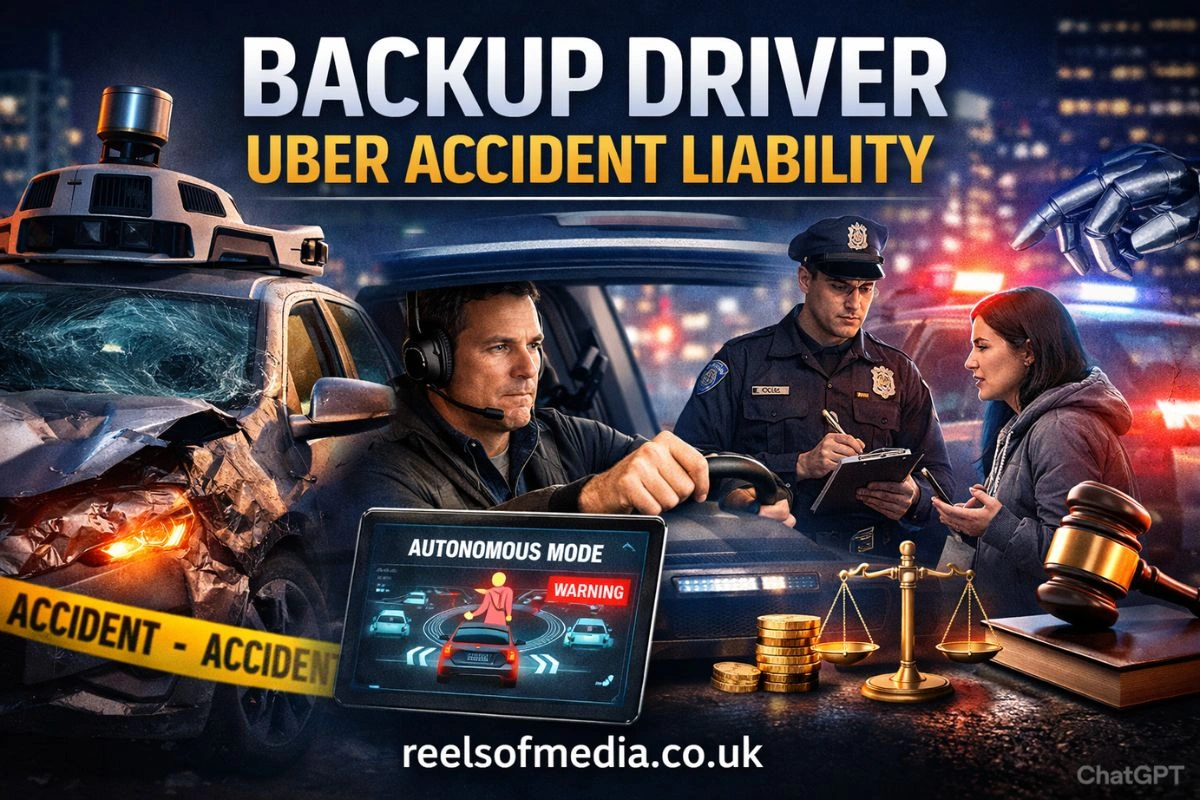
Determining backup driver uber accident liability has become a critical legal issue as autonomous ride-hailing technology expands worldwide. When a self-driving vehicle is involved in a crash, responsibility is no longer limited to a single driver. Instead, liability may involve the human safety driver, the operating company such as Uber, technology providers, and even third parties on the road. Understanding how fault is assigned is essential for legal professionals, insurers, and anyone involved in autonomous vehicle operations.
As autonomous testing and deployment continue to grow, regulators and courts are refining how they interpret backup driver uber accident liability in real-world cases. The presence of a human safety driver changes how negligence, insurance coverage, and compensation are evaluated after a crash. Clear knowledge of roles, responsibilities, and legal exposure helps organizations manage risk and ensures that victims receive appropriate compensation when accidents occur.
What Is a Backup Driver in Autonomous Ride-Hailing Vehicles?
A backup driver is a trained human operator assigned to monitor and control a self-driving vehicle during testing or limited commercial use.
-
Sits in the driver’s seat ready to take control
-
Oversees vehicle behavior and road conditions
-
Acts as a safety layer when automation fails
-
Required in most real-world autonomous testing programs
Backup drivers exist because fully autonomous systems are not yet legally or technically independent in most regions.



Definition of a safety or backup driver
A safety or backup driver is a licensed professional responsible for supervising autonomous driving systems and intervening when necessary.
-
Must remain alert and attentive at all times
-
Legally considered the active driver in many jurisdictions
-
Responsible for preventing collisions when automation misjudges risk
-
Often employed directly by rideshare or testing companies
Courts frequently treat backup drivers as primary operators when determining responsibility.
Role in semi-autonomous and self-driving tests
Backup drivers monitor system performance and ensure safe operation during testing or limited deployment.
-
Observe vehicle sensors and system alerts
-
Keep hands ready for manual takeover
-
Report system errors or unusual behavior
-
Follow strict operational safety protocols
They function as a human fail-safe until autonomous systems meet full regulatory approval.
Difference between backup driver and rideshare driver
A backup driver supervises automated systems, while a standard rideshare driver manually operates the vehicle.
-
Backup drivers oversee automation rather than driving continuously
-
Rideshare drivers maintain full control of the vehicle
-
Backup drivers follow testing protocols and safety guidelines
-
Liability rules differ between both roles
Legal exposure is often higher for backup drivers in autonomous testing scenarios.
How Self-Driving Uber Systems Operate During Active Trips
Self-driving ride-hailing vehicles use sensor data and software to navigate but still rely on human oversight.
-
Cameras, radar, and lidar detect surroundings
-
Software calculates speed, route, and braking
-
Backup driver monitors performance
-
Manual takeover remains available
Companies like Uber deploy layered safety systems combining AI and human supervision.
Autonomous mode vs manual control
Autonomous mode allows the system to drive, while manual control shifts responsibility to the human driver.
-
Autonomous mode handles steering, braking, and navigation
-
Manual mode is activated during risk or system uncertainty
-
Backup drivers must instantly switch when required
-
Control transitions are logged for investigations
Responsibility can shift depending on which mode was active during a crash.
Monitoring requirements for human drivers
Backup drivers must continuously monitor road conditions and system behavior.
-
Eyes on the road at all times
-
No phone use or distractions
-
Hands positioned for rapid takeover
-
Awareness of pedestrians and traffic
Failure to monitor properly can result in negligence claims.
When human intervention is expected
Human intervention is expected when the system detects uncertainty or potential danger.
-
Sensor confusion or object misidentification
-
Complex urban traffic conditions
-
Construction zones or unexpected obstacles
-
System alerts requiring manual control
If a driver fails to intervene when required, liability often increases.
Who Can Be Held Liable in an Uber Autonomous Accident?
Liability in an autonomous rideshare accident can involve multiple parties depending on fault and system performance.
-
Backup driver
-
Operating company
-
Technology or vehicle manufacturer
-
Third-party road users
Courts assess responsibility using negligence and product liability principles.
Backup driver legal responsibility
Backup drivers can be held liable if they fail to act reasonably to prevent a crash.
-
Distracted driving or inattention
-
Failure to take control when alerted
-
Ignoring safety protocols
-
Delayed reaction during emergencies
Personal criminal or civil charges are possible if negligence is proven.
Company and employer liability
The operating company may share liability if policies, training, or system design contributed to the crash.
-
Inadequate safety procedures
-
Insufficient driver training
-
Disabling safety features
-
Poor testing oversight
Employers can face civil lawsuits and regulatory penalties.
Vehicle manufacturer or software provider liability
Manufacturers may be liable if technical defects caused the accident.
-
Sensor or hardware malfunction
-
Software decision errors
-
Inadequate system warnings
-
Design flaws affecting safety
Product liability laws often apply in these situations.
Third-party driver or pedestrian responsibility
Other road users may share or hold full liability if their actions caused the crash.
-
Traffic violations
-
Sudden unsafe maneuvers
-
Pedestrian crossing violations
-
Impaired driving
Investigators evaluate all involved parties before assigning fault.
Legal Duties and Responsibilities of a Backup Driver
Backup drivers are legally responsible for maintaining safe vehicle operation even when automation is active.
-
Must supervise the system continuously
-
Must intervene when risk appears
-
Must follow company safety rules
-
Must comply with traffic laws
They are treated as active operators under many legal frameworks.
Duty of care and road safety obligations
Backup drivers owe a duty of care to passengers, pedestrians, and other drivers.
-
Maintain full situational awareness
-
Avoid distractions
-
React to hazards quickly
-
Operate within legal driving standards
Failure to meet this duty can result in liability.
Monitoring and intervention requirements
Drivers must be ready to take control instantly when system limits are reached.
-
Watch for system alerts
-
Monitor road complexity
-
Keep hands near controls
-
Take over without delay
Delayed intervention can be interpreted as negligence.
Situations where negligence may apply
Negligence applies when a driver fails to act reasonably under the circumstances.
-
Watching videos or using a phone
-
Ignoring system warnings
-
Falling asleep or losing focus
-
Misjudging road hazards
Investigators compare driver behavior against expected professional standards.
Why Liability Determination Matters After an Autonomous Crash
Determining liability defines who pays damages and who faces legal consequences.
-
Affects compensation for victims
-
Determines insurance payouts
-
Influences criminal charges
-
Shapes regulatory response
Accurate liability assessment ensures fair legal outcomes.
Impact on victims and compensation claims
Liability findings determine how victims recover losses after a crash.
-
Medical expense coverage
-
Lost income compensation
-
Pain and suffering damages
-
Wrongful death claims
Clear fault allocation speeds up settlements.
Insurance coverage and legal outcomes
Insurance companies rely on liability decisions to approve or deny claims.
-
Determines which policy pays
-
Influences settlement size
-
May trigger litigation
-
Affects future premiums
Complex liability can lead to multi-party lawsuits.
Influence on future autonomous vehicle laws
Each liability decision influences future regulations and testing approvals.
-
Sets legal precedents
-
Guides policy updates
-
Impacts public safety rules
-
Shapes insurance standards
Governments monitor these cases closely.
How Liability Is Determined After a Self-Driving Accident
Liability is determined through investigations, evidence review, and legal analysis.
-
Police and safety agency reports
-
Vehicle data analysis
-
Driver behavior review
-
Corporate policy evaluation
Multiple authorities may be involved in complex cases.
Role of police and federal investigations
Authorities investigate the scene and collect evidence to determine fault.
-
Interview witnesses
-
Review video footage
-
Examine vehicle data logs
-
Reconstruct accident timeline
Findings support criminal or civil proceedings.
Evidence used to determine fault
Investigators rely on technical and behavioral evidence.
-
Sensor and system logs
-
Driver camera recordings
-
GPS and speed data
-
Maintenance and training records
These details reveal whether human or system error occurred.
Civil vs criminal liability considerations
Civil liability concerns compensation, while criminal liability involves legal penalties.
-
Civil cases seek financial damages
-
Criminal cases address negligence or misconduct
-
Both can occur simultaneously
-
Standards of proof differ
A driver may face one or both depending on severity.
Key Legal Factors That Influence Backup Driver Liability
Several legal factors determine whether a backup driver is responsible.
-
Level of attention and response
-
Company safety systems
-
Local traffic laws
-
Technical system performance
Each factor contributes to final liability decisions.
Negligence and distracted driving
Negligence occurs when a driver fails to act with reasonable care.
-
Using a phone or device
-
Looking away from the road
-
Ignoring alerts
-
Slow reaction to hazards
Distracted behavior is a primary cause of liability findings.
Company safety protocols and training
Company policies influence how responsibility is shared.
-
Training adequacy
-
Monitoring requirements
-
Safety enforcement
-
Operational guidelines
Weak protocols can shift some liability to the employer.
State and country traffic laws
Local laws determine how autonomous vehicles are regulated.
-
Requirements for human supervision
-
Testing permissions
-
Insurance mandates
-
Driver responsibility standards
Liability outcomes vary by jurisdiction.
Technology failure and system errors
System malfunctions can reduce or shift driver responsibility.
-
Sensor detection failures
-
Software miscalculations
-
Disabled safety features
-
Delayed system alerts
Experts analyze whether failure was foreseeable.
Insurance Coverage in Uber Autonomous Vehicle Accidents
Insurance coverage typically involves multiple policies covering different parties.
-
Commercial rideshare insurance
-
Corporate liability policies
-
Personal driver coverage
-
Manufacturer liability coverage
The active policy depends on operational status and fault.
Commercial rideshare insurance policies
Commercial policies usually provide primary coverage during testing and trips.
-
High liability limits
-
Coverage for passengers and third parties
-
Activated when vehicle is in service
-
Managed by the operating company
These policies often handle initial claims.
Company liability coverage limits
Companies maintain large policies to cover potential damages.
-
Multi-million dollar coverage
-
Legal defense costs included
-
Settlement negotiation handled by insurer
-
Coverage may depend on driver compliance
Coverage limits affect compensation outcomes.
Personal insurance and backup drivers
Personal insurance may apply if driver negligence is proven.
-
Secondary coverage after company policy
-
May exclude commercial activity
-
Can face denial depending on contract
-
Legal review often required
Drivers must understand their policy terms.
How claims and settlements are handled
Claims typically follow a structured investigation and negotiation process.
-
Evidence review by insurers
-
Liability determination
-
Settlement negotiation
-
Litigation if unresolved
Complex cases may take months or years to resolve.
Real-World Case Studies of Autonomous Uber Accidents
Real incidents demonstrate how liability is assessed in autonomous testing.
-
Highlight shared responsibility issues
-
Reveal system limitations
-
Influence future regulation
-
Provide legal precedent
These cases guide policy and corporate practices.
Overview of the 2018 Arizona self-driving crash
A self-driving test vehicle struck a pedestrian during nighttime testing in Arizona.
-
Vehicle was in autonomous mode
-
Backup driver was present
-
Collision resulted in fatality
-
Triggered global scrutiny
Investigations focused on both human and system performance.
Legal actions taken against the backup driver
Authorities charged the backup driver based on negligence findings.
-
Alleged distraction before impact
-
Failure to intervene
-
Criminal charges filed
-
Plea agreement reached
The case confirmed that backup drivers can face personal liability.
Corporate and civil settlement outcomes
The operating company resolved civil claims through settlement.
-
Financial compensation to victim’s family
-
Avoided prolonged litigation
-
Adjusted safety protocols afterward
-
Increased regulatory oversight
Corporate responsibility remained a key discussion point.
Common Legal Risks for Backup Drivers and Rideshare Companies
Backup drivers and companies face significant legal exposure in autonomous testing.
-
Human error
-
System limitations
-
Policy failures
-
Regulatory breaches
Risk management is essential for both parties.
Failure to monitor the road
Failure to watch road conditions is a primary liability trigger.
-
Delayed reaction to hazards
-
Missed system alerts
-
Reduced situational awareness
-
Increased crash likelihood
Continuous monitoring is mandatory.
Overreliance on autonomous technology
Trusting automation without supervision creates legal risk.
-
Assuming system cannot fail
-
Ignoring warning signals
-
Slow manual takeover
-
Misunderstanding system limits
Drivers must treat automation as assistive, not infallible.
Inadequate safety policies
Weak internal policies expose companies to liability.
-
Poor driver training
-
Lack of monitoring systems
-
Insufficient testing procedures
-
Weak reporting structures
Strong governance reduces legal exposure.
Regulatory non-compliance
Violating testing or safety regulations can lead to penalties.
-
Operating without permits
-
Ignoring safety requirements
-
Failing to report incidents
-
Breaching data rules
Non-compliance increases both civil and criminal risk.
Best Practices to Reduce Liability in Autonomous Ride-Hailing
Risk reduction requires strict operational controls and safety culture.
-
Continuous driver training
-
Clear intervention rules
-
System monitoring
-
Compliance oversight
Preventive measures reduce legal exposure significantly.
Safety training and driver awareness
Training ensures drivers understand system limits and responsibilities.
-
Regular simulation exercises
-
Emergency response drills
-
Distraction prevention policies
-
Performance evaluations
Well-trained drivers reduce accident risk.
Real-time monitoring systems
Monitoring systems track driver attention and vehicle performance.
-
In-cab cameras
-
Alertness detection software
-
Real-time telemetry
-
Central control oversight
These tools improve accountability.
Clear intervention protocols
Drivers must know exactly when and how to take control.
-
Defined takeover thresholds
-
Audible and visual alerts
-
Standard operating procedures
-
Incident reporting steps
Clarity reduces hesitation during emergencies.
Corporate compliance and reporting
Compliance systems ensure legal and regulatory alignment.
-
Safety audits
-
Incident documentation
-
Regulatory reporting
-
Continuous policy updates
Strong compliance frameworks protect organizations.
Future Laws and Regulations for Self-Driving Car Liability
Future regulations will define responsibility between humans and automated systems more clearly.
-
Standardized liability models
-
Mandatory safety features
-
Expanded insurance requirements
-
Cross-border regulatory alignment
Legal frameworks are evolving rapidly.
Emerging global autonomous vehicle regulations
Governments are developing rules for testing and deployment.
-
Human oversight requirements
-
Safety certification standards
-
Data recording mandates
-
Licensing frameworks
Regulations vary widely by region.
Proposed changes to rideshare liability laws
Lawmakers are reviewing how liability applies to autonomous fleets.
-
Shared liability models
-
Mandatory corporate coverage
-
Updated negligence definitions
-
Clearer driver responsibility rules
Changes aim to reduce legal ambiguity.
Impact of AI and automation on legal responsibility
AI systems are reshaping traditional liability concepts.
-
Questions about software accountability
-
Manufacturer responsibility debates
-
Reduced human control scenarios
-
New insurance structures
Legal systems are adapting to automation realities.
FAQs
Can a backup driver be held responsible for an autonomous Uber crash?
Yes, a backup driver can be held legally responsible if they fail to monitor the vehicle or intervene when necessary, which is central to understanding backup driver Uber accident liability.
Who determines liability after a self-driving Uber accident?
Liability is determined through police and regulatory investigations, examining system data, driver behavior, and company protocols.
Does Uber insurance cover accidents involving backup drivers?
Uber’s commercial rideshare insurance typically covers damages, but personal insurance or manufacturer coverage may also apply depending on the situation.
How do courts decide between driver and company responsibility?
Courts assess negligence, system design, safety protocols, and evidence to allocate liability between the human driver, the company, and other parties.
Are autonomous vehicle liability laws the same in all countries?
No, liability laws differ globally, with varying requirements for backup drivers, insurance, and company responsibilities depending on local regulations.