

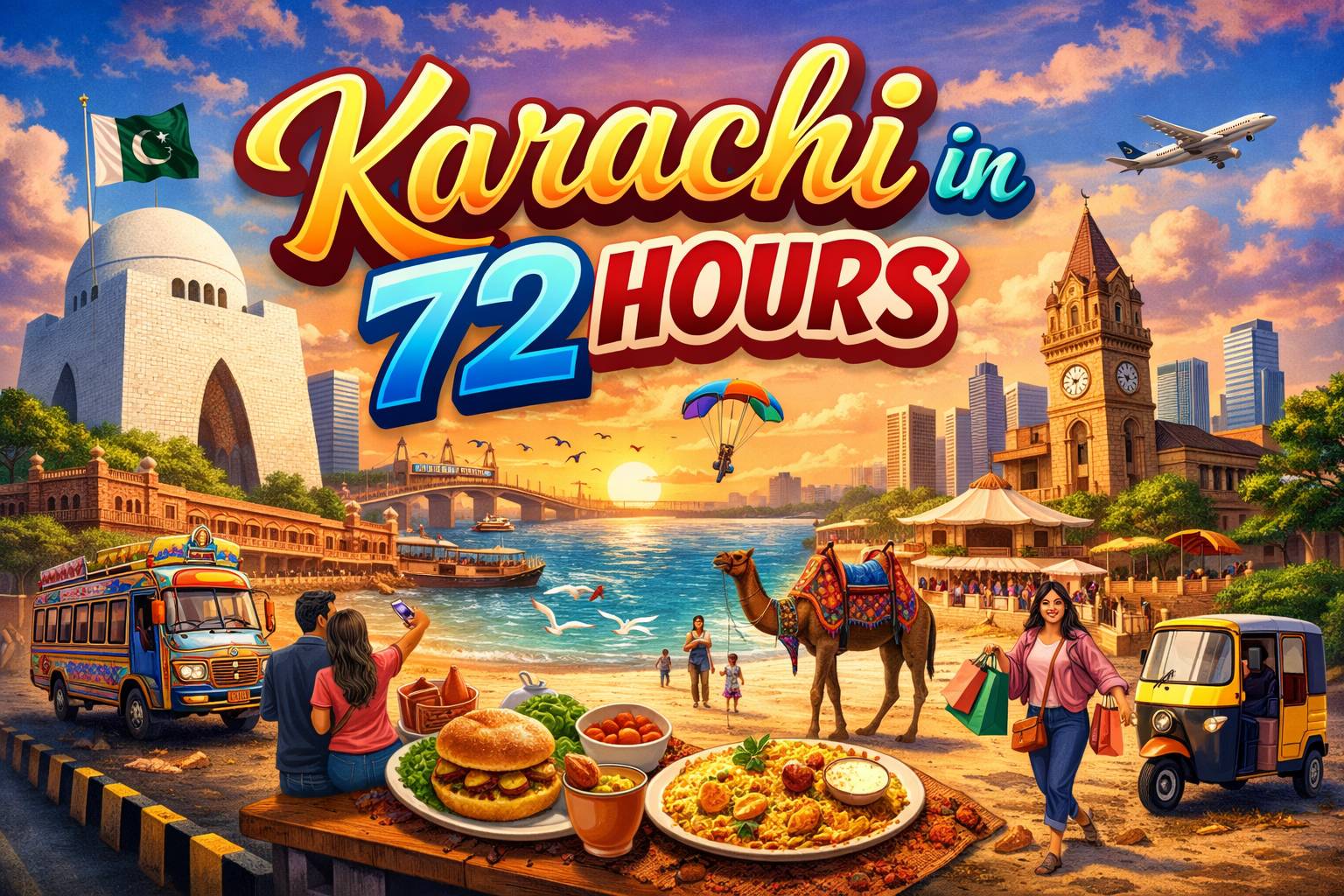
Karachi doesn’t do “gentle introductions”. It’s loud, sprawling, salty at the edges, and constantly hungry. For a first timer, the trick isn’t trying to see everything — it’s picking a few neighbourhoods with very different moods, eating with intention, and timing the city so you’re not stuck in traffic when you should be watching the Arabian Sea turn orange.
If you’re booking flights to Pakistan for the first time, Karachi is a brilliant (if slightly intense) place to start: it’s the country’s biggest city, its most restless food capital, and the one that puts the sea right on the edge of daily life.
This is a city-break style plan for three days: where to base yourself, which areas to tackle together, what to eat (properly), how to get around, and what to skip without regret.
Before you start: where to stay and how to move
Best first-timer bases
- Clifton / Seaview: easiest for sea views, cafés, bigger hotels, and quick access to the “nice” parts of town.
- Saddar / Downtown (only if you’re confident): great for markets and colonial-era streets, but intense, noisy, and best enjoyed in daylight with a plan.
- DHA: calmer, more residential, good restaurants — but you’ll be travelling further to reach the classic Karachi sights.
Getting around
- Use ride-hailing (Careem/Uber equivalents are common) and keep your days neighbourhood-based. Karachi traffic doesn’t ruin your trip — over-ambition does.
- Short hops: rickshaws are fun for quick rides, but agree the price first if you’re not on an app.
- Walk selectively: some streets are great on foot (especially early morning), others are better as “arrive, explore a block, leave”.
Timing tip: plan one big move late morning, then mostly stay put until after sunset. Your mood will thank you.
Day 1: Clifton & the Sea — salt air, street snacks, and sunset energy
Morning: Clifton’s calmer side
Start light. Karachi mornings can feel surprisingly soft if you lean into them early.



- Begin with a proper Pakistani breakfast: look for halwa puri (crispy fried bread with chickpea curry and sweet semolina) or nihari (slow-cooked beef stew) if you want to go all-in.
- If you’re easing in, do chai + paratha somewhere busy-but-clean and watch the city wake up.
Late morning: Mohatta Palace and a slower pace
Mohatta Palace is a great first-day anchor: beautiful building, manageable size, and it gives you context before you dive into the chaos elsewhere. After, drift around Clifton’s back streets for small galleries or bookshops if you spot them — Karachi rewards wandering when you’re not rushed.
Afternoon: street food, but pick your battles
Karachi’s street food is legendary, but the smartest first-timer move is to choose a popular vendor with high turnover. You want heat, crowds, and speed — not a quiet cart with yesterday’s oil.
What to eat on Day 1
- Bun kebab: Karachi’s scrappy burger — spiced patty, chutney, soft bun. Eat it hot.
- Chaat: crispy, tangy, yoghurt-and-chutney chaos. Order one and share.
- Sugarcane juice or lassi if it’s sweltering.
Evening: Sea View (Seaview) at golden hour
Yes, it’s busy. Yes, it’s a bit bonkers. But Seaview at sunset is a Karachi rite. Go for the atmosphere: families, street sellers, snacks, laughter, the sea breeze cutting through the city heat.
Do this
- Walk the edge where the air feels cleanest.
- Buy something simple (roasted corn with chilli and lemon is a classic move).
- Stay long enough to watch the light change, then leave before the post-sunset crush.
What to skip at Seaview
- Camel/horse rides if the animals look overworked.
- Anything that feels aggressively tourist-priced without an app or posted menu.
Day 2: Saddar & Old Karachi — markets, history, and the city at full volume
This is your “energy day”. Go early, dress modestly, keep valuables low-key, and plan your route so you’re not wandering blindly.
Morning: Empress Market + surrounding lanes
Empress Market is the headline, but the real magic is the orbit around it: spice shops, fabrics, bangles, and the constant theatre of bargaining.
Shopping targets (and how to buy)
- Spices: ask for small amounts so you can sample and travel easily.
- Ajrak / block prints: look for crisp printing and rich dye.
- Metalwork + kitchen tools: if you like practical souvenirs, this is where Karachi shines.
Bargaining rule: friendly, unhurried, and willing to walk away. You’ll get a better deal by being calm than by being clever.
Midday: colonial streets + a breather
In between market chaos, Saddar has pockets of old-world architecture. Look up. That’s the trick: the best parts are often above the signage.
When the heat builds, take a café break. Karachi’s modern coffee culture is real — and it’s a practical reset button.
Lunch: biryani, but choose your style
Karachi biryani is a serious topic. Expect spice, tang, and potatoes (often). The best first-timer move is to order one plate and share, then go back later if you’re obsessed.
Also worth trying
- Karahi (tomato-rich stir-fried meat, best eaten with fresh naan)
- Seekh kebab + paratha (simple, smoky, perfect)
Late afternoon: Burns Road for an evening food crawl
Burns Road is the classic: bright lights, constant grilling, people everywhere, and more food than you can logically eat.
Build a mini crawl
- Kebabs first (while you’re hungriest)
- Bun kebab or rolls next
- Dessert: try kulfi (dense ice cream) or falooda (sweet, chilled, very Karachi)
What to skip on Day 2
- Trying to “see a bit of everything” across town. Saddar + Burns Road already is everything — in one day.
- Quiet-looking seafood sitting out in the heat. Karachi has great seafood, but not from a lonely counter at 4pm.
Day 3: DHA calm + coastal views — parks, beaches, and a softer landing
After two full-on days, Day 3 should feel like exhaling.
Morning: a park walk and a slow breakfast
If you can, do a morning stroll in a greener area (DHA has options) and get breakfast somewhere with space and air conditioning. Karachi can be relentless; comfort isn’t “touristy” — it’s strategic.
Late morning: Do Darya for sea-facing dining
Do Darya is where Karachi leans into its coastline: restaurants lined up facing the water, especially good for lunch when the breeze behaves.
Order something you’ll actually enjoy, not just what you think you should:
- grilled fish or prawns if you trust the restaurant
- or go classic with karahi + naan and enjoy the view as the bonus
Afternoon: beach choice — pick the right one for your vibe
For a first visit, Seaview is the spectacle, but if you want something less chaotic, ask locals or your hotel about safer, quieter beach options that are good that day (conditions can vary).
If you’re sunburn-prone, do beaches late afternoon rather than midday — Karachi sun plays no games.
Evening: one last food hit, but make it intentional
Finish with something you missed rather than repeating what you already nailed:
- didn’t do nihari? do it now.
- didn’t do chaat properly? find a popular spot and go in.
- want a calm dessert? find a clean place for kulfi and call it a win.
What to skip on Day 3
- Long, cross-city “one last detour” missions. End your trip with good memories, not gridlock.
What first-timers usually get wrong (so you don’t)
- Overpacking the itinerary. Karachi is about texture: one market lane can take an hour if you let it.
- Eating without pacing. Do a crawl, share plates, and keep water on you.
- Ignoring the city’s rhythms. Early morning and sunset are your best friends.
- Treating every neighbourhood the same. Karachi changes block by block; keep your plan tight and your expectations flexible.
Quick, practical notes you’ll actually use
- Dress: modest, breathable, layers for air-con.
- Money: carry small notes for snacks and markets.
- Photos: ask before photographing people; a smile goes far.
- Comfort: take breaks. Karachi rewards stamina, but it doesn’t require suffering.