

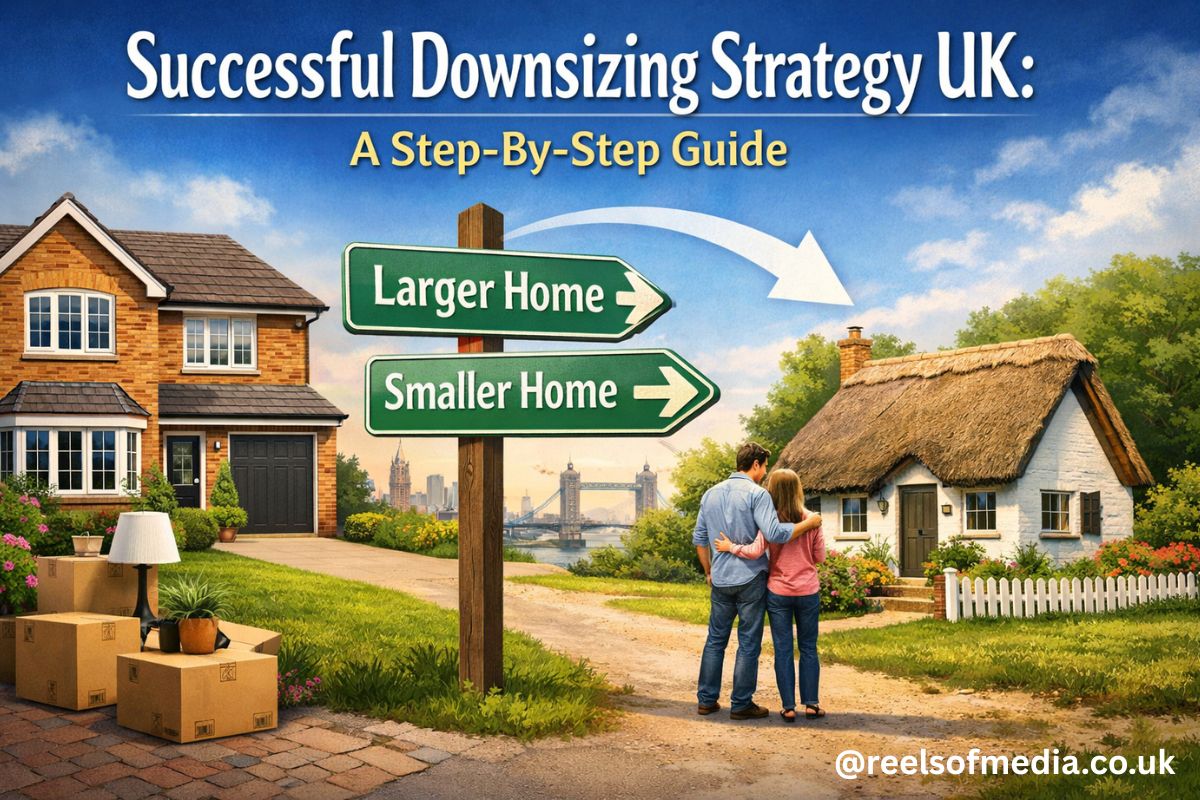
For millions of UK homeowners, the family home has served its purpose well, raised children, hosted celebrations, and built memories. But when the rooms sit empty, and the maintenance bills keep climbing, a well-planned downsizing strategy can transform both finances and lifestyle.
Explore managed buildings Ilford services for professional support that helps owners transition, adapt, and protect the long-term value of their assets.
From understanding the financial case to avoiding common pitfalls, here is how to plan a downsizing that works for your circumstances, not someone else’s.
What Is a Downsizing Strategy and Who Is It For?
A downsizing strategy is a structured plan for moving from a larger property to a smaller, more manageable one with clear goals for what you want to achieve financially, practically, and emotionally. It is not simply the act of moving; it is the thinking, timing, and sequencing that determine whether the move succeeds.
Many people assume downsizing is only for retirees, but that view is increasingly outdated. For those building a broader property income plan, exploring Professional Landlord Services Ilford can help align a downsizing move with longer-term investment and rental income objectives.
The following situations are common triggers for developing a downsizing strategy:
| Trigger | What It Signals |
| Empty nest | Children have moved out; multiple bedrooms sit unused for months at a time. |
| Rising maintenance costs | Repair bills and upkeep demands outpace the benefit of having the space. |
| Approaching retirement | Equity release becomes a priority to supplement pension income. |
| Health or mobility changes | A single-storey or more accessible property becomes a practical necessity. |
| Location mismatch | The current property is far from family, transport, or key amenities. |
The Financial Case for Downsizing
The financial benefits of a well-executed downsizing strategy are substantial but only when the full picture is considered. Selling a larger home and purchasing a smaller one can release significant equity. According to Rightmove, downsizing from a five-bedroom property to a three-bedroom home could save homeowners up to £3,806 annually in energy bills alone, depending on energy efficiency ratings.
- Beyond energy savings, the monthly cost reductions compound quickly across several areas:
- Lower council tax on a smaller, less valuable property
- Reduced building and contents insurance premiums
- Smaller mortgage or mortgage-free status, freeing up monthly income
- Lower maintenance costs with fewer rooms, less outdoor space, and modern fixtures
- Reduced cleaning and decorating expenditure over time
Building Your Downsizing Strategy: A Step-by-Step Approach
A reliable downsizing strategy follows a logical sequence. Skipping steps tends to create problems later, such as rushed decisions on property type, underestimated costs, or emotional regret about possessions or location.



Step 1: Define Your Goals
Be specific about what you want to achieve. Is the priority financial releasing equity or reducing monthly outgoings? Is it lifestyle, less maintenance, a better location, or a more manageable home? Or is it health-driven, needing a property on a single floor or closer to support services? Your goals determine every decision that follows.
Step 2: Get an Accurate Property Valuation
Before anything else, obtain a professional valuation of your current home. This anchors your entire financial plan. Speak with at least two or three local estate agents to compare estimates, and request a detailed breakdown of comparable sales in your area. Avoid basing decisions on online estimates alone, which can be misleading in both directions.
Step 3: Research Your Target Property and Location
Where you move matters as much as what you move into. Consider proximity to public transport, healthcare, shops, and family. Think about property type, flat, bungalow, terrace, or retirement community and how each aligns with your current and future needs. Measure prospective properties carefully before committing; furniture that fits your current home may not transfer as expected.
Step 4: Plan Your Declutter Early
Decluttering is one of the most underestimated elements of any downsizing strategy. Begin the process as soon as you decide to move, not in the final weeks. Working room by room and sorting possessions into clear categories makes the task manageable:
- Keep items in regular use or of genuine sentimental value
- Donate good-condition items that a charity or community centre can use
- Sell valuable items that can offset moving costs
- Discard anything that is broken, duplicated, or simply no longer serves a purpose
Step 5: Time Your Sale and Purchase Carefully
The sequence of selling and buying significantly affects your negotiating position. Selling first gives you a clear budget and makes you a more attractive buyer. Buying first carries the risk of being caught in a chain or holding two properties simultaneously. In a competitive market, being a pre-qualified buyer with a sale already agreed upon puts you in a much stronger position.
Emotional Challenges in Downsizing and How to Navigate Them
A downsizing strategy is not purely financial or logistical. For many homeowners, the move involves leaving a property where decades of family life have taken place. That attachment is real, and underestimating the emotional dimension leads to delayed decisions, last-minute reversals, and stress that could have been managed with better preparation.
Practical steps that ease the emotional transition include:
- Involving family members in decluttering decisions, particularly for shared possessions
- Photographing or preserving memories tied to the home before leaving
- Visiting the new area multiple times before committing to build familiarity
- Giving yourself a realistic timeline, rushing the emotional process often backfires
Common Mistakes in Downsizing and How to Avoid Them
Even the most financially savvy homeowners make avoidable errors when approaching a downsize for the first time. Understanding where others go wrong is the fastest way to protect your own strategy.
| Common Mistake | How to Avoid It |
| Underestimating total moving costs | List every cost, agent fees, stamp duty, conveyancing, removals, and renovations, before finalising a budget. |
| Choosing a property that is too small | Be honest about your actual space needs, not just your current ones. Storage, guest rooms, and home office space all count. |
| Skipping the declutter phase | Start at least 6 months before the planned move date. Late decluttering adds stress and leaves less time for good decisions. |
| Ignoring location quality | Visit the target area at different times of day and week. Check transport links, local amenities, and community feel before committing. |
| Letting emotion override planning | Acknowledge the feelings, but keep decisions anchored to your written goals and financial plan. |
Conclusion
A successful downsizing strategy is not about settling for less; it is about gaining more of what matters. Lower costs, less maintenance, better location, and the financial freedom that comes from releasing built-up equity are all achievable outcomes when the process is planned carefully and honestly.
The homeowners who navigate downsizing most smoothly are those who start early, set clear goals, account for every cost, and treat the emotional side of the move with the same seriousness as the financial side.
Frequently Asked Questions
At what age should I start thinking about downsizing?
There is no fixed age. Many homeowners begin planning in their mid-50s when children leave home, and priorities shift, while others downsize in their 70s for health or financial reasons. The right time is when your current home no longer fits your actual life, not based on age alone.
How much equity can I realistically release by downsizing?
This depends entirely on the value of your current home, the price of your target property, and the costs of moving. Some homeowners release tens of thousands of pounds; others release considerably more.
Will I need to pay Stamp Duty when I downsize?
Yes, if the property you are purchasing is priced above the Stamp Duty threshold, currently £250,000 in England and Northern Ireland. The rate varies based on purchase price.
Is downsizing to a flat a good idea?
It can be, particularly for reducing maintenance responsibilities and heating costs. However, leasehold considerations, service charges, and ground rent must all be reviewed carefully. Some flats carry annual service charges that significantly offset the savings from lower utility bills, so always request a full breakdown before exchanging contracts.
Should I sell before I buy when downsizing?
In most cases, yes. Selling first gives you a confirmed budget, removes the risk of holding two properties, and makes you a more attractive buyer in competitive markets.