

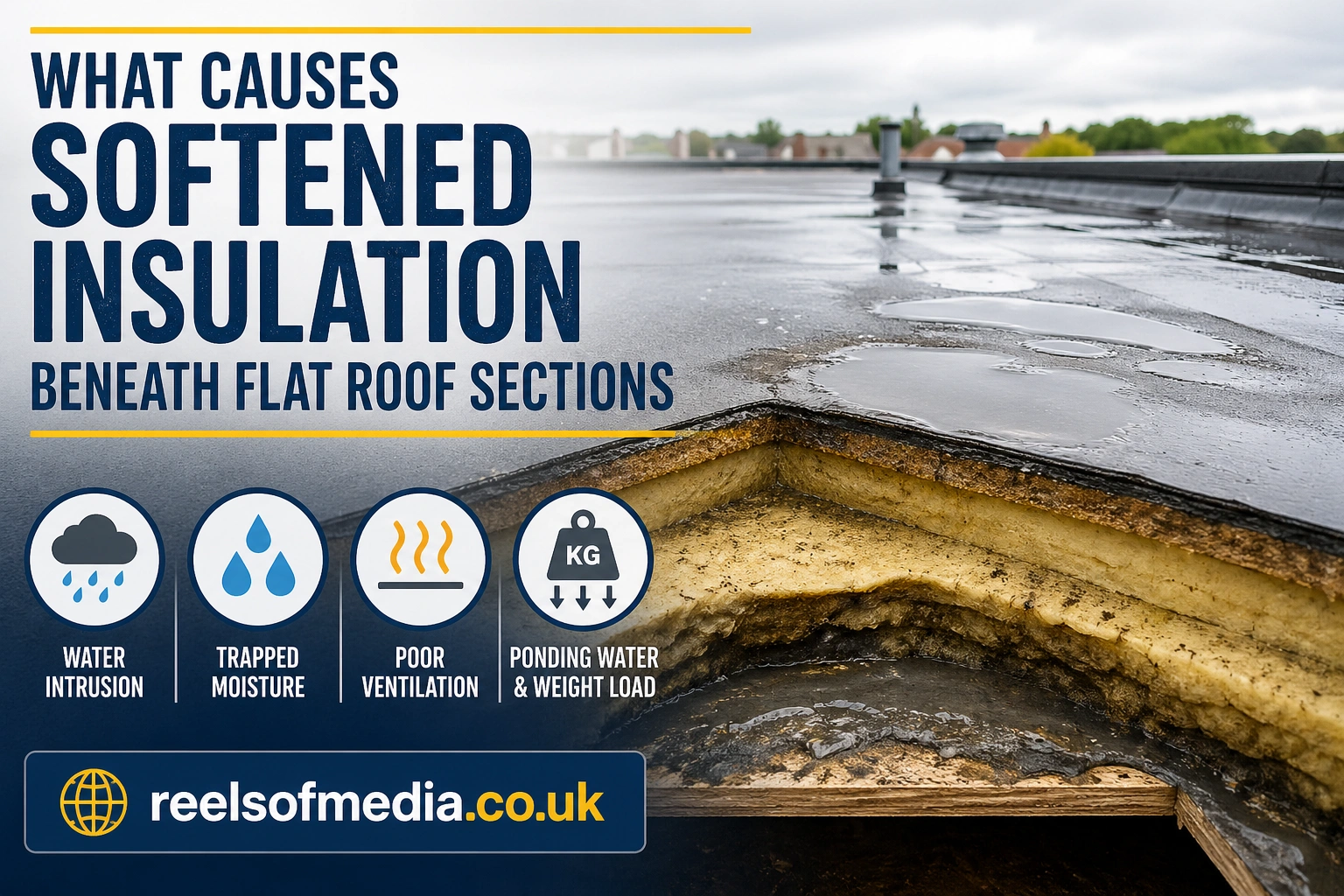
Flat roofs are a popular choice for modern homes and commercial buildings because they offer a sleek look and extra space for HVAC units or rooftop decks. However, they come with a unique set of challenges that traditional sloped roofs don’t usually face. One of the most frustrating issues homeowners encounter is softened or “spongy” insulation beneath the roof membrane. When you walk across your roof and feel a dip or a soft spot, it is a sign that something is going wrong deep within the roofing system. If you notice these signs, seek a roof repair st. george service early on can save you from a complete structural failure. Dealing with moisture issues quickly is the only way to protect your property and your wallet.
The Problem of Standing Water
The most common culprit behind soft insulation is ponding water. Since flat roofs do not have a natural pitch to shed water, they rely on a slight taper and working drains to move rain along. When a roof has low spots or clogged scuppers, water sits in one place for days. Over time, that standing water puts immense pressure on the roof membrane. Eventually, the water finds a tiny pinhole or a weak seam and begins to seep into the insulation layers below. Once the insulation boards get soaked, they lose their structural integrity and turn into a wet, mushy mess that feels soft under your feet.
Failing Seams and Flashing
Flat roofs are not usually one continuous piece of material. They are made of large sheets of TPO, EPDM, or PVC that are heat-welded or glued together at the seams. As a roof ages, these seams can pull apart due to the constant expansion and contraction caused by temperature changes. Flashing around vents, chimneys, and skylights is another major weak point. If the sealant cracks or the metal flashing pulls away from the wall, rain will run straight down into the insulation. Because the insulation is sandwiched between the deck and the waterproof membrane, it stays trapped there with no way to dry out, leading to permanent softening.
Condensation from the Inside Out
Sometimes the moisture isn’t coming from the rain at all. It can actually come from inside your building. If a flat roof lacks a proper vapor barrier or sufficient ventilation, warm and humid air from the kitchen or bathroom rises and hits the cold underside of the roof deck. This causes condensation to form. This moisture then drips down into the insulation. This is a sneaky problem because your roof might look perfectly fine from the outside, but the insulation is slowly rotting away due to the interior moisture. This type of damage often goes unnoticed until the ceiling starts to sag or mold begins to grow.
Mechanical Damage and Foot Traffic
Flat roofs are often used as platforms for maintenance workers to service AC units or for residents to enjoy the view. Heavy foot traffic can be a silent killer for roof insulation. If people walk on the roof frequently without using designated walk pads, they can compress the insulation boards. Once the boards are compressed, they create a low spot where water naturally gathers. Furthermore, dropped tools or heavy equipment can create small punctures in the membrane. Even a hole the size of a pencil lead can let in enough water over a single season to ruin several square feet of insulation.
Age and Material Degradation
Like everything else, roofing materials have a lifespan. After twenty or thirty years of baking in the hot sun, the protective membrane becomes brittle. It loses its ability to stretch and begins to develop hairline cracks. Once the top layer is compromised, moisture from the air and morning dew can slowly penetrate the system. Older types of wood fiber or perlite insulation are especially prone to softening when they get damp. Once these materials lose their “crunch” and become soft, they can no longer support the weight of the membrane, leading to more cracking and a cycle of worsening damage.
Final Word
Ignoring a soft spot on your flat roof is a recipe for disaster. What starts as a small patch of damp insulation can quickly turn into a rotted roof deck and a compromised ceiling. Keeping your drains clear and performing regular inspections will go a long way in extending the life of your roof. If you suspect that your insulation has already been compromised, it is best to call a professional roof repair st. george service to assess the damage before the next big storm hits. A quick patch today is much cheaper than a full tear-off and replacement tomorrow.