

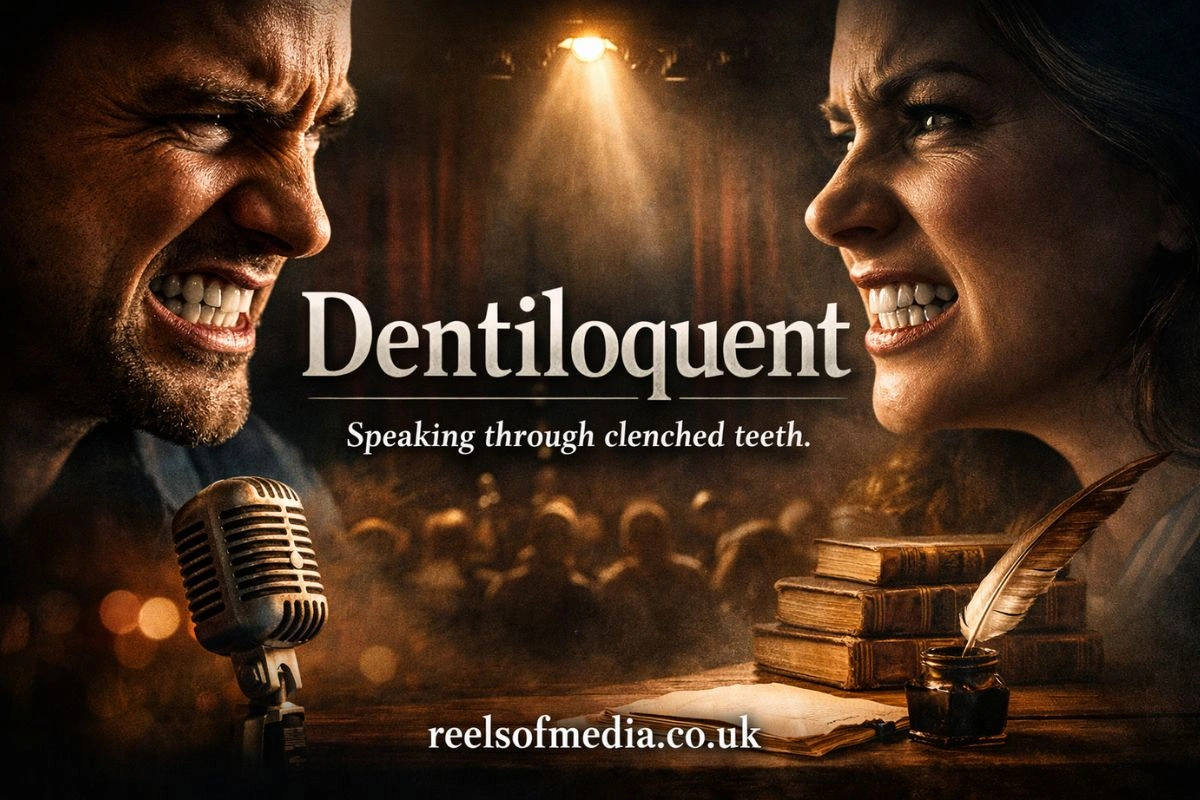
Language is full of fascinating words that describe subtle aspects of human communication and expression. Some of these words are widely used in everyday conversation, while others remain rare but meaningful in discussions about speech and vocal behavior. One such intriguing term is Dentiloquent, a word that captures a very specific way in which people produce speech. It highlights how the position of the teeth and jaw can influence the tone and clarity of spoken words.
Understanding unique speech patterns helps us appreciate the complexity of human communication. The way a person moves their mouth, lips, and jaw while speaking can change not only pronunciation but also the emotional tone of a message. Exploring uncommon expressions related to speech can provide deeper insight into how voices convey tension, emotion, and intention in both everyday interactions and expressive storytelling.
Meaning and Definition of Dentiloquent
The term Dentiloquent describes a style of speaking in which a person talks through clenched or nearly closed teeth. In this situation, the mouth does not open fully during speech, which can affect the clarity and tone of the voice. The resulting sound may appear tight, controlled, or slightly restricted compared to normal conversational speech.
This way of speaking often occurs when a person experiences strong emotions. For example, someone who feels anger, frustration, or intense determination may naturally tighten their jaw while talking. As a result, their speech becomes dentiloquent, producing a distinctive vocal quality that listeners can easily recognize.
Another interesting aspect of this term is that it captures a physical behavior that many people experience but rarely describe with a specific word. Although the behavior is common, the vocabulary used to explain it is uncommon, which makes the word particularly intriguing for language enthusiasts and students of speech.
The Linguistic Origin of Dentiloquent
The word Dentiloquent has its roots in Latin, where many English words describing speech and expression originate. The component “denti” comes from the Latin word for teeth, while “loquent” is derived from a verb meaning to speak. Together, these elements form a word that literally translates to speaking with the teeth.
Many English words share the same linguistic family that relates to speaking and expression. Words such as eloquent or loquacious come from similar origins that emphasize verbal communication. These linguistic connections show how language often builds complex meanings from simple root elements.
Even though dentiloquent did not become widely used in everyday vocabulary, it remains an interesting example of how language can precisely describe physical aspects of communication. Linguistic history often preserves such words, allowing them to remain part of the broader vocabulary used in academic or literary discussions.



Dentiloquent Speech and the Art of Speaking
The concept of Dentiloquent speech is sometimes discussed in studies of vocal expression and the mechanics of speaking. Effective speech typically requires proper movement of the lips, tongue, jaw, and teeth. When the teeth remain tightly together, the space available for sound production becomes limited, which changes how words are pronounced.
In situations where clear articulation and strong vocal projection are necessary, speakers usually avoid speaking with clenched teeth. Public speakers and communication trainers often encourage relaxed jaw movement because it allows sounds to resonate more clearly and naturally.
However, understanding dentiloquent speech can still be valuable when studying how physical tension influences vocal tone. By examining this speaking style, students of communication can learn how different mouth positions shape the way speech sounds and feels to listeners.
Dentiloquent Expression in Literature and Storytelling
Writers often describe subtle speech patterns to make characters feel more realistic and emotionally complex. The idea behind Dentiloquent speech helps authors illustrate moments of tension, anger, or restrained emotion within dialogue. A character speaking through clenched teeth immediately suggests internal conflict or suppressed intensity.
This descriptive detail allows readers to imagine the emotional state of a character more clearly. Even without explicitly naming the term, authors frequently describe the action by writing that a character spoke through clenched teeth. This visual and auditory detail strengthens the impact of dramatic scenes.
Such descriptions contribute to stronger storytelling because speech patterns reveal personality and emotional depth. A character’s voice, tone, and manner of speaking often communicate as much meaning as the actual words used in the dialogue.
Dentiloquent Speech in Acting and Performance
Performers frequently explore different vocal techniques to portray emotions convincingly. The idea behind Dentiloquent speech can be particularly useful when actors need to express tension or restrained anger. By keeping their teeth close together while delivering lines, actors can produce a sound that conveys pressure or controlled emotion.
This technique is often used in dramatic scenes where a character struggles to maintain composure. Instead of shouting or speaking loudly, the actor may deliver words quietly with a clenched jaw. This approach creates a powerful emotional effect because the character appears to be holding back intense feelings.
Training in acting often includes exercises that focus on facial muscles, jaw movement, and breath control. These elements help performers understand how physical actions influence vocal expression and allow them to use speech styles intentionally for dramatic impact.
Dentiloquent Speech in Everyday Situations
Although the word Dentiloquent is not commonly used in daily conversations, the behavior it describes occurs frequently in real life. People naturally clench their teeth while speaking during moments of stress or emotional intensity. This reaction can happen during arguments, difficult discussions, or situations where someone tries to control their feelings.
In many cases, dentiloquent speech acts as a subtle signal of tension. Listeners may notice that the speaker’s voice sounds tighter or more restrained than usual. Even without seeing the speaker’s facial expression, the tone of the voice can reveal underlying emotions.
Recognizing these small vocal cues can improve interpersonal communication. When people become aware of how emotions influence speech patterns, they may better understand the feelings behind someone’s words and respond with greater empathy.
Conclusion
The word Dentiloquent highlights an intriguing aspect of human communication by describing speech produced through clenched or nearly closed teeth. Although it is a rare term, it captures a very real behavior that appears in emotional moments, dramatic performances, and detailed descriptions in literature.
Exploring this concept reveals how the physical mechanics of speech shape vocal tone and expression. The position of the jaw, teeth, and lips can influence not only how words sound but also how emotions are conveyed to listeners. These subtle details remind us that communication involves much more than vocabulary alone.
By examining dentiloquent speech, we gain a deeper appreciation for the complexity of the human voice. The way people speak reflects their physical state, emotional experience, and intention, making speech one of the most powerful tools of human expression.