

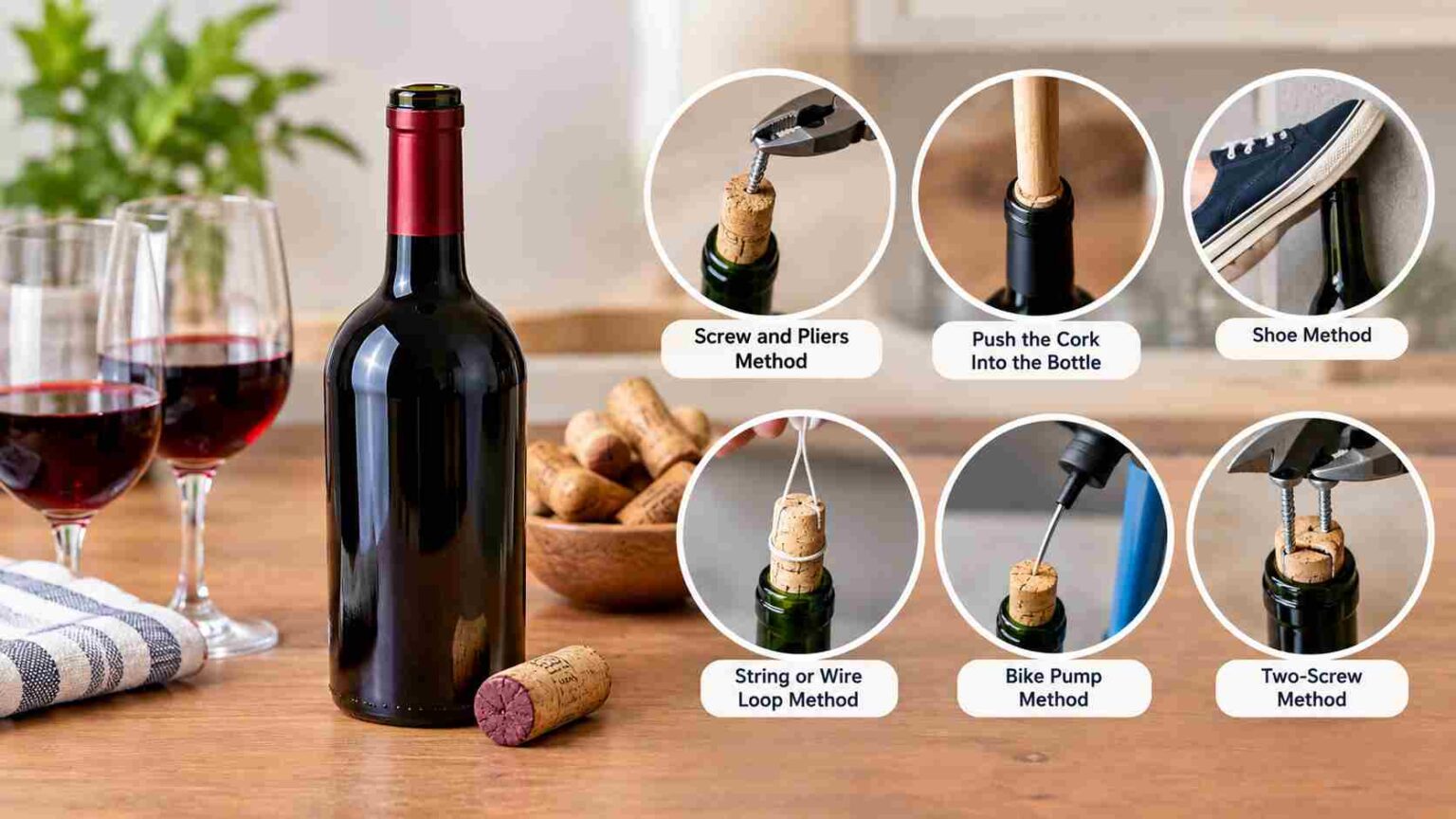
The fastest way to remove a cork without a corkscrew is to push it into the bottle using a sturdy object like a wooden spoon handle or a thick pen. It works in seconds, requires no special tools, and is the method most people can do right now with items already in the kitchen. If you want a cleaner result that doesn’t leave cork floating in your wine, the shoe method, a screw and pliers, or a bike pump are better choices depending on what you have on hand.
Below are seven practical methods, what you need for each, how to do it safely, and where each one falls short.
7 Easy Ways to Get the Cork Out
Each of these methods uses items you likely already have at home, from a spoon to a shoe to a simple lighter. Some rely on physical force, while others use air pressure to lift the cork out cleanly. Try the one that matches the tools you have on hand, and keep a backup option ready in case the first attempt doesn’t fully work.
1. Push the Cork Into the Bottle
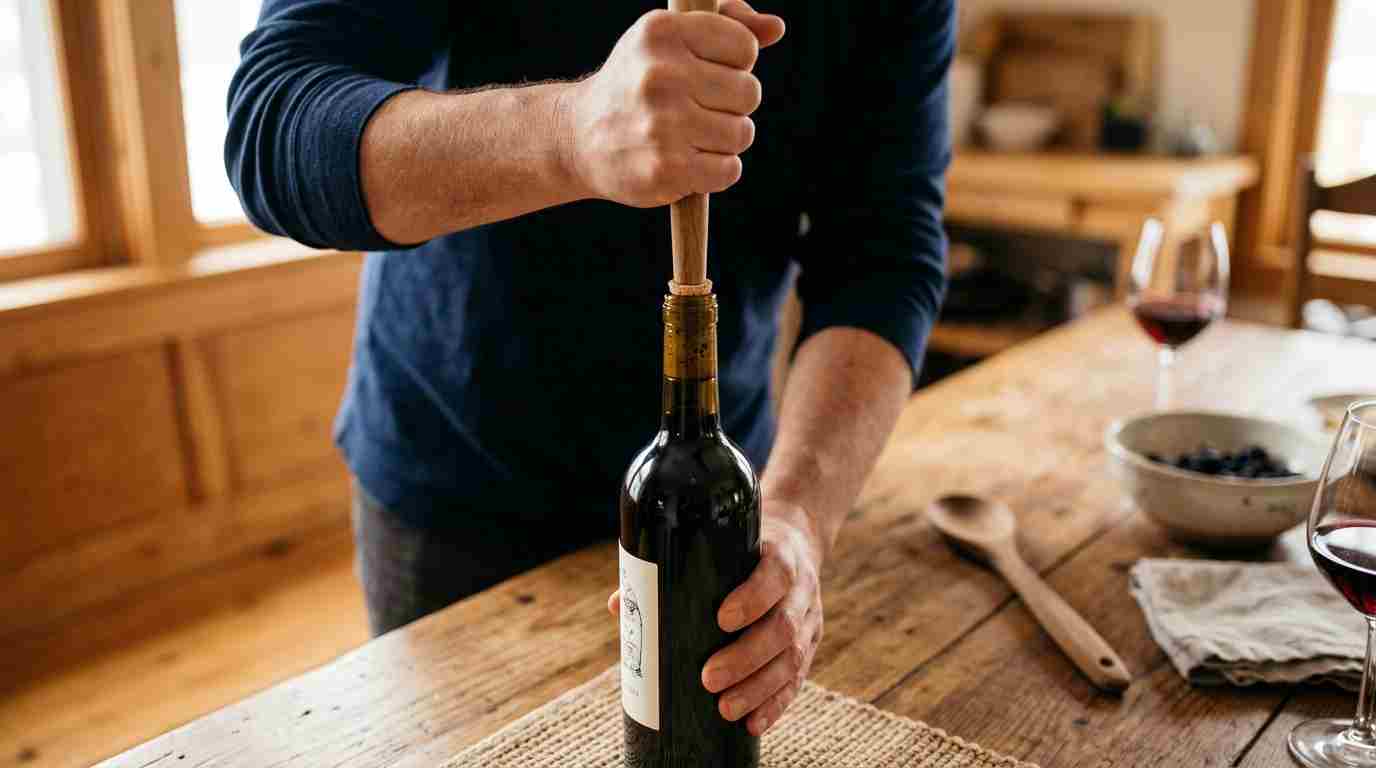
This is the simplest option because it needs no extra tools beyond something long and blunt.
What you need: A wooden spoon handle, a thick marker, a chopstick, or even a sturdy pen.
How to do it:
- Stand the bottle upright on a firm surface.
- Place the tip of your tool on the center of the cork.
- Press down firmly and steadily until the cork drops into the bottle.
Limitation: The cork ends up floating in the wine. You’ll need to pour the wine through a strainer, cheesecloth, or coffee filter to catch loose cork bits before serving. This method also works better on older, drier corks than on fresh, tightly fitted ones, which can require more force and risk splashing wine out of the neck.



2. The Shoe Method
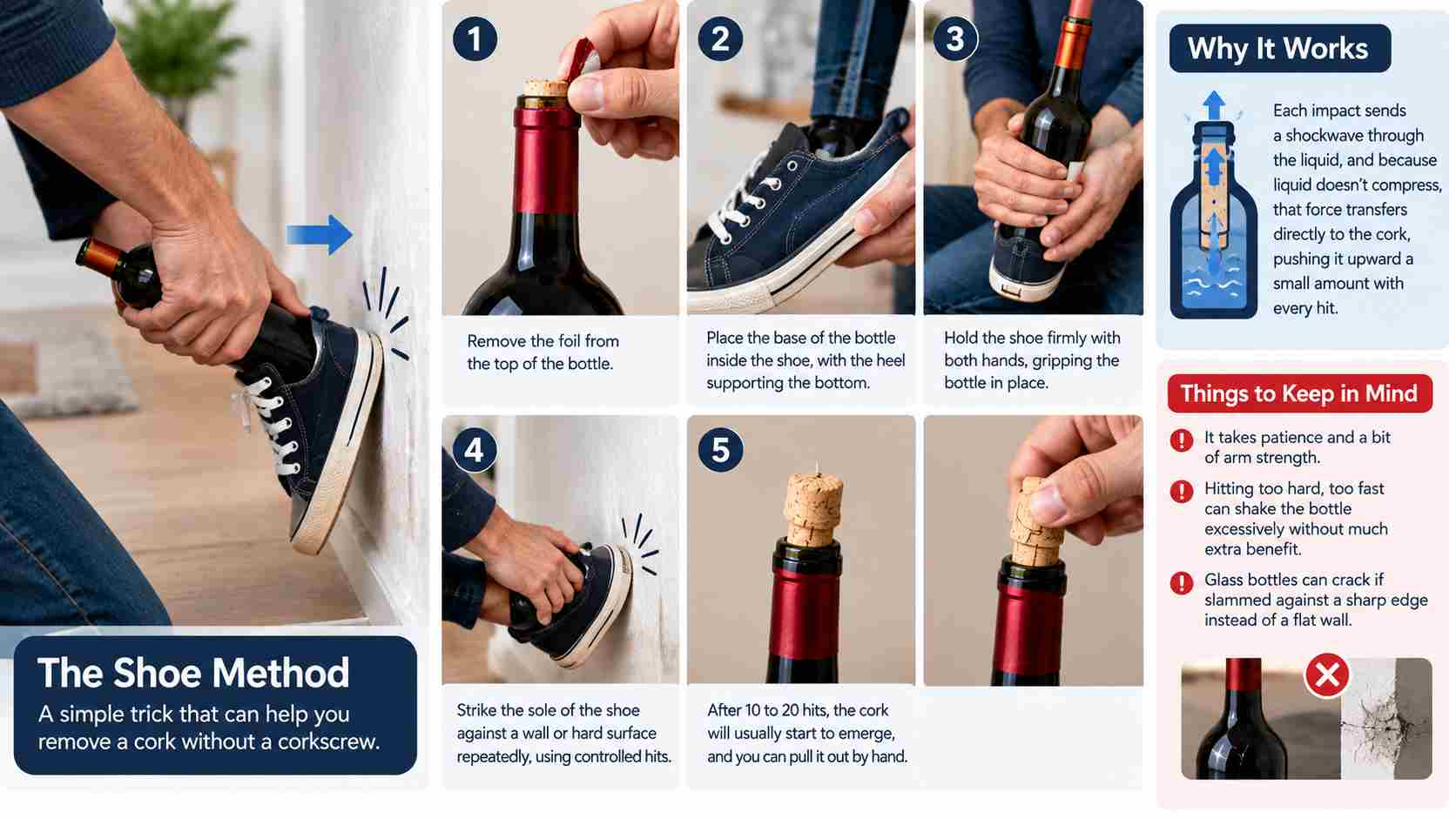
This is the most well-known bar trick for a reason: it works on most standard wine bottles with a natural cork, and it doesn’t require breaking or touching the cork at all.
What you need: A solid, flat-soled shoe (sneakers or dress shoes work better than soft sandals) and a wall or hard flat surface.
How to do it:
- Remove the foil from the top of the bottle.
- Place the base of the bottle inside the shoe, with the heel of the shoe supporting the bottom of the bottle.
- Hold the shoe firmly with both hands, gripping the bottle in place.
- Strike the sole of the shoe against a wall or hard surface repeatedly, using firm but controlled hits.
- The impact creates pressure inside the bottle that gradually pushes the cork out. After 10 to 20 hits, the cork will usually start to emerge, and you can pull it the rest of the way by hand.
Why it works: Each impact sends a shockwave through the liquid, and because liquid doesn’t compress, that force transfers directly to the cork, pushing it upward a small amount with every hit.
Limitation: It takes patience and a bit of arm strength. Hitting too hard, too fast can shake the bottle excessively without much extra benefit, and glass bottles can crack if slammed against a sharp edge instead of a flat wall.
3. Screw and Pliers Method
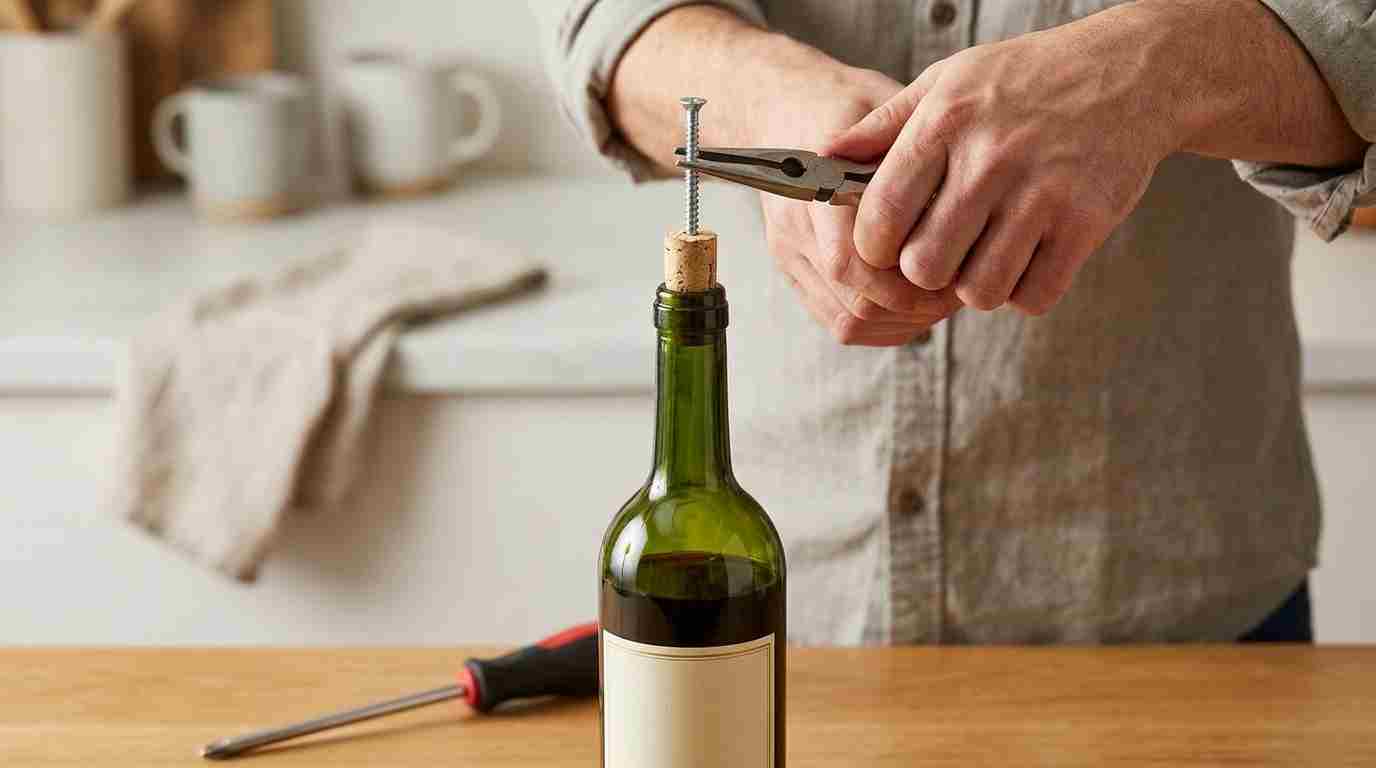
This is one of the more reliable methods if you have basic tools around the house.
What you need: A long screw (at least 2 inches), a screwdriver, and pliers or a hammer with a claw.
How to do it:
- Twist the screw into the center of the cork, leaving about half an inch sticking out.
- Grip the exposed part of the screw firmly with pliers, or slide the claw of a hammer underneath the screw head.
- Pull upward with steady pressure, twisting slightly if the cork resists.
Limitation: If the screw isn’t centered, it can pull out at an angle and rip through the side of the cork instead of lifting it cleanly. Using a longer screw gives you more grip and reduces this risk.
4. Two-Screw Method
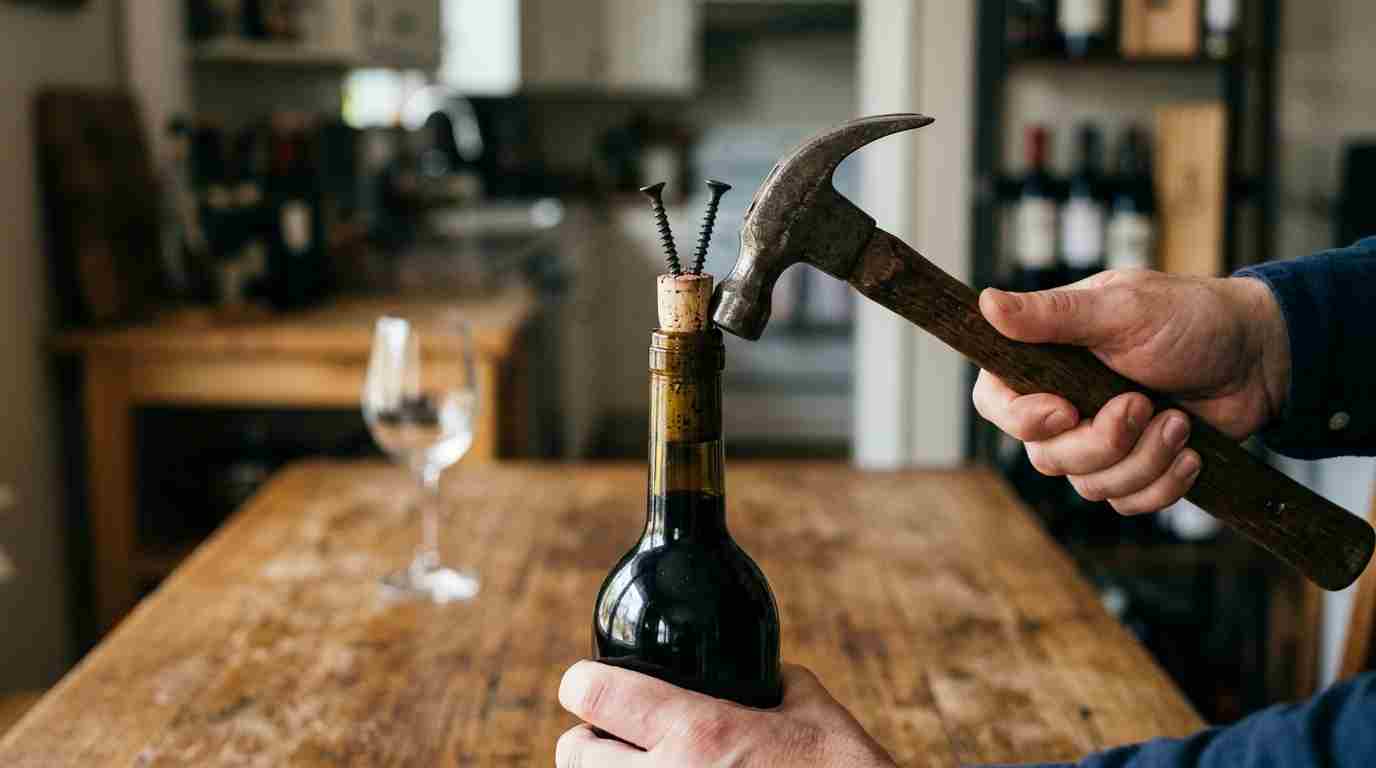
This variation solves the centering problem of the single-screw method by distributing the pulling force across two points.
How to do it:
- Screw two screws into the cork at slightly different angles, about half an inch apart, so their heads cross or sit close together.
- Slide the claw of a hammer under both screw heads at once.
- Lever the hammer backward slowly, using the bottle’s neck as a pivot point.
This method gives more even lift than a single screw, which matters especially with older corks that have become fragile and prone to crumbling under uneven pressure.
5. String or Wire Loop Method
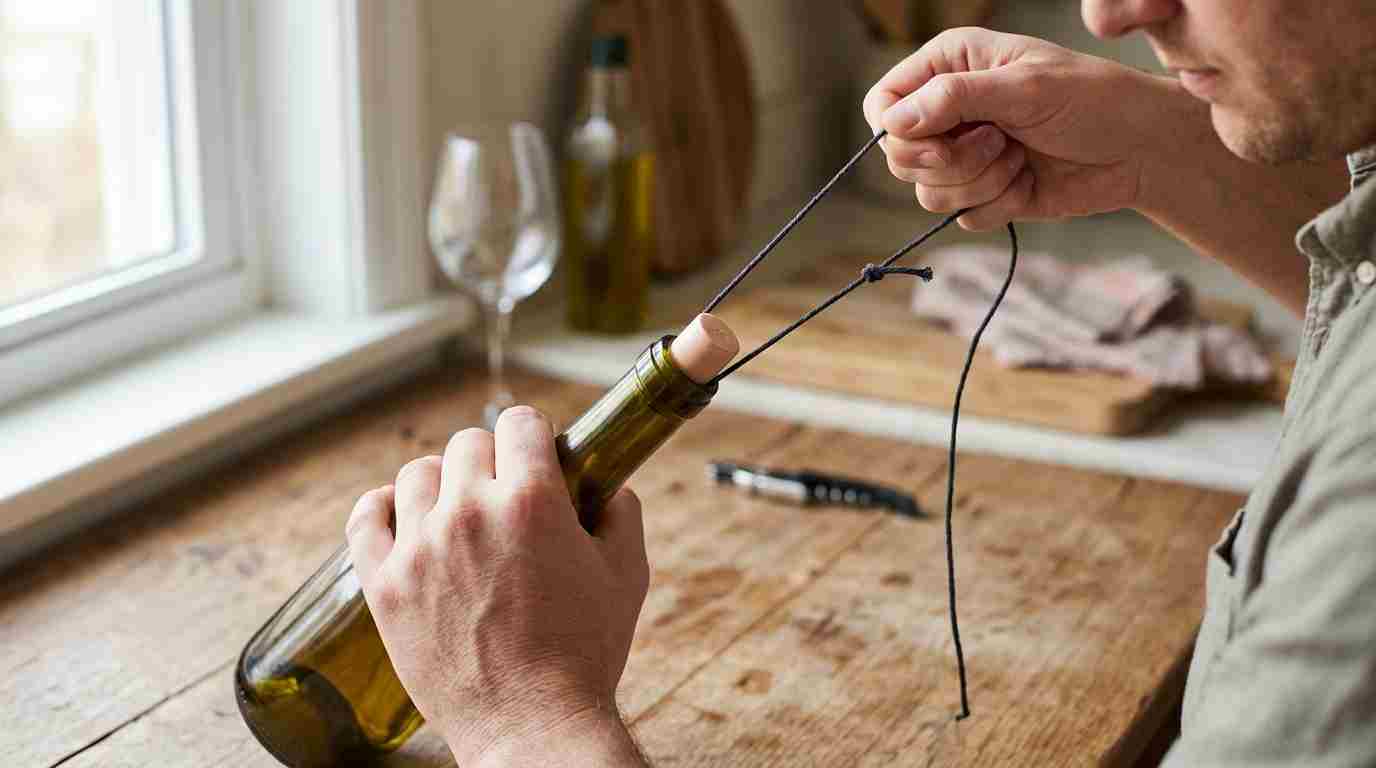
This method works best with synthetic or plastic corks, since they’re smoother and easier to loop a string around than natural cork, which tends to grip more tightly against the string.
What you need: A sturdy piece of string, thin rope, or a straightened wire coat hanger.
How to do it:
- Push the string or wire down along the side of the cork, between the cork and the bottle’s glass neck.
- Work it down until it passes below the bottom edge of the cork.
- Angle it so it forms a loop or hook under the cork.
- Pull upward firmly and steadily.
Limitation: Natural cork often resists this because the string can’t easily slide past its rough surface, and repeated attempts can push the cork further down into the bottle instead of up.
6. Heat Method Using a Lighter
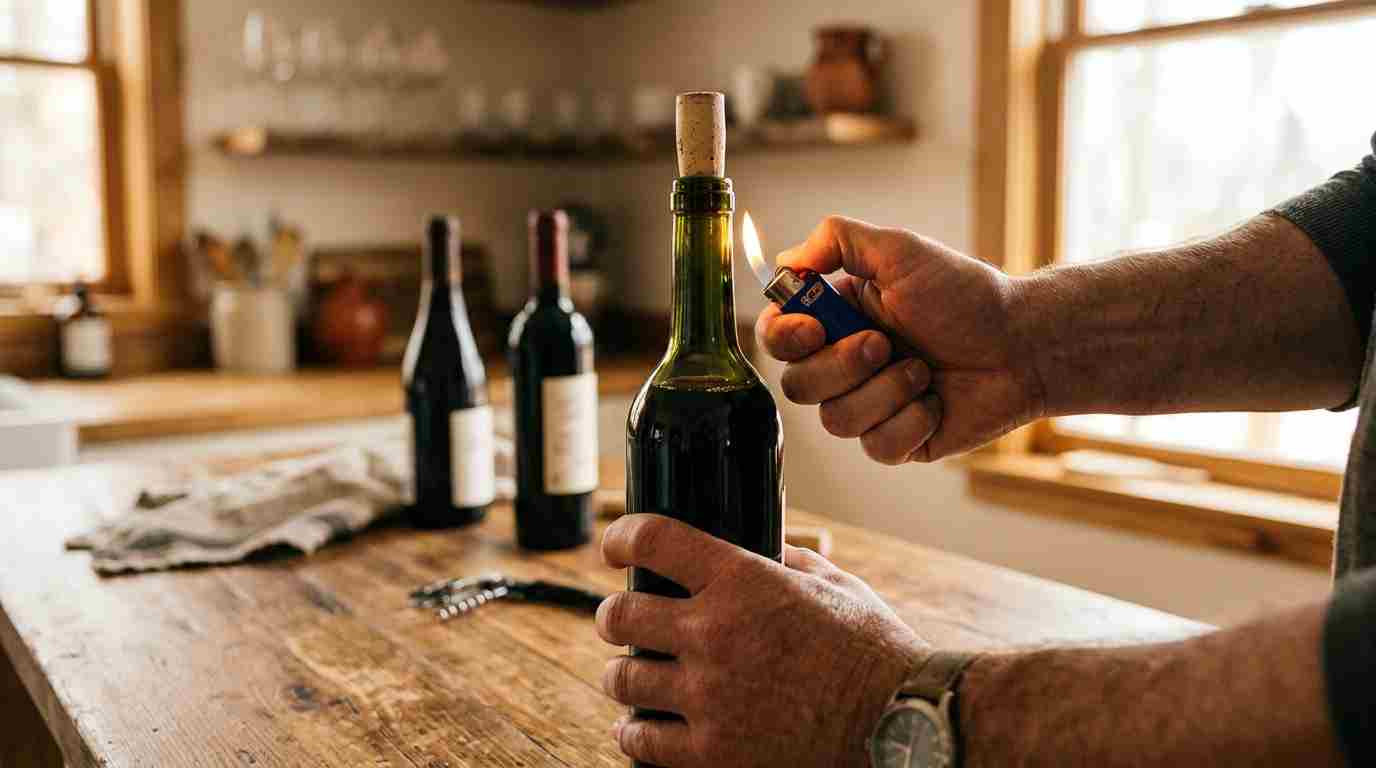
This method uses air pressure instead of physical force, which means less risk of pushing the cork inward or breaking it.
What you need: A butane lighter (a standard disposable lighter can work, though it takes longer).
How to do it:
- Hold the flame close to the neck of the bottle, just below where the cork sits, without touching the glass directly with the flame tip.
- Rotate the bottle slowly so the heat spreads evenly around the neck.
- Continue for 30 to 60 seconds. The air trapped between the wine and the cork expands as it heats, building pressure that pushes the cork upward until it pops out or loosens enough to pull by hand.
Limitation and safety note: Uneven heating can crack the glass, especially with thinner or older bottles, so keep the flame moving constantly rather than holding it in one spot. This method also doesn’t work well on bottles that are completely full, since there’s little air pocket to expand.
7. Bike Pump or Air Pump with a Needle
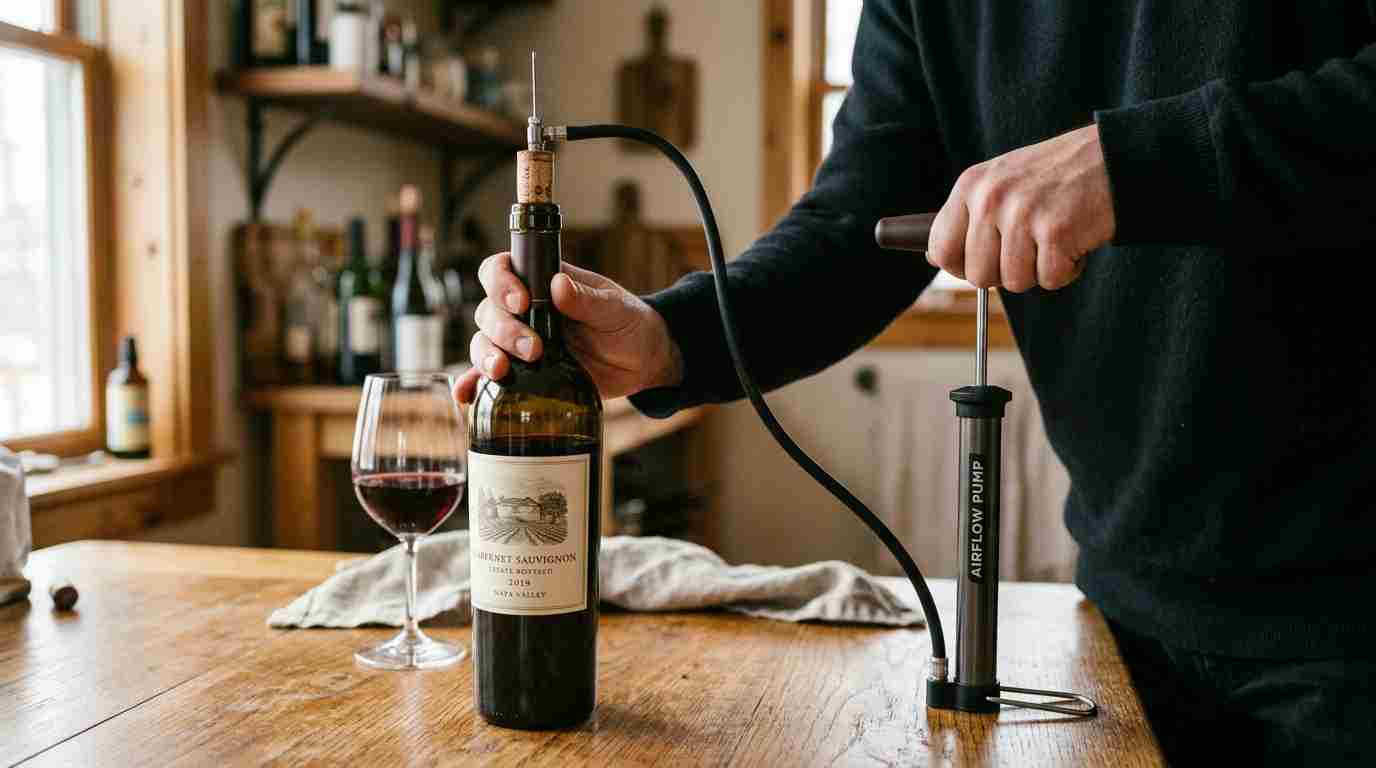
This method mirrors how professional wine preservation tools work, using air pressure to lift the cork without damaging it.
What you need: A needle-style inflation pump (the kind used for sports balls) or a bike pump adapted with a thin needle.
How to do it:
- Insert the needle through the center of the cork at an angle, pushing it far enough that the tip clears the bottom of the cork and enters the open bottle.
- Pump air steadily into the bottle.
- The building pressure pushes the cork upward and out, often quite quickly once enough air has been added.
Limitation: This method requires a needle thin enough to pass through cork without splitting it, and too much air pressure can cause the cork to shoot out forcefully, so keep the bottle pointed away from yourself and others while pumping.
Which Method Should You Choose?
| Method | Best For | Tools Needed | Difficulty |
|---|---|---|---|
| Push the cork in | Fastest option, any cork type | Spoon handle or pen | Easy |
| Shoe method | Natural cork, no extra tools | Solid shoe, wall | Moderate |
| Screw and pliers | Reliable grip and control | Screw, pliers | Moderate |
| Two-screw method | Fragile or older corks | Two screws, hammer | Moderate |
| String or wire loop | Synthetic corks | String or wire | Moderate |
| Heat method | Avoiding physical force | Lighter | Moderate, requires care |
| Bike pump with needle | Clean removal, minimal mess | Needle pump | Easy once set up |
Common Mistakes to Avoid
- Using a soft or hollow shoe for the shoe method, which absorbs impact instead of transferring it to the bottle.
- Forcing a screw in at an angle, which tears through the cork instead of lifting it whole.
- Applying direct flame to one spot on the glass, which raises the risk of cracking.
- Pointing the bottle toward yourself or others when using pressure-based methods like the pump or heat technique, since the cork can release suddenly.
Frequently Asked Questions (FAQs)
Is it safe to push a cork into the wine bottle?
Yes, it’s safe to drink from a bottle with the cork pushed inside, as long as you strain the wine to remove loose cork particles first. Use a coffee filter, cheesecloth, or a fine mesh strainer when pouring to catch any debris.
Why does the shoe method actually work?
Striking the shoe against a wall sends a shockwave through the liquid inside the bottle, and since liquid cannot compress, that force pushes directly against the underside of the cork. Repeated hits gradually lift the cork out a small amount at a time until it’s loose enough to pull.
Can heating the bottle damage the glass?
Yes, if you hold the flame in one spot for too long, uneven heat can cause the glass to crack, especially on older or thinner bottles. Keep the lighter moving constantly around the neck and never apply it directly to a fixed point for more than a second or two.
Does the string method work on all corks?
No, it works best on synthetic or plastic corks because they have a smoother surface that a string or wire can slide past easily. Natural cork is rougher and tends to grip the string instead, often pushing the cork down rather than lifting it out.
What should I do if the cork breaks apart?
Push the remaining pieces into the bottle rather than trying to dig them out, then pour the wine through a strainer or cheesecloth before serving. This prevents small cork fragments from ending up in the glass.
Which method is best if I have zero tools at home?
The shoe method is the best choice since it only requires a shoe and a wall, both of which are available almost anywhere. If you don’t want to use a shoe, pushing the cork in with your thumb or a sturdy household item is the next simplest backup.
Final Thoughts
Most of these methods rely on tools you already have at home, whether that’s a shoe, a screw, or a lighter. If you only need one reliable backup method, the screw and pliers approach offers a good balance of control and simplicity, while the shoe method remains the most practical option when you have zero tools available at all. Whichever method you choose, work over a sink or towel, and if the cork breaks apart, straining the wine afterward will save you from picking out small pieces glass by glass.