

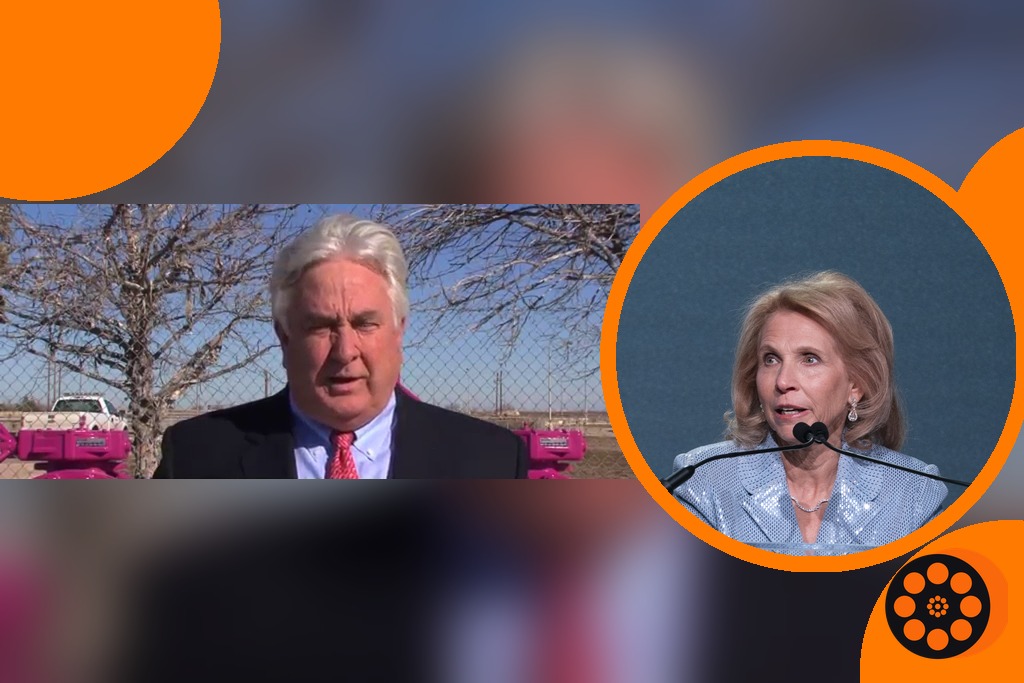
Tim Dove and Shari Redstone never worked together, are not related, and have no known public meeting, and this article will not pretend otherwise. Dove is a Texas oil executive who spent twenty five years at Pioneer Natural Resources and served as its chief executive. Redstone is a media heir who fought for control of her father’s empire, chaired Paramount Global, and then sold the family company. Their industries, oil and entertainment, could hardly be further apart. What makes the comparison honest and interesting is the ending both stories share: the companies that defined their careers were both sold in landmark deals, in 2024 and 2025.
Dove’s world was the Permian Basin, the vast West Texas oilfield where Pioneer became one of the most important shale producers in America. Redstone’s world was Hollywood and New York boardrooms, where her family controlled CBS, MTV, Nickelodeon, and the Paramount film studio through National Amusements. One led a company built by a founder he served under for two decades. The other inherited control of a company her grandfather founded and her father turned into an empire. This article tells both stories side by side, with the differences stated as plainly as the similarities.
Quick Facts
| Detail | Tim Dove | Shari Redstone |
|---|---|---|
| Known for | Former CEO of Pioneer Natural Resources | Former chair of Paramount Global |
| Born | 1956, exact date and birthplace not public | 14 April 1954, Washington, D.C. |
| Peak role | President and CEO of Pioneer, 2017 to 2019 | Chair of Paramount Global, 2019 to 2025 |
| Education | MIT; University of Chicago | Tufts University; Boston University |
| Spouse | Jenny Dove | Ira Korff, divorced 1992 |
Who Is Tim Dove?
Timothy L. Dove was raised in Dallas, Texas, and graduated from Jesuit College Preparatory School of Dallas in 1975 as valedictorian. He earned a degree in mechanical engineering from the Massachusetts Institute of Technology in 1979 and a master’s degree in business administration from the University of Chicago in 1981. His exact birth date and birthplace are not publicly documented, and they are not guessed at here.
Dove began his career in 1981 at Diamond Shamrock Corporation, working in business development and merger analysis, and continued with its upstream successor, Maxus Energy. In total he spent about thirteen years there before moving to the company where he would spend the rest of his executive career. He was never a household name, and his industry is one where chief executives rarely are, but inside American oil he was one of the most experienced operators of his generation.
Dove: Twenty Five Years at Pioneer
In 1994, Dove joined Parker and Parsley Petroleum as vice president for business development, working under its founder and chief executive, Scott Sheffield. He became a senior vice president in 1996 and played a key role in the 1997 merger of Parker and Parsley with MESA Inc. that created Pioneer Natural Resources. At Pioneer he rose steadily: executive vice president for business development, then executive vice president and chief financial officer in 2000, then president and chief operating officer in 2004, and a board director from 2013.
Pioneer became a pure play Permian Basin producer, sitting on some of the most valuable shale acreage in the Midland Basin. Dove’s two decades as Sheffield’s deputy made him the natural successor, and in May 2016 the company announced the plan: Sheffield would retire as chief executive at the end of 2016, and Dove would take over. On 1 January 2017, Dove became president and chief executive officer of Pioneer Natural Resources.
Dove: The Short Tenure and the Exit
Dove’s time at the top was brief. He led Pioneer through the shale industry’s shift from growth at any cost toward capital discipline and shareholder returns, continuing the company’s high intensity completion program in the Permian. Then, on 21 February 2019, Pioneer announced that Dove would retire as chief executive and director effective immediately, and that founder Scott Sheffield would return as chief executive the same day. Announcing his departure, Dove said: “I believe that, for me personally, it is the right time to step aside.”
Since leaving Pioneer, Dove has taken board and advisory roles rather than another chief executive job. He has served as an independent board member of Wildfire Energy, an advisory director for Oilfield Water Logistics, and an adviser to the board of Petro-Victory Energy. He is also chairman of the Jesuit Dallas Foundation. When ExxonMobil acquired Pioneer in a $59.5 billion deal that closed on 3 May 2024, Dove had been gone for five years and played no role in it. The sale was led by Sheffield and then by chief executive Richard Dealy. Any account that credits or blames Dove for the Exxon deal is simply wrong about the timeline.



Who Is Shari Redstone?
Shari Ellin Redstone was born on 14 April 1954 in Washington, D.C. Her grandfather, Michael Redstone, founded National Amusements, the theater chain that became the family holding company. Her father, Sumner Redstone, used that base to build one of the great media empires, acquiring Viacom in 1987 and CBS in 2000 and building them around brands such as MTV, Nickelodeon, Comedy Central, and the Paramount studio.
Redstone earned a bachelor’s degree from Tufts University in 1975 and a law degree from Boston University School of Law in 1978, followed by a master’s degree in law in 1980. She practiced corporate law, estate planning, and criminal law in the Boston area before joining the family business. She joined National Amusements in 1994 and became its president in 1999. She also served as vice chair of both Viacom and CBS Corporation, and in 2011 she co-founded the venture capital firm Advancit Capital.
Redstone: The Fight for the Empire
Shari Redstone’s path to the top ran through one of the most public corporate battles in American media. As Sumner Redstone aged into his nineties, questions about his mental competence became the subject of lawsuits, including a case brought by his former companion Manuela Herzer. In February 2016, Sumner resigned as executive chairman of CBS and Viacom, and Viacom’s board named Philippe Dauman chairman against Shari’s wishes.
The fight escalated through 2016. In May, Dauman was removed from the trust that would control the empire, and National Amusements moved to replace five Viacom directors. The battle ended with a settlement on 20 August 2016: Dauman resigned as chief executive, the board was reshuffled in the Redstones’ favor, and Shari’s position as her father’s successor was secured. Sumner Redstone died on 11 August 2020, aged 97. By then his daughter had already achieved the goal she had pursued for years: reuniting the empire by merging CBS and Viacom, a deal that closed on 4 December 2019 and made her chair of the combined company, renamed Paramount Global in 2022.
Redstone: Chair of Paramount and the Skydance Sale
As chair of Paramount Global, Redstone led a company under pressure from every side: a declining cable business, an expensive streaming race, and a heavy debt load. In July 2024, she agreed to sell control. Skydance Media and its partners would buy National Amusements for $2.4 billion and merge Skydance with Paramount. The Federal Communications Commission approved the deal on 24 July 2025, and it closed on 7 August 2025, ending thirty eight years of Redstone family control and making David Ellison chairman and chief executive of the combined Paramount Skydance Corporation.
Redstone left the board at the closing. Speaking to The New York Times about the sale, she summed up her decision in one line:
“I just wanted to be free.”
Her next chapter began quickly. On 16 September 2025 she was named chair of the board of Sipur, an Israel based studio known for the Emmy winning documentary We Will Dance Again and the Netflix series Bad Boy, and she also invested in the company. She remains associated with Advancit Capital, the venture firm she co-founded in 2011.
Two Companies, Two Sales, No Connection
It is worth stating plainly: there is no documented connection between Tim Dove and Shari Redstone. No shared company, board, deal, event, or statement links them, and no record shows that they have ever met. Pioneer drilled for oil in West Texas. Paramount sold entertainment in Hollywood. The two worlds never intersected.
The parallel that does hold is narrower and, stated carefully, accurate. Both are long tenure leaders identified with a single famous company, and both companies were ultimately acquired in landmark deals: Pioneer by ExxonMobil, closed in May 2024, and Paramount by Skydance, closed in August 2025. But the parallel is not symmetrical. Redstone personally negotiated and closed her family’s exit after fighting for a decade to control the company. Dove, a career professional manager at a founder led company, had retired five years before Pioneer’s sale and took no part in it. She sold the empire she inherited. He watched from outside as the company he helped build was sold by the founder who had returned to lead it.
Personal Lives
Dove is married to Jenny Dove, and they have four children. The couple made the lead gift for the Dove Fieldhouse at Jesuit College Preparatory School of Dallas, his old school. Beyond that, his family life is private, and no verified public photo of his wife could be found for this article.
Redstone’s former husband is Rabbi Ira A. Korff, whom she married in 1980 and divorced in 1992. They have three adult children, Brandon, Kimber, and Tyler Korff. Her father, Sumner Redstone, remained the defining figure of her professional life: she spent years as his deputy and presumed successor, fought publicly over his legacy while he was alive, and completed the sale of his empire five years after his death.
What They Share, and What They Do Not
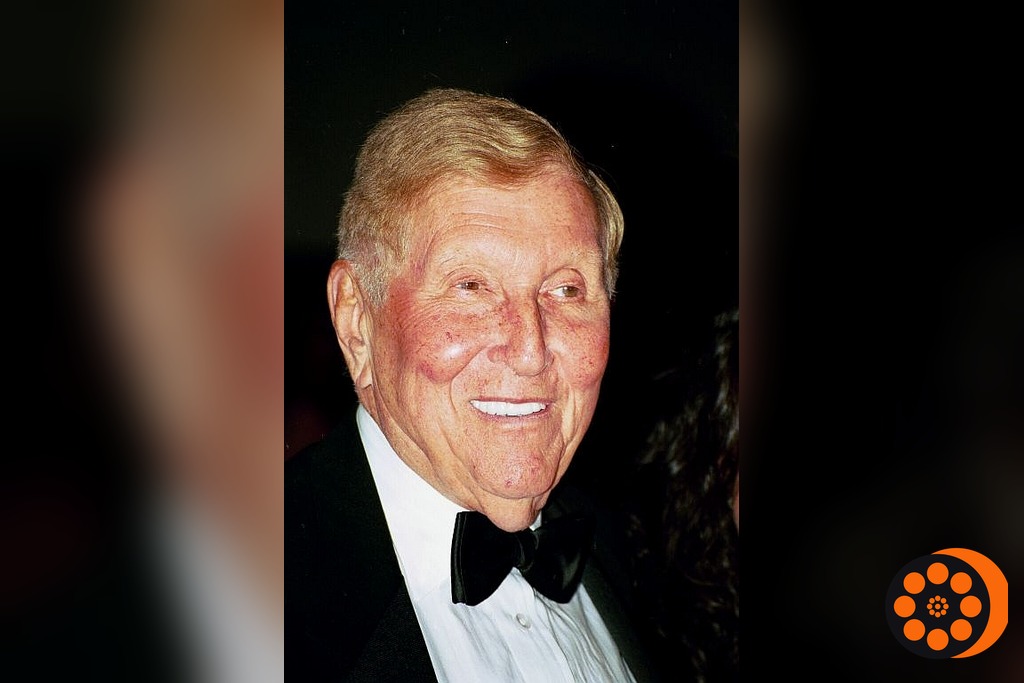
Both Dove and Redstone were insiders who waited a long time for the top job and then held it during the most turbulent years in their industries. Dove spent twenty two years as a deputy before becoming chief executive, just as the shale boom gave way to investor demands for discipline. Redstone spent two decades as her father’s deputy and vice chair before becoming chair, just as the television business her father had mastered began to shrink. Each of them, in other words, reached the top at the moment the old model started to end.
The differences matter more. Redstone’s story is about inheritance, control, and family: a daughter who refused to be pushed aside, won a boardroom war, and chose to sell. Dove’s story is about professional management: an engineer and dealmaker who served one company for twenty five years, stepped aside after two, and lived a quiet civic life afterward. One sold a family empire on her own terms. The other handed a founder’s company back to its founder. That contrast, not any invented link, is why their stories belong in the same article.
What Is Known and What Is Not Public
| Known and confirmed | Not public or not verified |
|---|---|
| Dove was Pioneer’s CEO from January 2017 to February 2019 | Dove’s exact birth date and birthplace, which are not publicly documented |
| ExxonMobil closed its Pioneer acquisition in May 2024, five years after Dove left | Any role for Dove in the Exxon deal, because he had none |
| Redstone chaired Paramount Global until the Skydance closing in August 2025 | Redstone’s personal proceeds from the sale beyond the reported $2.4 billion paid for National Amusements |
| Sumner Redstone died in August 2020, aged 97 | Private details of either family beyond what is already public |
| No connection exists between Dove and Redstone | Any claim that the two have met or dealt with each other |
Figures for either person’s net worth circulate online, but they are estimates, not confirmed facts, and are left out here. Press reports about Redstone’s personal proceeds from the Skydance transaction go beyond the confirmed $2.4 billion paid for National Amusements, so only that headline figure is used. This article reports only what reliable public records confirm.
Frequently Asked Questions
Who is Tim Dove?
Tim Dove is a Texas oil executive. He spent twenty five years at Pioneer Natural Resources and its predecessor, rose from business development roles to chief financial officer and chief operating officer, and served as president and chief executive from January 2017 until his retirement in February 2019, when founder Scott Sheffield returned.
Who is Shari Redstone?
Shari Redstone is an American media executive and heir, born on 14 April 1954. She is the daughter of Sumner Redstone, was president of National Amusements, chaired Paramount Global from 2019, and sold the family’s controlling stake to Skydance in a deal that closed in August 2025. She now chairs the Israeli studio Sipur.
Are Tim Dove and Shari Redstone connected?
No. They worked in different industries, energy and media, and there is no documented meeting, deal, board, or business relationship between them. The only parallel is that both are long tenure leaders whose famous companies were acquired, Pioneer in 2024 and Paramount in 2025.
Did Tim Dove sell Pioneer to ExxonMobil?
No. Dove retired in February 2019. ExxonMobil’s $59.5 billion acquisition of Pioneer was announced in October 2023 and closed on 3 May 2024, led by Scott Sheffield and then chief executive Richard Dealy. Dove had been gone for five years and had no role in the deal.
Is Shari Redstone still chair of Paramount?
No. She left when the Skydance merger closed on 7 August 2025, which ended thirty eight years of Redstone family control of Paramount. David Ellison became chairman and chief executive of the combined company. In September 2025, Redstone became chair of the Israeli studio Sipur.
Who was Shari Redstone’s father?
Her father was Sumner Redstone, the media mogul who acquired Viacom in 1987 and CBS in 2000 and built them into one of the world’s largest entertainment empires. He died on 11 August 2020, aged 97. Her grandfather, Michael Redstone, founded the family’s original company, National Amusements.
Conclusion
Tim Dove and Shari Redstone end their stories in surprisingly similar places for two people who never met: as former leaders of famous companies that no longer exist independently. He served a founder for twenty five years, led Pioneer briefly, and stepped aside with grace. She fought for her inheritance in public, chaired Paramount through its hardest years, and sold it on terms she chose. One story is about loyalty to a company. The other is about loyalty to a family. Both are about what happens to the people at the top when the industry beneath them changes for good.