
If you’ve been scrolling job boards looking for something that actually pays the bills—without locking you into a cubicle or demanding four years of college debt—you’re not alone. Millions of Americans are rethinking what a “stable career” looks like, and a growing number are landing on the same answer: home health care. Not as a placeholder, but as a genuine long-term move.
Here’s the thing most career advice columns won’t tell you. The biggest hiring boom of the next decade isn’t in tech or AI. It’s in living rooms, kitchens, and bedrooms across the country—wherever aging Americans need help with daily life.
The Silver Tsunami Isn’t Coming—It’s Already Here
Demographers have been warning about this for years, and the numbers have finally caught up. By 2030, every single baby boomer will be over 65. That’s roughly 73 million people. The U.S. Bureau of Labor Statistics projects that home health aide positions will grow by about 22% between 2022 and 2032—a pace that dwarfs almost every other occupation in the country.
And it makes sense when you think about where most seniors actually want to spend their final years. Overwhelmingly, the answer is at home. Not in a facility, not in a hospital ward—at home, with familiar surroundings and some measure of independence. That preference is creating a vacuum of demand that the current workforce simply can’t fill. The home care industry is short-staffed by hundreds of thousands of workers right now, and the gap is widening every quarter.
Getting Certified Doesn’t Take Years—It Takes Weeks
Compare the HHA path to other roles in healthcare. A registered nurse needs at minimum a two-year associate degree, often a four-year BSN, plus clinical rotations and board exams. An EMT certification takes several months. Even a certified nursing assistant program can run six to twelve weeks depending on the state.
Home health aide training programs, on the other hand, typically require 75 to 120 hours of combined classroom instruction and hands-on clinical work. In many states, you can realistically go from zero to certified in four to six weeks. That’s not a typo. For people juggling existing jobs, family obligations, or tight finances, that timeline is a game-changer.
Why the Certification Exam Deserves Your Respect
An HHA certification provides instant job security and the freedom to work in a variety of home contexts, in contrast to many entry-level positions. The state-mandated competency exam, however, is more than just a formality; it assesses everything from emergency response to infection management. Many prospective assistants use a thorough HHA practice test to become acquainted with real-world situations before their formal evaluation in order to avoid the annoyance of a retake.
Think of it this way: the exam exists because your future clients are vulnerable. They’re counting on you to know how to handle a blood pressure cuff, recognize the signs of a diabetic emergency, and transfer someone from a wheelchair to a bed without injury. Passing on the first try isn’t just about saving yourself time. It signals to agencies and families that you’re ready to be trusted with their loved ones.


From Side Hustle to Career Ladder
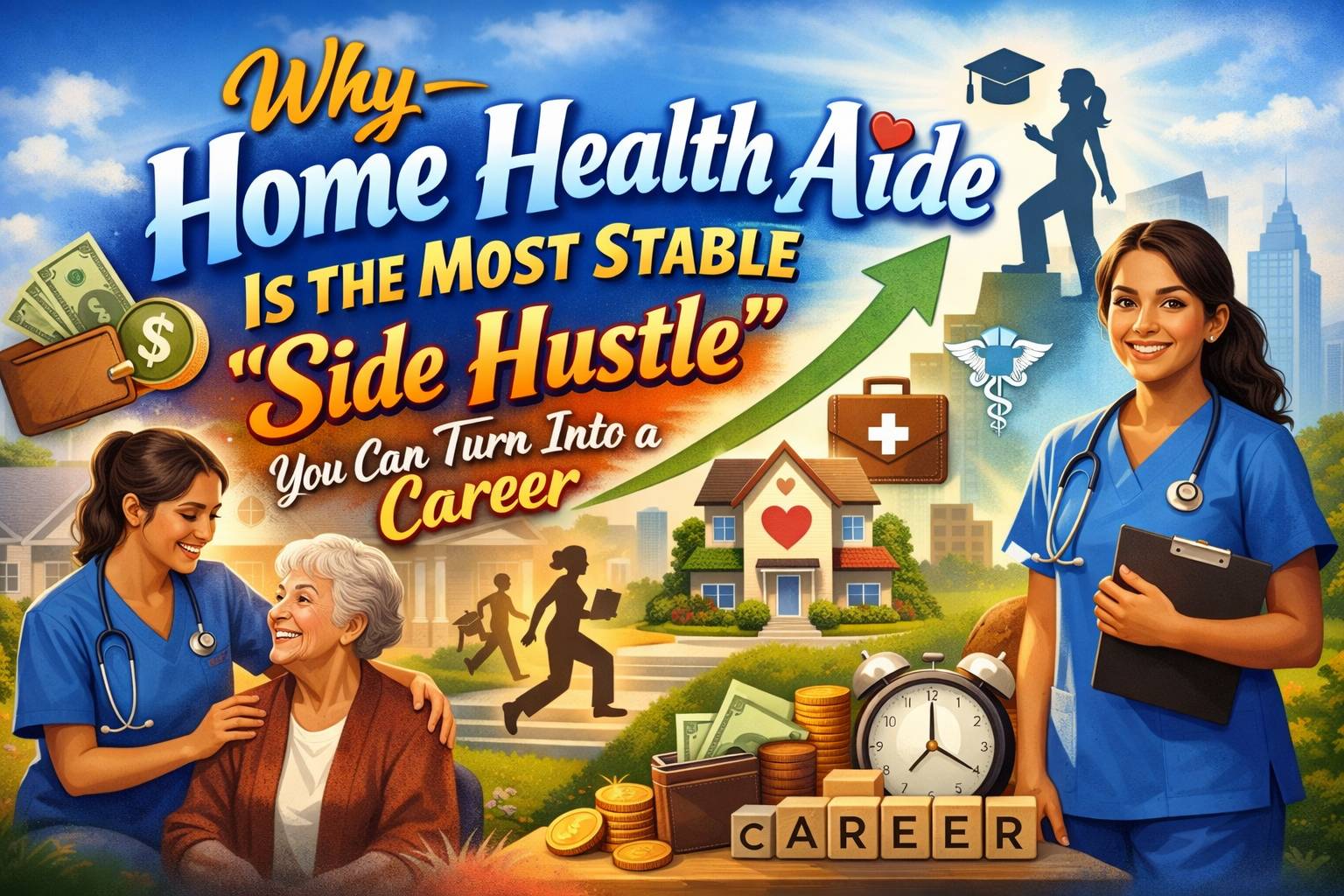
One of the most underrated aspects of starting as a home health aide is where it can lead. Plenty of HHAs use the role as a stepping stone into nursing, physical therapy, or healthcare administration. The clinical exposure you get—working directly with patients, managing medications, coordinating with doctors—builds a foundation that looks strong on any healthcare school application.
Others carve out a solid living staying in home care itself, picking up private clients, specializing in dementia or palliative support, or eventually launching their own small care agency. In an economy where entire industries can get disrupted overnight by a new app or a shift in trade policy, this kind of demand—rooted in basic human need—offers something rare: genuine stability.
The Bottom Line
The care economy isn’t a trend. It’s a demographic inevitability. And for anyone willing to invest a few weeks of training and take the certification process seriously, a home health aide role offers something most “side hustles” can’t: predictable income, meaningful work, and a clear path forward—recession or not.
The window is wide open. The question is whether you’ll walk through it.