
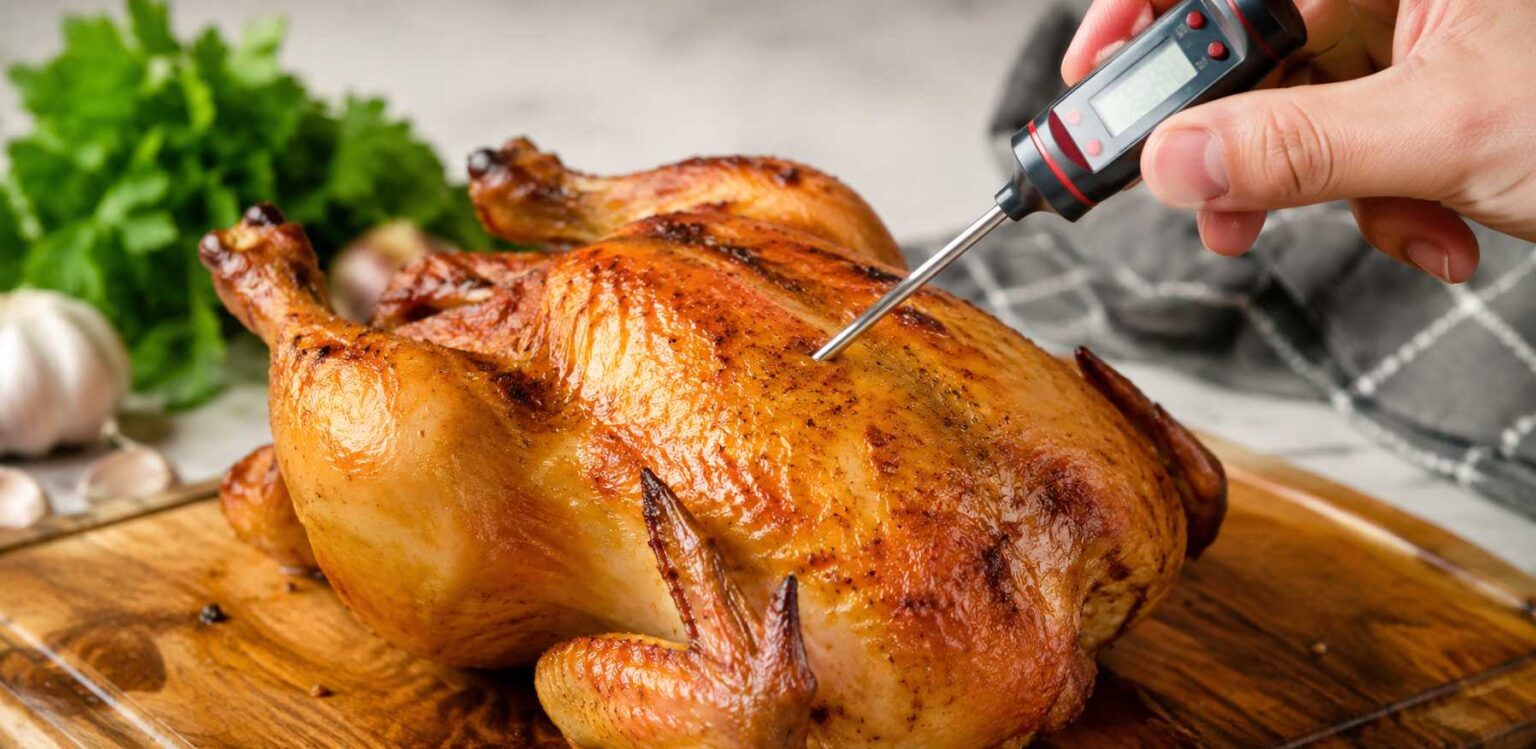
Chicken is done when its internal temperature reaches 165°F (74°C) at the thickest part of the meat. This is the only measurement that confirms the meat is safe to eat, because it’s the point at which harmful bacteria like Salmonella and Campylobacter are destroyed. Color, texture, and juice clarity can support this reading, but none of them are reliable on their own.
Why a Thermometer Beats Every Other Method
Visual cues are shaped by too many variables to trust by themselves. A chicken breast can look pale and firm on the outside while the center is still underdone, especially with thicker cuts or uneven heat. On the other hand, some fully cooked chicken retains a pink tint near the bone, particularly in younger birds, because of a pigment in the bone marrow that seeps into nearby tissue during cooking. Neither situation tells you anything reliable about safety.
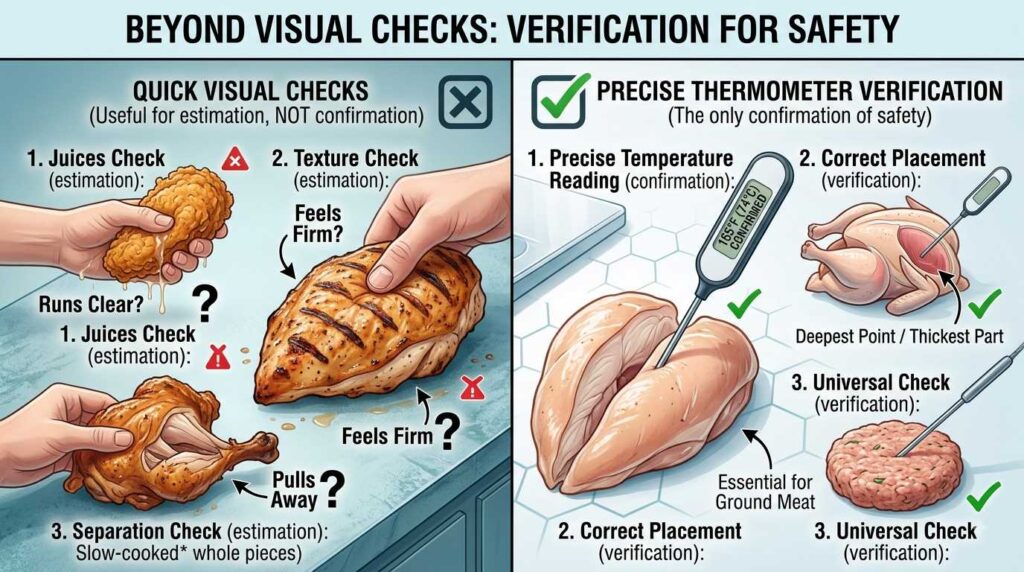
An instant-read meat thermometer removes the guesswork. Insert it into the thickest part of the meat without touching bone, since bone conducts heat differently and can give a false high reading.
Where to check for different cuts:
- Whole chicken: inner thigh, close to the breast, away from the bone
- Bone-in breasts or thighs: thickest section, angled away from bone
- Boneless breasts: center of the thickest part
- Ground chicken (patties, meatballs, sausage): center of the piece, since bacteria can be mixed throughout ground meat rather than staying on the surface
Signs Chicken Is Cooked (Used Alongside a Thermometer)
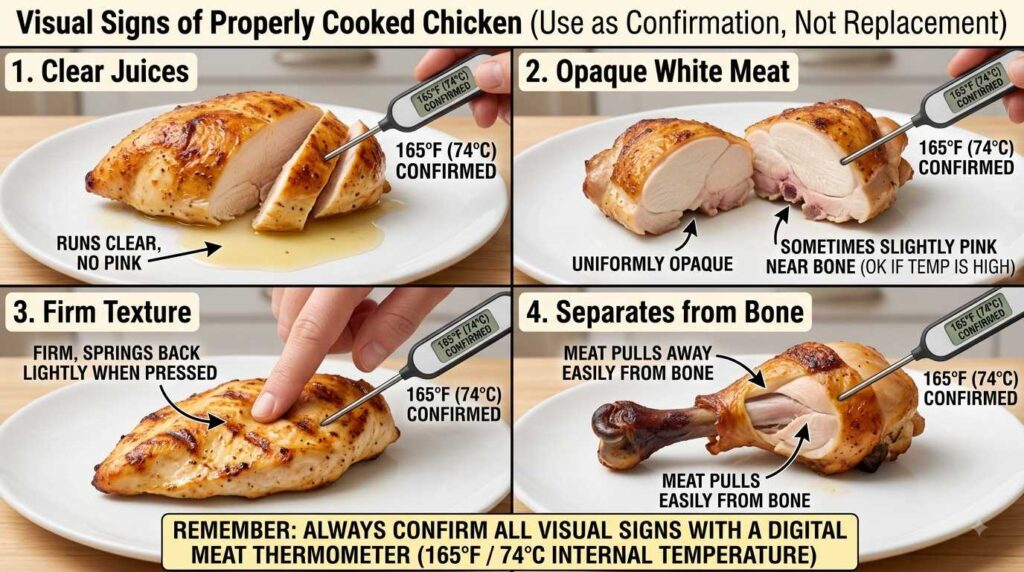
These indicators are useful for a quick check, but they should confirm a temperature reading, not replace it.
| Sign | What to Look For | Reliability |
|---|---|---|
| Juices | Run clear, not pink or red | Moderate, can vary with cooking method |
| Color | Opaque white throughout | Moderate, bone-in cuts may stay pink even when done |
| Texture | Firm, springs back slightly when pressed | Low alone, useful as a secondary check |
| Bone-in pieces | Meat pulls easily away from the bone | Moderate, more reliable for slow-cooked or roasted chicken |
Ground chicken behaves differently from whole cuts. It should always look uniformly opaque with no translucent or glossy patches, and a thermometer reading is especially important here since visual cues are less dependable in ground meat.
Common Mistakes That Lead to Undercooked or Overcooked Chicken
Cutting into the meat to check. Slicing chicken open to inspect the color releases juices and dries out the meat, and it still doesn’t confirm the internal temperature accurately. A thermometer gives a precise answer without wasting moisture.

Judging doneness by cooking time alone. Recipe times are estimates based on average conditions. Oven calibration, the starting temperature of the meat (refrigerated versus room temperature), pan material, and the exact thickness of the cut all shift how long chicken actually needs. Two chicken breasts of different thickness cooked for the same amount of time will not finish at the same rate.
Ignoring carryover cooking. Chicken continues cooking slightly after it’s removed from heat, as residual heat keeps working through the meat. Pulling chicken at exactly 165°F and letting it rest for three to five minutes allows this carryover to finish the job without drying out the meat. Some cooks pull chicken breasts at 160°F specifically to account for this rise, though checking again after resting is the safer habit for anyone unfamiliar with their equipment.
Trusting pink juices from bone-in cuts as proof of undercooking. Near the bone, pigment can tint juices slightly even in fully cooked chicken. Temperature is the deciding factor here, not juice color.
Doneness by Cooking Method
Different cooking methods create different visual results, even at the same internal temperature.
- Grilled or pan-seared: Look for a firm exterior with no pink juices when pierced, but rely on the thermometer since grill marks can create a done-looking crust over undercooked meat.
- Baked or roasted: Insert the thermometer into the thigh for whole birds, since thighs take longer to cook than breast meat and reaching 165°F there guarantees the rest of the bird is safe.
- Boiled or poached: Cut into the thickest part as a visual check, but confirm with a thermometer, since gentle cooking methods can leave the center underdone even when the outside looks fully cooked.
- Fried: Breading holds heat and can make chicken look and feel done on the outside well before the interior reaches a safe temperature. A thermometer inserted through the crust into the meat is the only dependable check here.
What Happens If Chicken Is Undercooked
Eating undercooked chicken risks foodborne illness from bacteria that live on raw poultry. Symptoms typically include stomach cramps, diarrhea, fever, and nausea, usually appearing within a day or two of eating contaminated meat. Cooking chicken to 165°F kills these bacteria regardless of the cut or cooking method, which is why temperature, not appearance, is the standard used by food safety agencies.
Quick Reference
- Safe internal temperature: 165°F (74°C)
- Check the thickest part of the meat, avoiding bone
- Let chicken rest for a few minutes after cooking to allow carryover heat and juice redistribution
- Use visual signs (clear juices, opaque color, firm texture) as a backup, not a replacement for a thermometer
- Ground chicken needs the same temperature check as whole cuts, checked at the center
A reliable meat thermometer costs little and removes almost all guesswork from cooking chicken safely. Once you get used to checking temperature instead of relying on color or time, undercooked or overdone chicken becomes far less common in your kitchen.
Frequently Asked Questions (FAQs)
Is it safe to eat chicken if it’s slightly pink near the bone?
Yes, as long as the internal temperature has reached 165°F. Pink near the bone often comes from a pigment in the bone marrow that can seep into surrounding tissue during cooking, especially in younger chickens. It’s a cosmetic issue, not a safety one, provided the temperature check confirms doneness.
Can I rely on cooking time instead of a thermometer?
No, not reliably. Cooking time is only an estimate, and actual cook time depends on the thickness of the cut, whether the chicken started cold or at room temperature, oven accuracy, and the cooking method used. Two pieces of similar size can still finish several minutes apart. A thermometer gives an exact answer that time alone cannot.
Does cutting into chicken to check if it’s done work?
It can give a rough visual clue, but it’s not accurate and it dries out the meat by releasing juices. Cut chicken can also look done on the surface while the center is still underdone. A thermometer inserted into the thickest part is a more accurate and less wasteful way to check.
Why do chicken breasts sometimes look done but taste undercooked?
This usually happens with thicker or unevenly shaped breasts, where the outside cooks faster than the center. Searing or browning can create a done-looking crust well before the middle reaches a safe temperature. Checking the thickest part with a thermometer avoids this problem.
Should I let chicken rest before checking if it’s fully cooked?
Yes, resting for three to five minutes after cooking allows carryover heat to finish cooking the center and lets juices redistribute through the meat. If chicken is pulled right at 165°F, resting confirms and locks in that temperature rather than letting it drop.
Is ground chicken harder to check for doneness than whole cuts?
Yes, because bacteria in ground meat can be mixed throughout rather than staying on the surface, unlike a solid cut where surface cooking kills most bacteria early. Ground chicken should reach 165°F at the center, checked with a thermometer, and should look uniformly opaque with no translucent patches.