

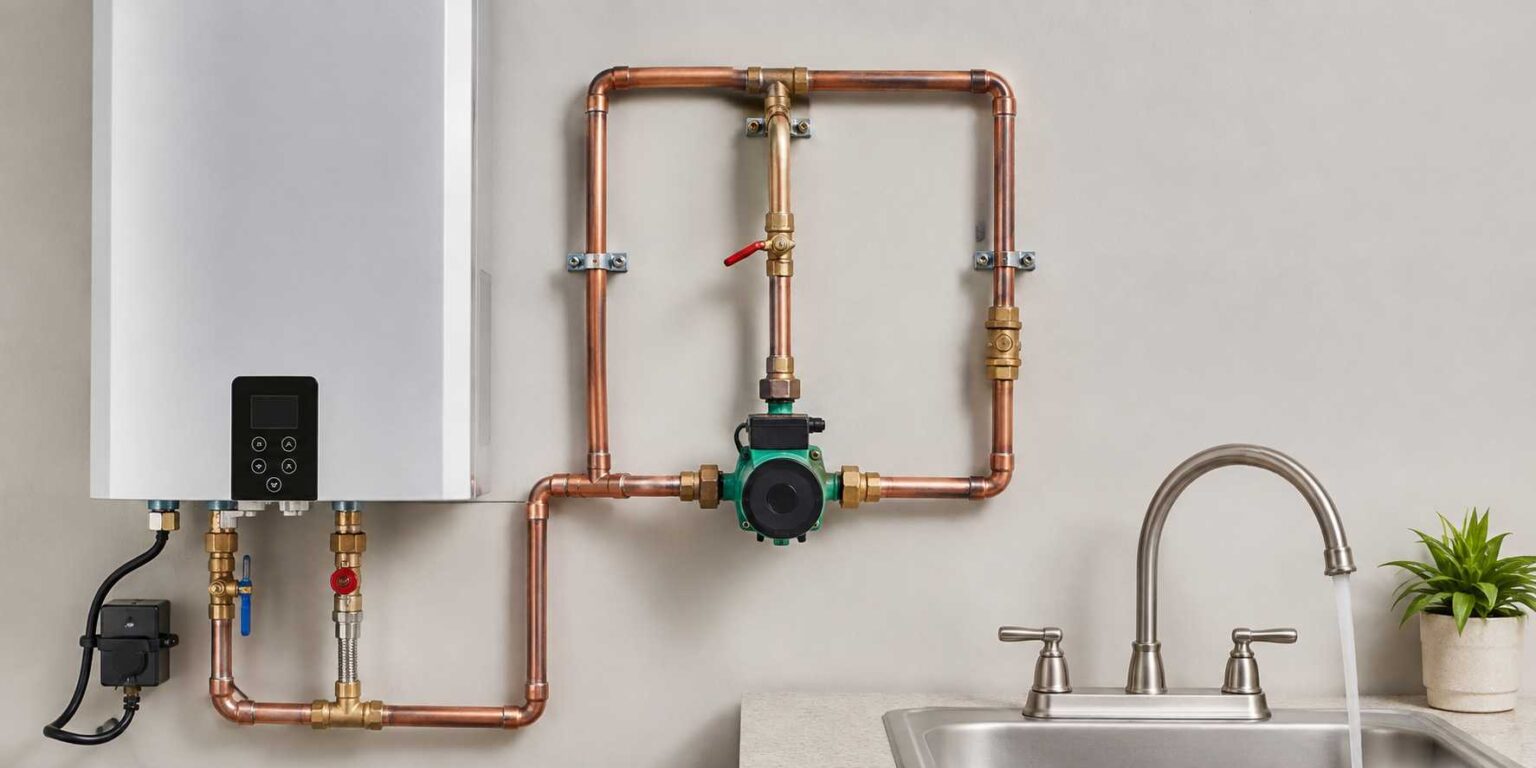
A hot water recirculation pump keeps water moving through your pipes so hot water reaches the faucet almost instantly, instead of you waiting while cold water drains out first. Paired with a tankless water heater, it solves one of the most common complaints owners have: the long wait, sometimes called the “cold water sandwich,” where you get a burst of leftover hot water followed by cold water before the tankless unit catches up.
How It Works With a Tankless Heater
A tankless heater only produces hot water when it senses flow above a certain rate, usually between 0.4 and 0.6 gallons per minute. A recirculation pump pushes water through the hot water line continuously or on a schedule, so the heater fires up and keeps the line primed with hot water even before anyone opens a tap.
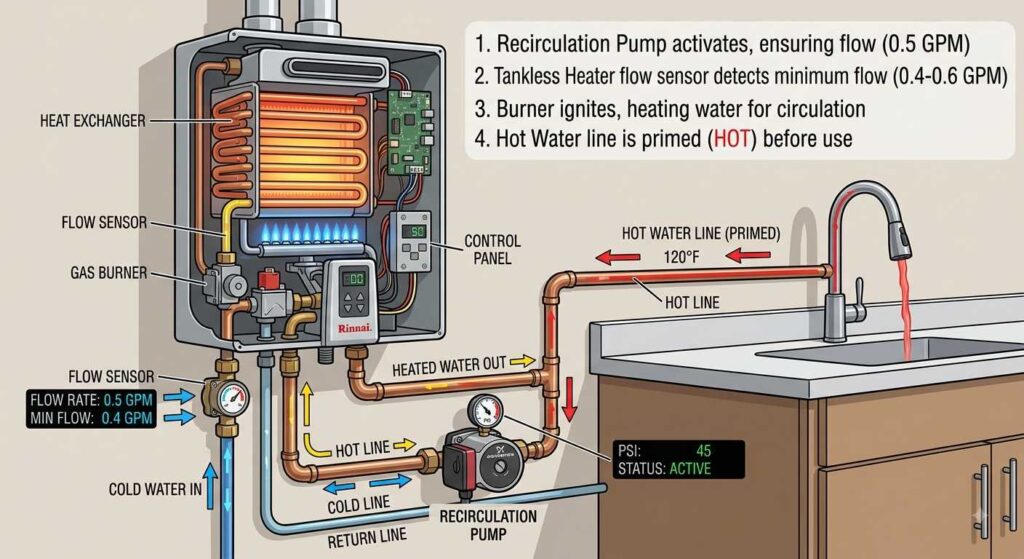
This is where tankless systems differ from tank heaters. A tank always has a reserve of hot water sitting ready, so recirculation is mostly about convenience. A tankless unit has no reserve, so the pump is doing more work: it has to trigger the heater’s minimum flow rate correctly, or the heater may not ignite at all, or worse, it may cycle on and off repeatedly. That kind of short-cycling wears down the heat exchanger faster and shortens the unit’s lifespan.
Types of Recirculation Systems
Dedicated return line A separate pipe runs from the farthest fixture back to the water heater, creating a closed loop. This is the most efficient and quietest setup because it never touches the cold water supply. It’s straightforward in new construction but expensive to retrofit into an existing home since it usually means opening walls.
Crossover or comfort valve system Instead of a dedicated pipe, the pump uses the existing cold water line as the return path through a bypass valve, usually installed under the sink farthest from the heater. No new plumbing is required, which makes it the most common retrofit option. The trade-off is that the cold line can run slightly warm for a few seconds after the pump cycles, which some people notice with single-handle mixer faucets.
On-demand pumps These run only when triggered, by a push-button, a phone app, or a motion sensor near the sink. They’re the most energy-efficient choice because the pump isn’t running on a fixed schedule. The wait for hot water is still a few seconds shorter than a passive line, but not instant, since the pump has to run briefly before hot water arrives.
Timer or aquastat-controlled pumps These run on a set schedule, or switch on when the water in the line drops below a certain temperature. They guarantee hot water is ready at predictable times of day but use more electricity than on-demand systems since they run whether or not anyone actually needs hot water at that moment.



Built-In vs Add-On Pumps
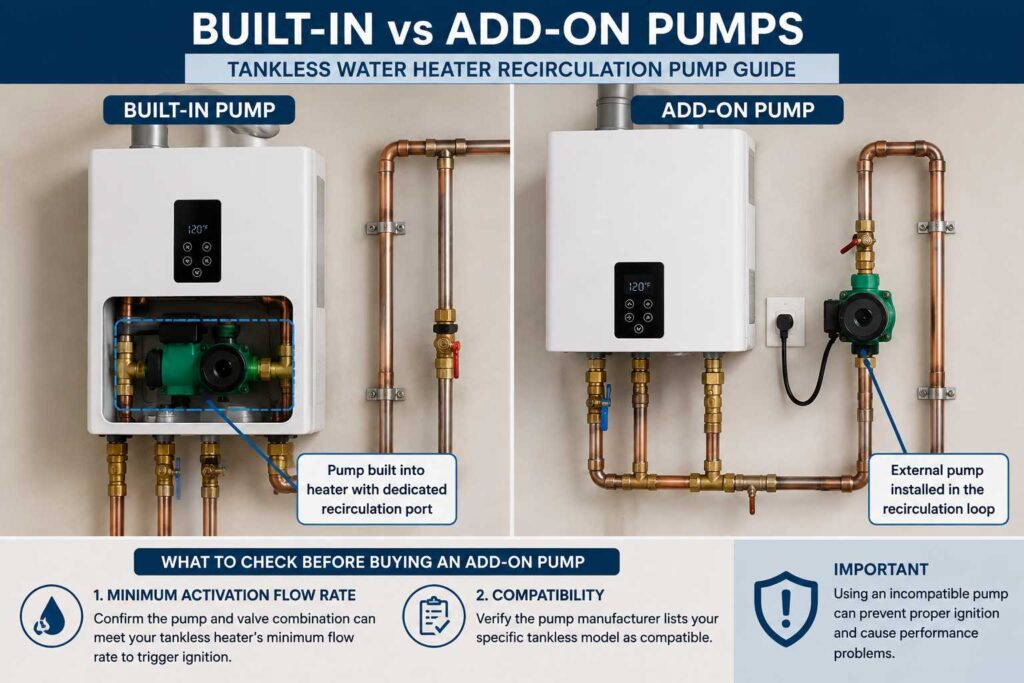
Some tankless heaters, mostly higher-end models, come with a recirculation pump and dedicated port built into the unit. This is the cleanest setup because the manufacturer has already matched the pump’s flow characteristics to the heater’s ignition requirements. If your tankless heater doesn’t have this feature, you’ll need an external pump, and compatibility becomes your responsibility.
Before buying an external pump, check two things: the heater’s minimum activation flow rate, and whether the pump manufacturer lists your specific tankless model as compatible. Some pump makers publish a defined compatibility list rather than claiming universal fit, and installing a mismatched pump is one of the most common causes of tankless heaters failing to fire correctly after a recirculation system is added.
Key Components to Know
| Component | Purpose |
|---|---|
| Circulator pump | Moves water through the loop; should be bronze, brass, or stainless for potable water contact |
| Bypass or crossover valve | Connects hot and cold lines at the fixture farthest from the heater in non-dedicated systems |
| Check valve | Stops backflow and keeps water moving in one direction |
| Timer or control module | Manages when the pump runs, if not using on-demand activation |
What to Check Before Installing
- Minimum flow rate match: confirm the pump and bypass valve combination can trigger your heater’s minimum GPM without causing short-cycling.
- Pipe insulation: insulating the hot water lines reduces heat loss between cycles and improves how long water stays usable after the pump shuts off, regardless of which system you choose.
- Noise level: pumps that run early morning or late at night are more noticeable if they’re not rated for quiet operation; look for sealed or lubricated bearings if this matters to you.
- Power source: under-sink pumps for crossover systems need an outlet nearby, which isn’t always available in older bathrooms without an electrician’s help.
- Local plumbing code: some jurisdictions have specific requirements for backflow prevention on recirculation systems, so it’s worth checking before installation rather than after.
Common Mistakes to Avoid
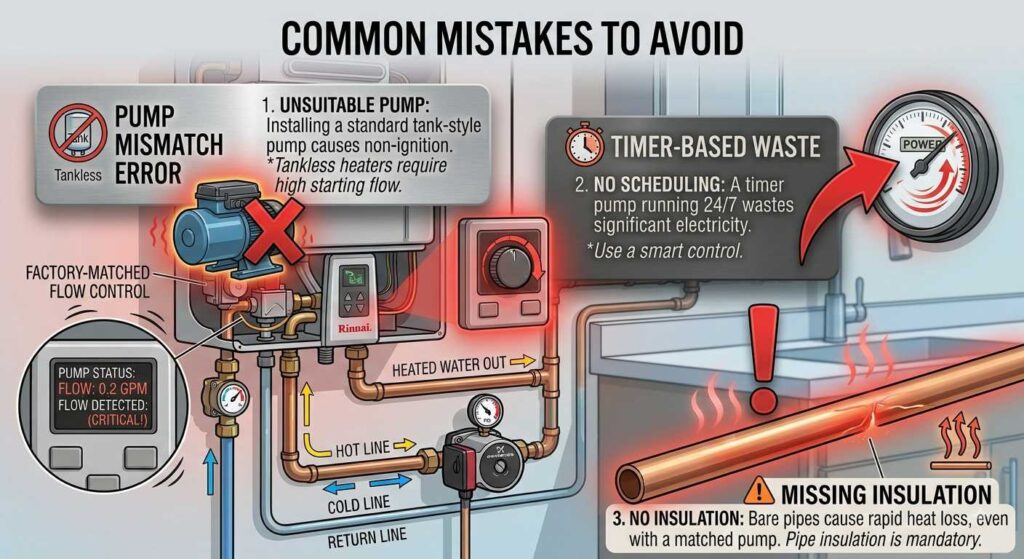
Installing a pump not rated for tankless systems is the single biggest error, since standard pumps built for tank heaters don’t account for the minimum flow requirement. Running a timer-based pump continuously instead of scheduling it around actual usage hours also wastes a noticeable amount of electricity over a year. And skipping pipe insulation undercuts the efficiency of even a well-chosen pump, since heat still escapes from bare pipe between cycles.
Is It Worth Installing?
For a tankless heater, a recirculation pump is worth it if the heater is located far from frequently used fixtures, such as a primary bathroom on the opposite end of the house. In smaller homes where the heater sits close to most taps, the wait time may already be short enough that the added cost and complexity aren’t justified. The right choice depends less on the type of heater and more on how far hot water actually has to travel before it reaches you.