

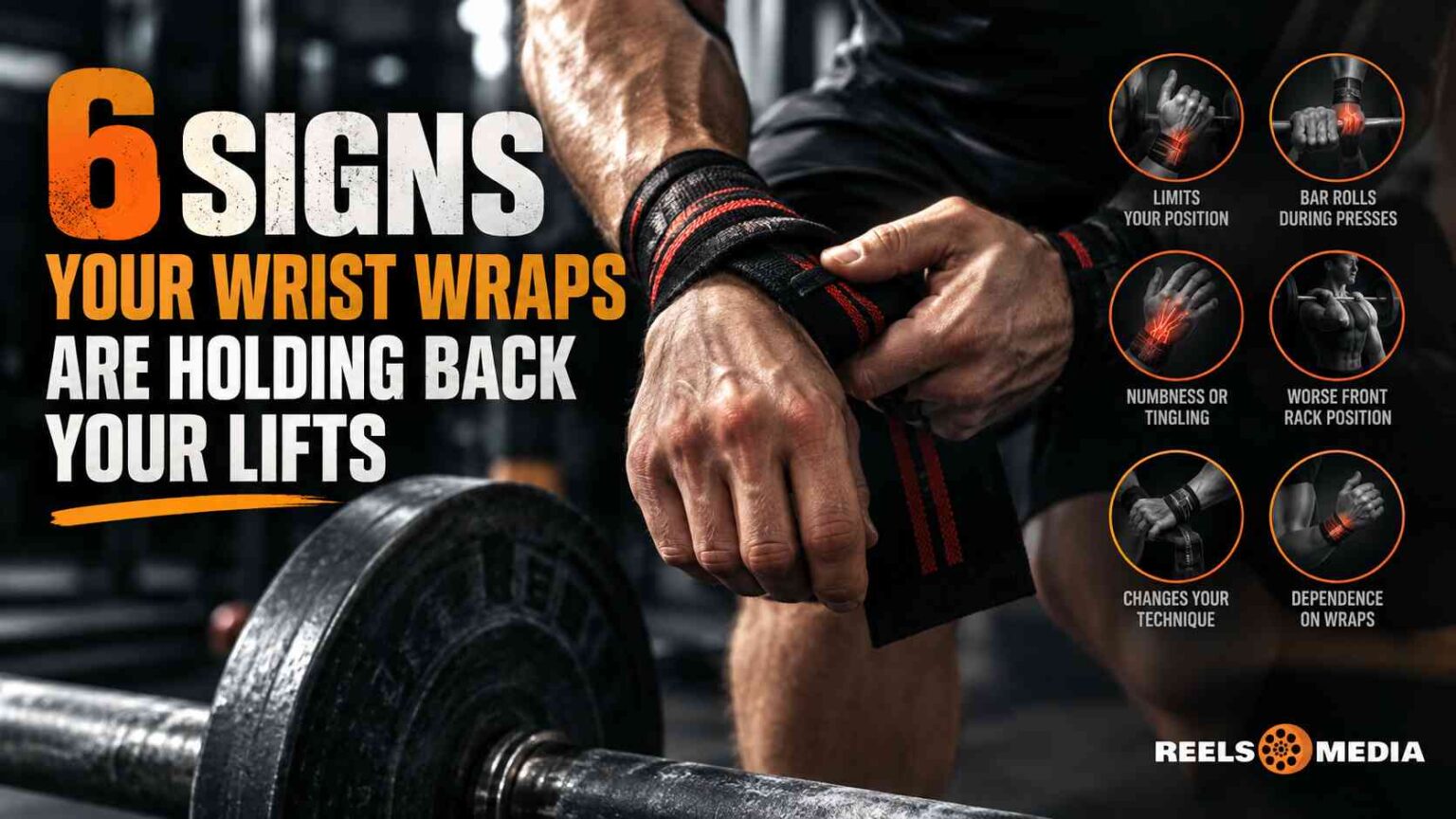
Lifters should be able to move freely while wearing wrist wraps, which should support their position. When wraps are too stiff, loose, or badly placed, they change bar contact and reduce confidence under load.
The result can be a stalled press, an unstable front rack, or unnecessary wrist strain. Six signs show when a wrap has become part of the problem, and each points to an adjustment before the next heavy session.
A useful check starts with the wrap itself. Proper wrist wraps for lifting should match the movement, load, and wrist position without forcing the hand into one fixed angle. A wrap that suits a strict press can restrict the wrist during a clean or jerk. The signs below separate useful support from equipment that interferes with technique.
1. The Wraps Limit Your Starting Position
A wrap should secure the wrist while allowing the lifter to set the bar correctly. If it makes it difficult to maintain a comfortable grip or requires too much extension, the starting position will be compromised before the repetition even starts.
This problem appears during bench presses, front squats, and overhead presses. The lifter might adjust the hands, elbows, or bar path to accommodate the wrap. Those changes reduce consistency and can create technical faults.
A simple test involves wearing the wraps without weight. The lifter should close the hand, rotate the wrist, and assume the usual setup without pressure or pinching. If those positions feel restricted, the wrap is too stiff, too tight, or poorly positioned.
2. The Bar Rolls During Presses
A bar that shifts across the palm creates an unstable connection during a press. Wrist wraps should reduce unwanted extension without forcing the bar away from the strongest part of the hand.
Loose wrapping often causes this problem. The material moves during the repetition, which changes hand pressure and makes the bar feel unpredictable. Excessive stiffness can create the same result by preventing the wrist from settling beneath the bar.



The bar should sit over the base of the palm. A secure wrap supports that position, but it cannot replace active hand pressure or proper forearm alignment.
3. The Wraps Leave Numbness or Tingling
Numbness, tingling, or pulsing pressure around the hand signals excessive compression. The wrap is tighter than the lift requires.
This problem often develops when a lifter adds tension between sets without checking circulation. A tight wrap also becomes more restrictive as the wrist flexes during setup or movement. Discomfort that continues after the set requires immediate removal.
The correct fit feels firm without affecting finger temperature or sensation. The lifter should loosen the wrap between working sets, then tighten it only for movements that need additional support.
4. Your Front Rack Position Gets Worse
Weightlifting movements require enough wrist movement to place the elbows and upper body correctly. A wrap that blocks this movement forces compensation through the shoulders, hands, or torso.
While performing a clean, make sure the bar lands across your shoulders and that your elbows rise rapidly. Excessive wrist restriction slows that transition and creates a crowded front rack. The lifter often notices difficulty receiving the bar before identifying the wrap as the cause.
A less restrictive setting usually suits cleans, jerks, and front squats better than a rigid setting used for maximal pressing. The wrap should support the wrist without controlling the entire rack position.
5. The Wraps Change Your Technique Between Sets
Equipment that feels different from set to set makes technical practice harder. A wrap that shifts, loosens, or needs repeated adjustment changes the conditions of each repetition.
This inconsistency often comes from uneven tension or a strap placed across the wrong part of the wrist. The lifter then spends time correcting the wrap instead of assessing bar speed, balance, or joint position.
Each wrap should sit in the same location and use comparable tension for similar sets. Movement-specific adjustments still matter, but random changes create noise that hides technical errors.
6. The Lifter Depends on Wraps for Every Movement
Wrist wraps have a clear role in heavy pressing and demanding strength work. They should not replace wrist control, grip practice, or gradual exposure to loading.
A lifter who wears wraps during warmups, light accessories, and every barbell movement loses useful feedback from the wrist and hand. That dependence can make unwrapped training feel unfamiliar, even with a moderate load.
Warmup sets often work well without wraps when the lifter has no medical restriction. Wraps can then be reserved for heavier sets or movements where wrist stability limits performance before the target muscles do.
Conclusion
Wrist wraps should make a sound position easier to maintain, not dictate how the lift must look. Before the next session, test each wrap during an unloaded setup, then compare comfort, bar contact, and movement quality under working weight.
Adjust the tension or choose a less restrictive setting when the wrap limits technique. If numbness continues, stop using the wrap and seek qualified medical advice before loading the joint again.