
Aftercare Following Abortion Pills: Follow-Up, Support and Recovery
A decision as big as an abortion can bring with it a storm of emotions. A burden perhaps, maybe a sense of relief, but always a bit of uncertainty over what the future holds. While taking the pills can feel like the end of a chapter, you still need to heal and recover from it all. Most women often think of post abortion recovery only in its most physical form, but emotional recovery is just as important to completely move on from this procedure.
That being said, if you’ve taken, or are planning to take an abortion pill, read as we explore the steps afterwards in their entirety – from recovery, aftercare, to when you should seek help from a professional.
What is medication abortion like (for first-timers)?
If you’ve already gone through with an abortion and are now in recovery, feel free to skip ahead. But if it’s still day one for you, then the first thing you need to know is what an abortion with pills normally looks like.
Now, if you’ve already ordered the abortion pill online through a legitimate provider, you’ll likely notice how you get not one, but two pills. The first one, mifepristone, is taken to halt the progress of your pregnancy. The second one, misoprostol, is taken 24 to 48 hours later to trigger the uterus and push out the pregnancy tissue.
Once you take the second pill, you will experience a bit of cramping and bleeding in a few hours. These cramps will feel like a heavy period, while bleeding will feel heavier than a normal period and may include clots. Do not worry at this stage, as this is simply your reproductive system cleaning the past pregnancy tissue completely.
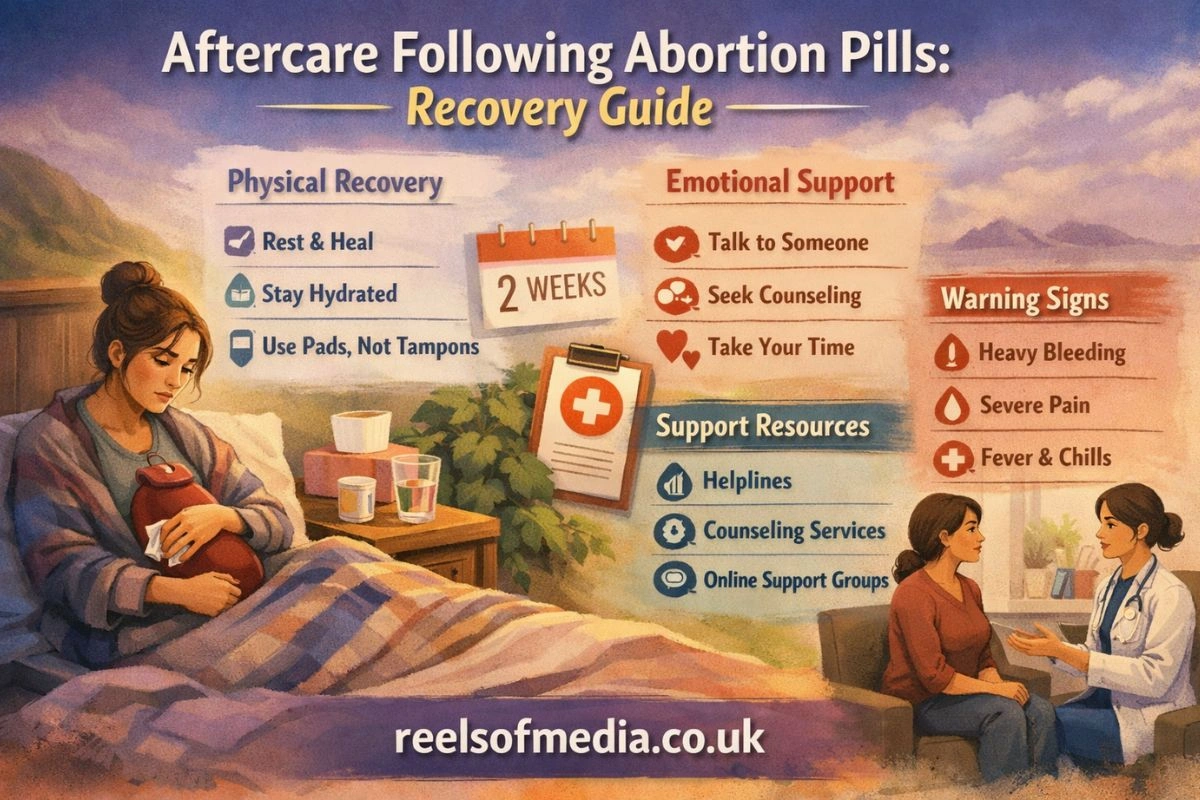
A day or two later, most of the pregnancy tissue will have passed from your body, and what will follow is only a bit of light bleeding and spotting for around two weeks. Fortunately, the most intense period will now be behind you, and what’s left is taking good care of yourself for the next few days.
Common side effects you may feel after an abortion
Once you’re through with an abortion, do note there’s a greater chance of you feeling its side effects than not. That’s completely within expectations and normal, so do not panic over what you experience next.
Cramping and bleeding are obviously the big ones here. You’ll experience cramps in waves – they’ll come and go for a few more days after an abortion. As for bleeding, it usually lasts about 14 days while tapering slowly. Outside of this, you may experience nausea, diarrhoea, mild fever or chills (especially within the first 24 hours of the process), fatigue, headaches, and dizziness. Since the pills tackle our hormones, an abortion can also cause breast tenderness or mood swings that may feel as if they came out of nowhere.

What is recovery from an abortion like?
On the physical side, most people return to their normal lives within a few days. While your energy levels may seem lower than usual, that will also eventually return to normal. As mentioned before, bleeding will taper off slowly, usually within two weeks. You may experience a bit of spotting for a few more weeks, but that is normal. Any hormonal symptoms will also eventually ease, though this can usually take longer as the body slowly recalibrates itself.
On the emotional side, it’s as varied as it can get – some may feel relief or happiness, while others may feel regret or sadness. Generally speaking, any emotion that stems during this period comes more from the personal and social circumstances surrounding the abortion and less from the process itself.
When will your menstrual cycle return to normal?
You may be surprised to know that ovulation can happen within the same month as an abortion for a lot of women. Your periods will usually return within four to eight weeks, but do not be surprised if they’re heavier or lighter than usual at first.
Since ovulation can happen within two to three weeks of an abortion, you can get pregnant once again. When it comes to sexual activities, most doctors recommend waiting at least two weeks until the bleeding has stopped. This significantly reduces the risk of an infection and gives your body enough time to heal. But if you don’t want to conceive again right away, please rely on contraceptives for the time being.
How can you best take care of yourself after an abortion?
The first thing you need to focus on once you are through with an abortion is getting adequate rest. Just take it easy for the first few days and keep it simple. Avoid any intense exercise, heavy lifting, or activities that could put unnecessary strain on your body. Stay hydrated, drink warm liquids, eat when you’re comfortable, and don’t stress if your appetite feels off for a day or two.
If the cramps are too difficult to handle, you can try over-the-counter pain relievers like ibuprofen. Even heat packs can make a noticeable difference. Another thing you should absolutely avoid is tampons or any menstrual cups until the bleeding has eased. Use sanitary pads instead, as this can lower the risk of infection and also make it easier to monitor how much you’re bleeding. Wear a tight-fitting bra or a compression top of some kind to get relief from breast tenderness.
But there’s nothing more important than to keep checking in with your emotions without judgment. Have a support system of some kind in place – whether that’s your partner, a friend, family, or a therapist to get through this phase. Plus, remember, you don’t really need to feel a certain way right now. Everyone copes with an abortion differently. If you want to talk, talk. If you don’t, that’s fine too.
Abortion care services you can access in the UK
Listen, if you’re going through an abortion all by yourself, know that you don’t need to do so at all. You have a lot of services in the UK, along with your fertility centre of choice, to help you through this process. For one, you should contact your abortion provider directly to clear any doubts or concerns. Most telemedicine services in the UK will have helplines and follow-up support as part of their abortion packages.
If that isn’t possible, then you can also speak to your GP or receive care through the NHS, even if the abortion was managed privately. Let’s also not forget all the support organisations set up with the sole purpose of helping people post abortion, such as BPAS(British Pregnancy Advisory Service), ARCH (abortion recovery care & helpline), and the pregnancy crisis helpline. All of these organisations will be more than happy to help you and ensure that you receive the care you deserve.
When should you seek help after an abortion?
Even if medication abortion is a safe procedure in most cases, there are still a few red flags you’ll need to look out for that warrant immediate medical attention. For instance, if you experience excessively heavy bleeding, the kind that soaks through two or more pads per hour for two hours in a row, it is time to seek help as soon as possible.
Similarly, abdominal pain that fails to improve with pain relief, fever lasting for more than 24 hours, and foul-smelling discharge from the vagina all mean that you need help right away.
While such complications are extremely rare, especially when abortion pills are used correctly, if you do notice any such issue, please get in touch with your healthcare provider quickly, as treating this on time makes a big difference.
Take care of yourself
Once you get through an abortion, you may be tempted to rush back to your normal life and put it all behind you as soon as possible. Although this thought stems from a good place, don’t forget that each person recovers from such an event at their own pace.
So once you’re done, notice your body and pay attention to its signals. If something feels off, ask for help. If you are well or unwell, either physically or emotionally, do not hesitate to reach out to the people and medical professionals around you. After all, you deserve the best aftercare and support as you successfully go through this process.