

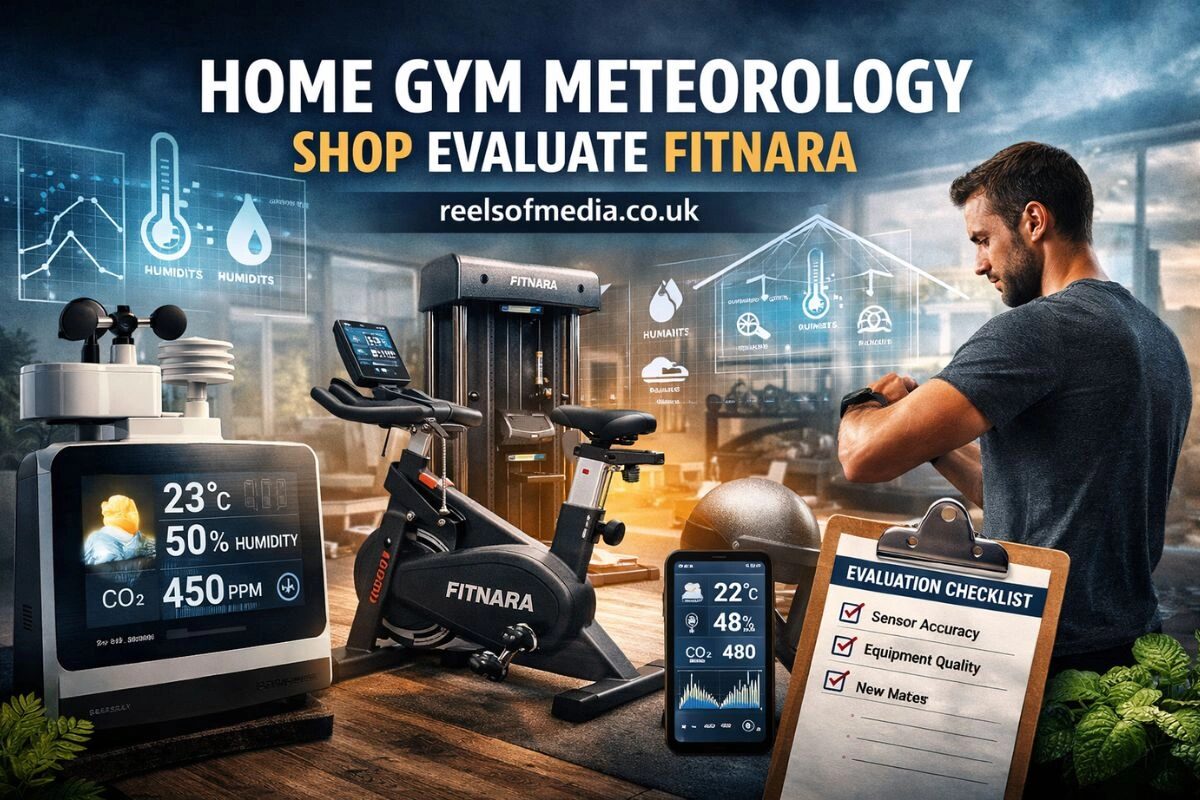
Creating an effective home gym involves more than just picking the right equipment. Understanding the environmental conditions in your workout space is essential for consistent performance and safety. Home gym meteorology shop evaluate Fitnara focuses on how temperature, humidity, airflow, and air quality impact indoor workouts and helps users make informed decisions about their home gym setup.
Monitoring and adjusting these conditions can improve comfort, reduce fatigue, and protect long-term health. By combining smart tools, accurate data, and strategic equipment placement, home gym meteorology shop evaluate Fitnara allows users to optimize their fitness environment for both beginners and serious fitness enthusiasts, ensuring that every workout is as effective as possible.
What Is Home Gym Meteorology?
Definition of Home Gym Meteorology
Home gym meteorology is the practice of monitoring and managing indoor environmental conditions to support safe and effective workouts.
It treats temperature, humidity, airflow, and air quality as operational inputs, not background details.
Focuses on measurable indoor climate data
Applies basic environmental science to fitness spaces
Aims to reduce performance drop-offs and health risks
Environmental Factors That Affect Indoor Workouts
The key environmental factors are temperature, humidity, ventilation, and air quality.
Each directly affects physical output, recovery, and comfort.
Temperature influences endurance and strength output
Humidity affects sweat evaporation and fatigue
Ventilation controls heat buildup and stale air
Air quality impacts breathing efficiency



How It Differs From Traditional Home Gym Planning
Home gym meteorology prioritizes environment before equipment selection.
Traditional planning usually focuses only on machines, weights, and floor space.
Uses data instead of assumptions
Adjusts layout based on airflow and heat zones
Considers long-term usability, not just setup cost
Why Environment Matters in a Home Gym Setup
Impact of Temperature on Workout Performance
Temperature directly affects muscle efficiency and cardiovascular strain.
Rooms that are too hot or too cold reduce workout quality.
High heat increases dehydration and early fatigue
Cold rooms limit joint mobility and warm-up efficiency
Stable temperature supports consistent training output
Role of Humidity and Ventilation
Humidity and ventilation control how the body cools itself.
Poor airflow traps heat and moisture during workouts.
High humidity slows sweat evaporation
Low ventilation increases perceived exertion
Balanced airflow maintains comfort during long sessions
Air Quality and Long-Term Health Considerations
Air quality affects respiratory health over repeated workouts.
Dust, mold, and stagnant air can cause chronic irritation.
Poor air quality stresses lungs during cardio
Long-term exposure may trigger allergies or asthma
Clean airflow supports sustainable training habits
How Home Gym Meteorology Works in Practice
Measuring Indoor Climate Conditions
Indoor climate is measured using basic environmental sensors.
These tools provide objective data instead of guesswork.
Temperature sensors track heat levels
Hygrometers measure humidity
CO₂ or air-quality sensors detect stale air
Interpreting Data for Fitness Optimization
Climate data becomes useful when linked to workout outcomes.
Patterns reveal when conditions reduce performance.
Compare workout output across temperature ranges
Track fatigue during high-humidity sessions
Identify airflow dead zones in the room
Adjusting Equipment and Layout Based on Conditions
Equipment placement should respond to heat and airflow patterns.
Layout changes often improve comfort without new purchases.
Move cardio equipment closer to airflow sources
Keep heat-generating machines spaced apart
Avoid placing equipment in poorly ventilated corners
What to Look for When Shopping for a Meteorology-Optimized Home Gym
Essential Environmental Monitoring Features
A meteorology-aware setup includes basic monitoring tools.
These features support ongoing adjustments.
Real-time temperature and humidity readings
Historical data tracking
Alerts for extreme conditions
Space, Layout, and Climate Compatibility
The room itself determines how effective monitoring can be.
Not all spaces support stable climate control.
Ceiling height affects heat buildup
Room size impacts airflow efficiency
Window placement influences temperature swings
Smart vs Non-Smart Home Gym Systems
Smart systems automate monitoring, while non-smart setups rely on manual checks.
Both approaches can work if used correctly.
Smart systems provide continuous data
Manual setups require routine checks
Choice depends on budget and user discipline
Overview of Fitnara as a Home Gym Solution
What Fitnara Is and What It Claims to Offer
Fitnara presents itself as a home gym solution with environmental awareness features.
Its positioning suggests a blend of fitness equipment and climate monitoring.
Focus on integrated systems
Emphasis on data-supported workouts
Designed for indoor fitness environments
Types of Equipment and Systems Available
Fitnara appears to offer modular or bundled gym systems.
Exact configurations vary by setup.
Core workout equipment
Optional monitoring components
App-based data access in some configurations
Target Users and Use Cases
Fitnara targets users who train consistently indoors.
It suits people who value structure and data.
Home gym owners with limited space
Users sensitive to heat or air quality
Data-oriented fitness planners
How to Evaluate Fitnara for Home Gym Meteorology
Equipment Quality and Durability
Durability determines long-term value and safety.
Evaluation should focus on materials and build standards.
Frame stability under repeated use
Wear resistance in moving parts
Manufacturer support and warranties
Environmental Data Tracking Capabilities
Environmental tracking should be accurate and actionable.
Not all systems provide usable insights.
Sensor accuracy ranges
Update frequency
Clarity of displayed data
Integration With Fitness or Smart Home Apps
Integration affects how easily data fits into daily routines.
Disconnected systems reduce practical value.
Compatibility with fitness tracking apps
Ability to export or view historical data
Smart home integration options
Benefits of Using a Meteorology-Aware Home Gym
Benefits for Beginners
Beginners benefit from stable and comfortable conditions.
This reduces early dropout risk.
Lower perceived difficulty
Safer learning environment
More consistent routines
Benefits for Serious Fitness Enthusiasts
Experienced users gain performance consistency.
Environmental control supports progressive training.
Predictable workout conditions
Better recovery management
Reduced overtraining risk
Benefits for Long-Term Home Gym Owners
Long-term owners benefit from sustainability.
A controlled environment protects both users and equipment.
Less equipment corrosion
Lower maintenance needs
Improved space usability over time
Limitations and Risks to Consider Before Choosing Fitnara
Potential Gaps in Environmental Accuracy
Not all systems match professional-grade sensors.
Accuracy limitations can affect decisions.
Consumer-grade sensor tolerances
Delayed data updates
Limited calibration controls
Cost vs Practical Value
Higher system costs do not always equal better outcomes.
Value depends on actual usage.
Monitoring features unused after setup
Marginal gains for casual users
Better returns with consistent tracking habits
Compatibility and Upgrade Limitations
Closed systems may limit future improvements.
Upgrades should be evaluated early.
Proprietary components
Limited third-party support
Restricted system expansion
Best Practices for Optimizing a Home Gym Environment
Ideal Temperature and Humidity Ranges
Most workouts perform best within narrow ranges.
Stability matters more than precision.
Moderate temperatures for strength and cardio
Controlled humidity to support cooling
Avoid extreme fluctuations
Ventilation and Airflow Optimization
Airflow should refresh air without creating drafts.
Simple adjustments often work.
Use fans to support natural ventilation
Avoid blocking vents
Promote cross-room airflow
Equipment Placement for Climate Balance
Placement affects both comfort and safety.
Heat-producing equipment needs spacing.
Separate cardio and strength zones
Keep electronics away from heat traps
Maintain clear airflow paths
Common Mistakes When Evaluating Home Gym Meteorology Systems
Ignoring Room Conditions
Equipment cannot compensate for poor room design.
Room assessment must come first.
Inadequate ventilation
Poor insulation
Limited space for airflow
Over-Reliance on Equipment Claims
Marketing claims may not reflect real performance.
Independent evaluation is necessary.
Verify sensor accuracy
Test data consistency
Compare with basic standalone tools
Choosing Systems Without Scalability
Future needs often change.
Rigid systems limit long-term usefulness.
No upgrade paths
Limited component replacement
Dependency on a single vendor
Tools and Technologies Used in Home Gym Meteorology
Sensors and Monitoring Devices
Sensors provide the raw data for decisions.
Accuracy and placement matter.
Temperature and humidity sensors
CO₂ or air quality monitors
Placement at workout height
Apps and Dashboards
Apps translate data into usable information.
Good dashboards reduce interpretation errors.
Clear visual trends
Historical comparisons
Simple alerts
Smart Climate Control Integrations
Integration allows automatic adjustments.
This reduces manual oversight.
Smart thermostats
Automated fans or vents
Scheduled climate adjustments
Fitnara vs Other Home Gym Evaluation Approaches
Fitnara vs Traditional Home Gym Equipment
Traditional setups focus on hardware only.
Fitnara adds environmental awareness.
Traditional: equipment-first
Fitnara: environment-aware planning
Trade-off between simplicity and data
Fitnara vs Smart Fitness Ecosystems
Smart ecosystems offer broader integration.
Fitnara appears more gym-specific.
Ecosystems cover multiple health metrics
Fitnara centers on workout environment
Choice depends on scope of use
When a Manual Setup Makes More Sense
Manual setups work for disciplined users.
They reduce cost and complexity.
Small or well-ventilated rooms
Occasional training schedules
Users comfortable with manual checks
Home Gym Meteorology Evaluation Checklist
Pre-Purchase Assessment
Evaluation starts before buying any system.
Room conditions should be documented.
Measure room size and airflow
Identify heat and humidity patterns
Define monitoring needs
Setup and Calibration Checks
Proper setup ensures reliable data.
Calibration prevents misleading readings.
Sensor placement review
Initial data verification
Baseline condition recording
Ongoing Monitoring and Adjustment
Conditions change over time.
Regular checks maintain effectiveness.
Seasonal adjustments
Equipment layout review
Sensor maintenance
FAQs
Is home gym meteorology important for indoor workouts?
Yes, monitoring temperature, humidity, and air quality helps maintain performance, prevent fatigue, and ensure a safe training environment.
How does Fitnara support home gym meteorology?
Fitnara integrates environmental tracking with workout equipment, allowing users to monitor climate conditions while exercising.
What factors should I consider when I home gym meteorology shop evaluate Fitnara?
Key factors include sensor accuracy, equipment durability, integration with fitness apps, and room size to ensure effective monitoring and comfort.
Can environmental conditions impact my exercise results?
Yes, poor ventilation, extreme temperatures, or high humidity can reduce endurance, increase fatigue, and affect recovery times.
Are there alternatives to Fitnara for optimizing a home gym environment?
Yes, standalone environmental sensors, smart thermostats, and ventilation solutions can achieve similar results for home gyms.