

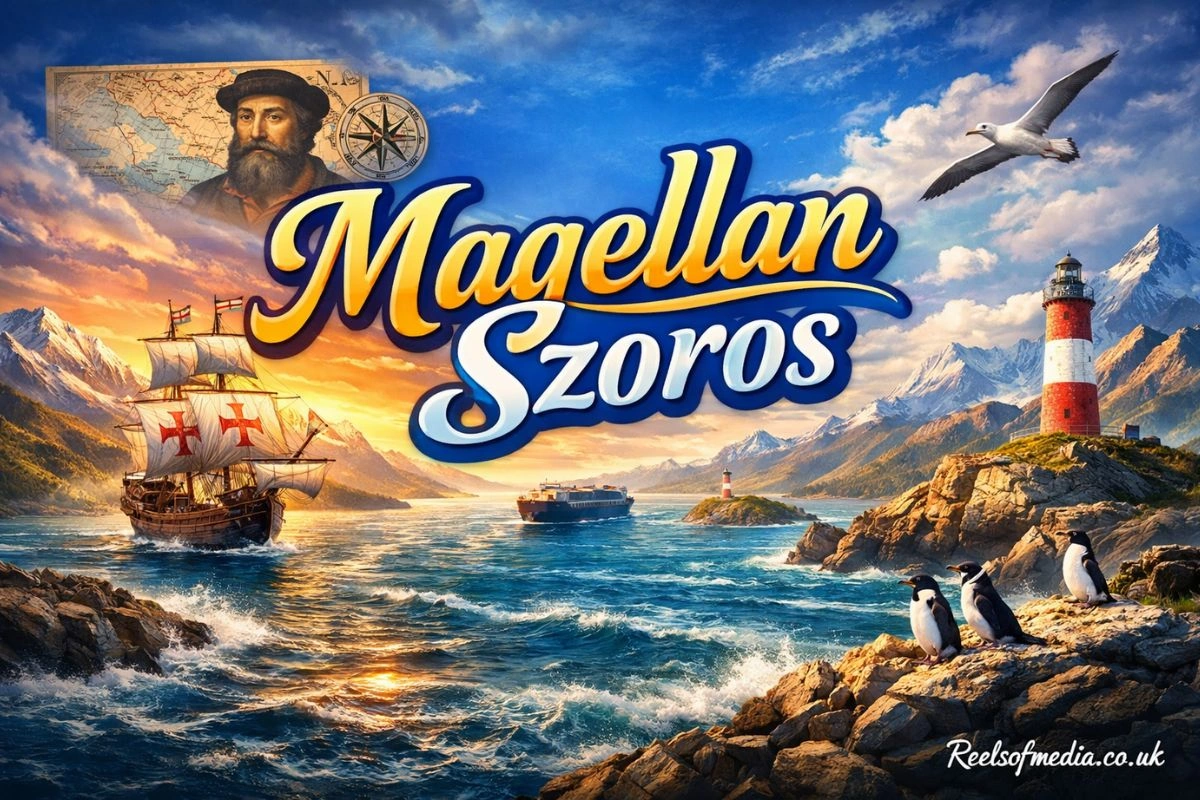
The Magellan szoros is a natural sea passage located at the southern tip of South America, separating mainland Chile from the islands of Tierra del Fuego. It connects the Atlantic and Pacific Oceans, making it one of the most historically significant maritime routes in the world. First navigated by Ferdinand Magellan in the 16th century, it played a key role in early global exploration and trade, offering ships an alternative to the dangerous waters around Cape Horn.
Today, the passage is known more for its geographic and historical importance than for heavy commercial use. While modern shipping often relies on the Panama Canal for efficiency, the strait remains relevant for regional navigation and tourism. Its narrow channels, unpredictable weather, and scenic landscapes continue to attract attention from researchers, travelers, and maritime professionals alike.
What is the Magellan-szoros and where is it located?
The Magellan-szoros is a narrow and winding maritime passage in southern Chile that links two of the world’s largest oceans. It runs between the South American mainland and Tierra del Fuego, forming a natural channel used by ships navigating between the Atlantic and Pacific without going around the southernmost tip of the continent.
Geographically, the passage is complex. It consists of multiple channels, turns, and variable widths, which require careful navigation. Unlike open ocean routes, ships here must deal with confined waters, shifting currents, and limited maneuvering space. This makes it fundamentally different from typical sea routes used in global trade.
Weather conditions add another layer of difficulty. Strong winds, sudden fog, and rapidly changing tides are common. These factors are not occasional inconveniences but consistent characteristics of the region, shaping how and when vessels can safely pass through.
A common misunderstanding is to think of it as a simple shortcut. In reality, it demands experience, local knowledge, and often pilot assistance. Without these, the risks increase significantly, especially for large commercial vessels.
Why was this sea route historically important?
The passage gained global recognition during the expedition of Ferdinand Magellan in the early 16th century. It provided one of the first known navigable links between the Atlantic and Pacific, allowing ships to avoid the dangerous waters around Cape Horn.
Before the construction of the Panama Canal, this route was essential for international trade and exploration. It enabled European powers to expand their reach into the Pacific region, influencing trade networks and geopolitical strategies for centuries.



Its importance was not only economic but also strategic. Control over such a passage meant influence over maritime movement between two major oceans. This made it a point of interest for naval operations and colonial expansion.
However, its historical role is sometimes overstated in modern discussions. While it was once indispensable, its significance declined as safer and faster alternatives emerged. Understanding this shift helps avoid the mistake of viewing it as equally critical today.
How safe and practical is navigation through this passage today?
Navigation through the Magellan-szoros is possible but requires strict planning and professional oversight. Modern vessels can pass through it, yet most rely on local maritime pilots who understand the region’s unique conditions.
From a safety perspective, the passage is manageable but not forgiving. Narrow channels, unpredictable weather, and strong currents still present real challenges. These are not theoretical risks but operational realities that shipping companies must account for when planning routes.
In terms of practicality, it is less efficient than open sea alternatives for large-scale commercial shipping. Delays caused by weather or navigation constraints can offset any distance advantage. This makes it a selective option rather than a default route.
A frequent mistake is assuming modern technology has eliminated these challenges. While navigation systems have improved safety, they do not remove environmental risks. Human judgment and local expertise remain essential components of safe transit.
How does it compare with alternative global shipping routes?
When compared to the Panama Canal, the Magellan-szoros is less commonly used for commercial shipping. The canal offers a controlled, predictable environment that supports faster and more reliable transit between oceans.
Another alternative is sailing around Cape Horn, which, although longer, can sometimes be preferable for certain vessels due to fewer navigational constraints. Each route involves trade-offs between distance, safety, cost, and time.
The Magellan passage sits between these options. It avoids the extreme conditions of Cape Horn but introduces its own navigational complexities. As a result, it is often chosen in specific scenarios rather than as a standard route.
A practical way to evaluate these routes is to consider operational priorities. Shipping companies focus on consistency and cost efficiency, which often leads them toward more predictable paths. This limits the routine use of the Magellan route in global logistics.
Is it still relevant in modern maritime travel and tourism?
Today, the Magellan-szoros remains relevant, but its role has shifted. Instead of being a primary commercial route, it is now more significant in regional navigation and specialized maritime operations.
Tourism has become one of its most visible uses. Cruise ships and expedition vessels travel through the passage to offer close views of remote landscapes, wildlife, and historical sites. This has given the region a different kind of economic value.
Its historical legacy also contributes to its continued importance. The connection to early exploration attracts interest from historians, educators, and travelers seeking to understand global maritime history.
However, its modern relevance should not be overstated. It is not a central hub of global trade anymore. Recognizing this helps provide a balanced perspective and avoids relying on outdated assumptions about its role.
Conclusion
The Magellan-szoros is best understood as a historically vital but selectively used maritime passage. Its geographic position and natural structure made it essential in the past, yet modern infrastructure and shipping priorities have reduced its everyday importance.
Today, its value lies in specialized navigation, regional use, and tourism rather than global trade dominance. A clear evaluation shows that while it remains significant, its role is context-dependent. Understanding both its strengths and limitations provides a more accurate and useful perspective.