

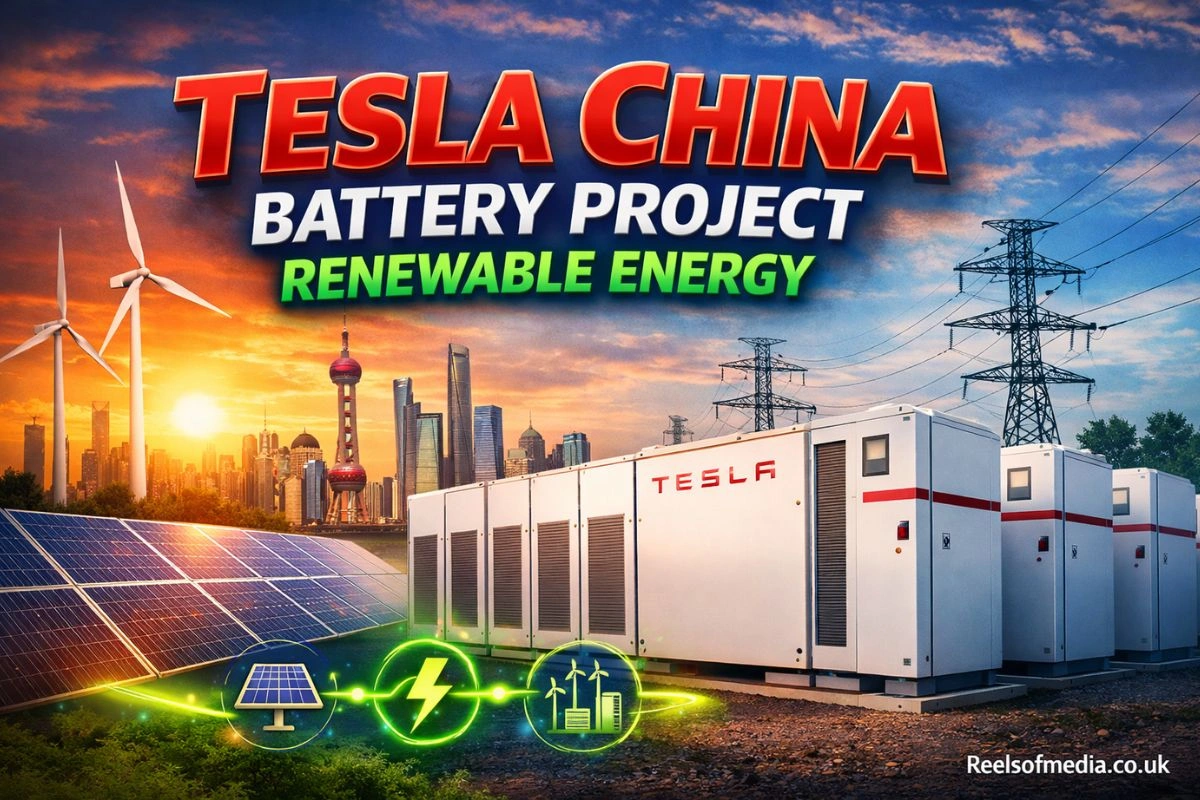
The tesla china battery project renewable energy is gaining attention as part of a larger shift toward reliable clean power systems. Tesla is expanding its presence in China by developing large-scale battery storage designed to support electricity grids. These systems are built to store excess energy and release it when demand increases, helping maintain a steady power supply. This approach focuses on solving real-world energy challenges rather than relying only on increasing power generation capacity.
As renewable sources like solar and wind continue to grow, the need for stable energy distribution becomes more critical. Battery storage plays a key role in balancing supply and demand, especially in high-consumption regions. Tesla’s efforts in China highlight how energy storage is becoming essential for modern infrastructure. Instead of replacing existing systems, these solutions work alongside them to improve efficiency, reduce waste, and support long-term energy stability.
What is happening with Tesla’s battery project in China
Tesla is building a large-scale battery manufacturing and deployment ecosystem in Shanghai focused on energy storage systems. The project includes production of Megapack units and their use in grid-connected storage facilities. These batteries are designed to store electricity and release it when demand rises, helping stabilize the power supply in urban and industrial areas.
The Shanghai facility plays a dual role. It manufactures battery units and supports local deployment projects. This allows faster integration into China’s power grid. Instead of shipping products globally first, Tesla can respond directly to regional energy needs, which improves efficiency and reduces logistical delays.
One practical aspect often overlooked is how these systems interact with existing infrastructure. They are not replacing power plants. They are supporting them. By storing surplus electricity, they reduce pressure on coal or gas plants during peak demand. This creates a more balanced energy mix without requiring immediate full replacement of traditional sources.
A common misunderstanding is that battery projects alone can solve energy shortages. In reality, they work as part of a system that includes generation, transmission, and demand management. Tesla’s role here is focused on storage, which is one piece of a larger energy strategy rather than a standalone solution.
How large-scale battery systems support renewable power
Battery storage systems make renewable energy usable on a consistent basis by addressing its variability. When solar panels generate excess electricity during the day, or wind farms produce more than needed, that energy is stored instead of being wasted. It can then be released when production drops or demand increases.
This approach improves grid reliability. Without storage, grids must rely on backup power sources, often fossil fuels, to handle fluctuations. With batteries in place, the need for sudden backup generation is reduced. This leads to more efficient energy distribution and lower operational stress on the grid.



Another important function is frequency regulation. Power grids require stable frequency to operate safely. Large battery systems respond quickly to changes in demand, helping maintain that stability. This is a technical but critical role that traditional power plants cannot always perform as efficiently.
A frequent mistake is assuming that bigger batteries always mean better results. The effectiveness of storage depends on integration, software control, and grid compatibility. Tesla’s systems are designed with advanced control software, which allows them to respond in real time rather than simply storing and releasing power passively.
Why China is investing heavily in grid storage solutions
China is expanding grid storage because it is rapidly increasing its renewable energy capacity. Large solar and wind installations are being built across the country, but without storage, much of that energy cannot be fully utilized. Battery systems help bridge this gap by making renewable output more predictable and reliable.
Another reason is urban demand. Major cities require stable electricity around the clock. Fluctuations in supply can affect industries, transportation, and residential life. Grid storage provides a buffer that helps manage these fluctuations without constant reliance on traditional power plants.
Policy direction also plays a role. China has long-term energy goals that include reducing emissions and improving efficiency. Storage systems support these goals without disrupting economic growth. This balance between sustainability and stability is a key factor in why large-scale battery projects are being prioritized.
It is important to note that China is not relying on a single company. Domestic manufacturers and international players are all contributing to the ecosystem. Tesla’s involvement adds competition and innovation, but it operates within a broader national strategy rather than defining it alone.
What this means for Tesla’s long-term energy strategy
Tesla’s expansion into energy storage shows that the company is positioning itself beyond the automotive sector. While electric vehicles remain a major part of its business, grid-scale batteries represent a different and potentially more stable revenue stream tied to infrastructure rather than consumer demand.
This strategy reduces dependence on vehicle sales cycles. Energy projects often involve long-term contracts and partnerships with governments or utilities. This creates consistent demand and allows Tesla to build a presence in national energy systems rather than only in consumer markets.
Another important aspect is vertical integration. Tesla designs both hardware and software for its battery systems. This allows tighter control over performance and efficiency. In large-scale deployments, software coordination becomes as important as the physical battery units.
A common assumption is that Tesla is leading this space without competition. In reality, it faces strong competition from established battery manufacturers and energy companies. Its advantage lies in system integration and global experience, not in operating without rivals.
Is this development important for the global energy transition
Projects like this are important because they address one of the biggest limitations of renewable energy: inconsistency. By enabling reliable storage, they make it possible for countries to increase renewable usage without compromising grid stability. This is a practical step toward reducing dependence on fossil fuels.
The global impact comes from scalability. If large battery systems prove effective in high-demand environments like China, they can be replicated in other regions. This creates a model for integrating renewable energy into existing grids without requiring complete infrastructure replacement.
However, it is important to remain realistic. Battery storage is not a complete solution. It must be combined with efficient grid management, diversified energy sources, and policy support. Overestimating its role can lead to poor planning and unrealistic expectations.
The key takeaway is that energy transition is not driven by a single technology. It is the result of multiple systems working together. Tesla’s battery projects contribute to this shift, but they represent one part of a broader and ongoing transformation.
Conclusion
Tesla’s battery expansion in China reflects a clear shift toward practical energy solutions that support renewable power rather than replacing existing systems outright. By focusing on storage, the company is addressing a real limitation in modern energy infrastructure.
The significance of this development lies in its application, not just its scale. Battery systems are becoming essential for stable, efficient energy use in a world that is increasingly dependent on renewable sources. While not a complete solution on their own, they play a critical role in shaping how electricity is generated, stored, and delivered in the future.
FAQs
What is the tesla china battery project renewable energy and how does it work?
The Tesla China battery project renewable energy is a large-scale energy storage initiative in Shanghai. It uses Tesla Megapack systems to store electricity from solar and wind sources. This stored energy can then be released when demand is high, helping stabilize the grid and make renewable power more reliable.
How do Tesla’s battery systems support renewable energy in China?
Tesla’s battery systems store excess electricity generated from solar panels and wind farms. By releasing this energy during peak demand periods, they reduce the need for backup fossil fuel generation and help balance the power grid efficiently.
Why is China investing heavily in grid-scale battery storage?
China is rapidly expanding its renewable energy capacity, including solar and wind. Grid-scale batteries help make this energy usable at all times, prevent waste, stabilize urban power supply, and support national emissions reduction goals.
What impact does this project have on Tesla’s energy business?
This project allows Tesla to expand beyond electric vehicles into infrastructure and utility-scale energy solutions. By providing grid-scale storage, Tesla can secure long-term contracts with utilities and governments, creating a steady revenue stream independent of vehicle sales.
Can these battery systems influence global renewable energy adoption?
Yes. Large-scale energy storage projects like Tesla’s in China provide a model for integrating renewable power into existing grids. If successful, similar systems can be replicated worldwide, supporting the global transition to cleaner and more reliable energy.