
TRT Therapy vs Natural Testosterone Boosters: What’s the Difference?
If you’ve found yourself struggling with health issues like persistent fatigue, reduced libido, and difficulty in building muscle, it is easy to chalk all of it up to low testosterone – and in all likelihood, you might be right here. After all, as we grow older, our testosterone levels tend to see a steep decline, but with said decline comes a lot of questions on what to do next.
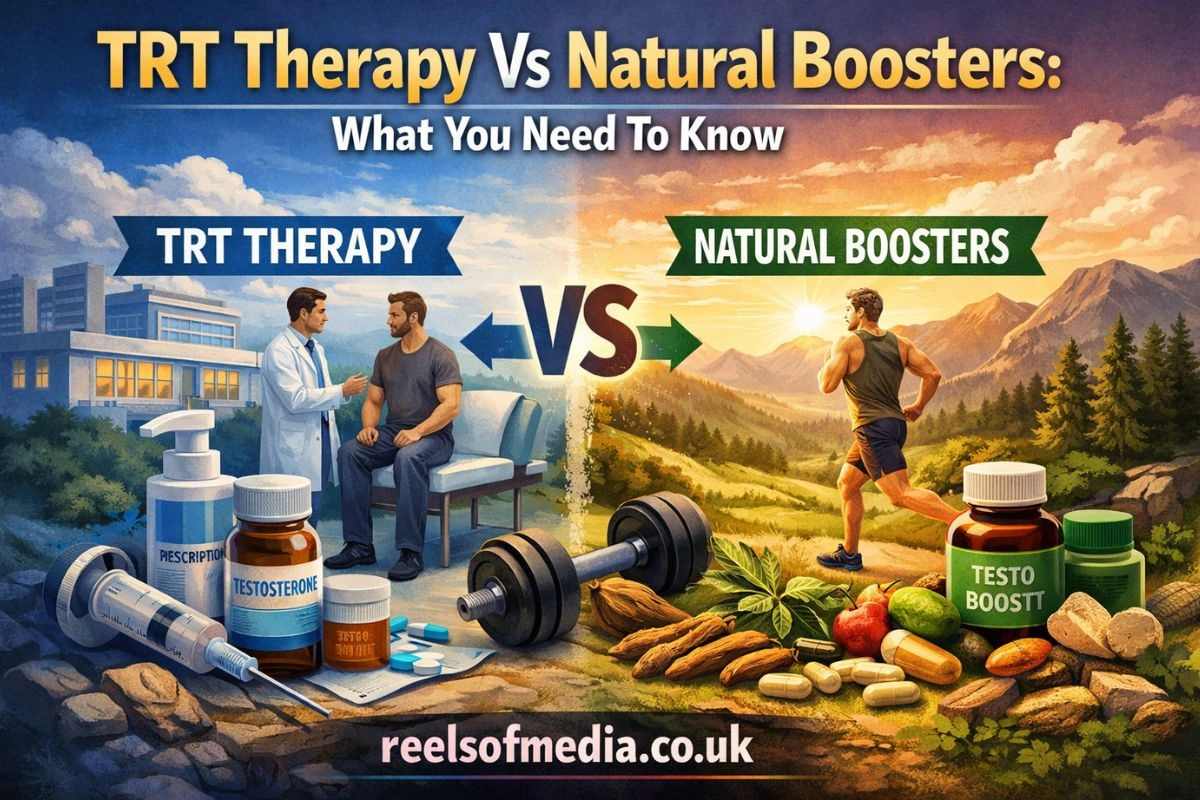
As you begin to look for solutions, you may be tempted to choose between either testosterone replacement therapy or a host of natural testosterone-boosting products. So which path should you actually take? Keeping this question in mind, let’s break down everything you need to know about both approaches and help you find the right one for your situation.
What is testosterone, and why does it decline?
Our testosterone is much more than just one hormone that controls our masculine features. It is a hormone that also plays a big role in maintaining muscle mass, bone density, weight, and red blood cell production, while also influencing our mood, energy, and cognitive function. Let’s not forget that it is also what drives our libido and sexual function – when you put all of these things into perspective, it is easy to see how essential testosterone is to men’s overall health and wellbeing.
Our body produces testosterone primarily in the testes, with the pituitary gland regulating its production. When this system works as intended, it naturally maintains our testosterone levels within a healthy range that supports all those bodily functions mentioned above.
Unfortunately, our T-levels take a slight hit in our 30s, dropping roughly 1-2% each year. Now, for some men, this isn’t an issue, and they often don’t face any problems because of it. But for many men, this decline can become quite problematic over time. While we’re on the topic, remember that the age-related decline being discussed right now is different from hypogonadism, which is when testosterone levels fall significantly below normal ranges due to testicular or pituitary problems.
That aside, there are several factors beyond ageing that can also accelerate testosterone decline beyond the yearly 1-2%. For one, poor sleep disrupts the hormone’s natural cycle as most testosterone is produced only during deep sleep. Obesity and insulin resistance can also create a vicious cycle where low testosterone promotes fat gain, and excess fat further reduces our testosterone. If you lead a sedentary lifestyle, chances are your body is already dropping testosterone to levels that support basic muscle function. Lastly, medications like opioids and corticosteroids can also suppress our t-levels quite significantly – warranting some way to combat the issue.
What is TRT therapy?
This is likely the first method you’ll come across when trying to treat your low testosterone problem. It is a proper medical treatment that supplements your body’s natural testosterone production when it falls below healthy levels.
However, this is not a process you can enrol for on your own. You’ll have to go through a proper diagnostic process that proves you have consistently low testosterone levels along with symptoms that are impacting your quality of life. But if you do get the green light for this therapy, note that it comes in several forms, and you’ll have the option to choose between them in collaboration with your doctor.

Injections are the most common of the bunch, administered either weekly or fortnightly to maintain steady levels. You can also go for gels and creams, which are applied daily to the skin to let testosterone be absorbed over time. Patches work similarly but are simply worn on the body instead. Finally, you can also get pellets implanted under your skin, which will release testosterone into the system over several months and bring the levels back to normal in a natural-feeling way.
With all these methods to restore your testosterone levels, you may wonder how safe they are. But as studies have shown time and again, when administered properly under medical supervision, TRT is a safe procedure to undertake, and for men with genuinely low levels, its benefits can be quite transformative. The moment you begin this therapy, you’ll notice your energy return, your brain fog finally dissipates, your muscle mass becomes easier to maintain, your libido improves, and your mood stabilises.
But yes, whether you go to a TRT clinic in London or anywhere else in the world, you need to take this therapy under medical supervision only. This is important to ensure that your therapy remains safe and effective, and that your dosages are adjusted on time as required. Without this, TRT can be quite risky, potentially causing cardiovascular issues, prostate problems, and fertility suppression.
What are natural testosterone boosters?
Natural testosterone boosters are on the polar opposite end of TRT, being supplements and lifestyle modifications that try to support your body’s natural testosterone production. Generally speaking, these work the best for men whose levels are just slightly on the lower end rather than being clinically low.
When it comes to natural testosterone boosters, the thing people consider most effective are lifestyle changes centred on improving your physical health – things like resistance training, losing weight, managing stress and fixing your sleep routine. You can also consider getting your nutrient intake in order with supplements of different vitamins and minerals. For instance, zinc supplements can help repair the body’s testosterone production, while magnesium pills can support hundreds of bodily processes, including hormone production. A diet rich in healthy fats will also do wonders for the body’s testosterone synthesis process.
A more divisive option is seeking over-the-counter supplements that combine nutrients with herbs like tribulus terrestris or ashwagandha. The problem with them is: While they are indeed marketed as testosterone, their benefits range from slight to non-existent, and most of their packaging claims just don’t align with actual research on the matter. Even more importantly, these supplements aren’t tightly regulated, meaning quality and potency can vary dramatically between brands.
That also brings us to the fundamental problem with this approach as a whole – not only are they unregulated and lack medical oversight, but they also cannot overcome true testosterone deficiency. If your body isn’t producing enough testosterone due to reasons out of your control, then no amount of lifestyle changes or supplements can restore things back to normal. These solutions may nudge borderline levels slightly higher or help maintain what you already have, but at the end of the day, they cannot replace medical treatment in cases where it’s genuinely needed.
Which option is right for you?
The difference between these two paths comes down to this: TRT is a proper medical treatment that is reserved only for diagnosed testosterone deficiency, while natural approaches are a collection of strategies that can maintain and improve borderline t-levels.
The worst thing you can do for yourself is self-diagnose and self-treat based on symptoms alone or fall for marketing that blurs the line between medical treatment and wellness products. Listen, testosterone replacement is serious business that requires professional oversight, and while natural boosters have their place, that place is also very limited. So, get tested, consult a qualified professional, and make decisions based on your actual hormone levels and individual circumstances rather than guesswork or falling for any aggressive marketing.