
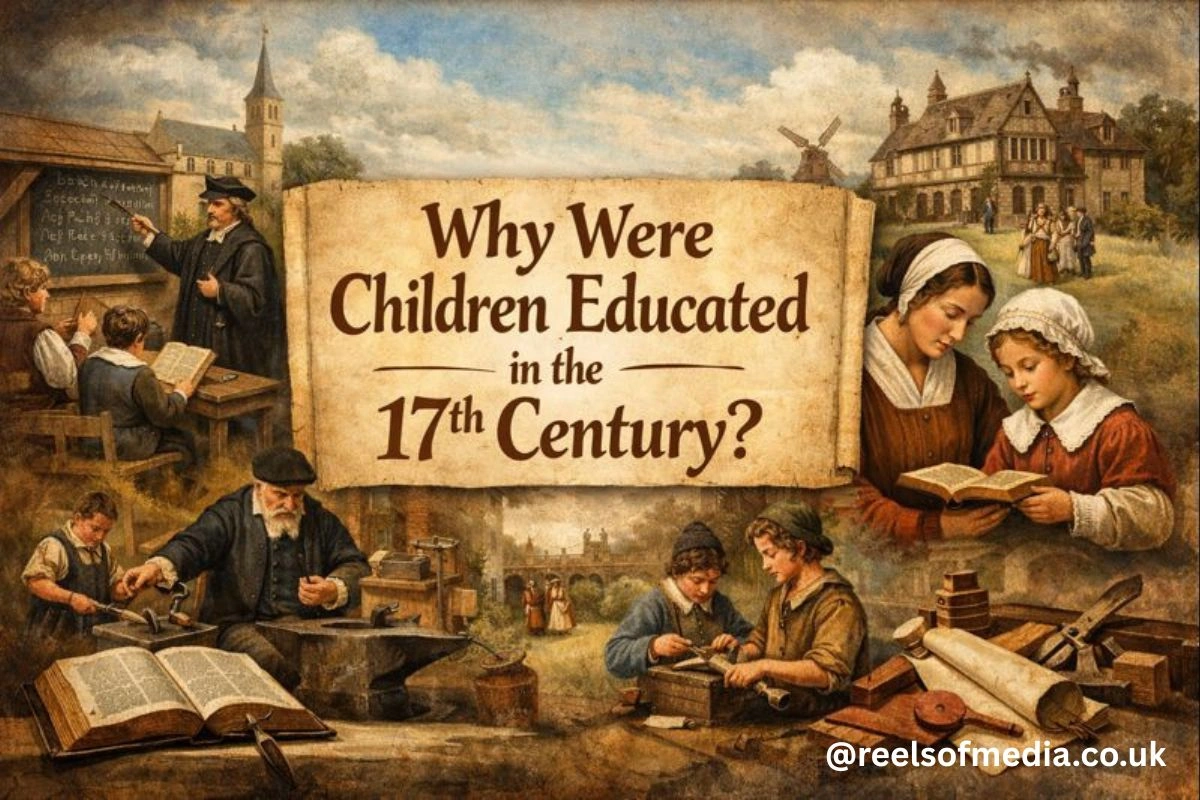
Children’s education in the 1600s looked very different from what we expect today. Learning was limited, uneven, and closely tied to religion, social class, and work rather than personal development. To understand why were children educated in the 17th century, it is necessary to look at how society was organized and what adults expected children to become. Education was not about opportunity or equality; it was about preparing children to fit into a fixed social order.
In the 17th century, education served practical and moral purposes. Children were taught skills that supported religious belief, economic survival, and obedience to authority. Formal schooling was available to only a small portion of society, while most learning happened at home, in churches, or through apprenticeships. Understanding why were children educated in the 17th century helps explain how education functioned as a tool for stability, control, and continuity rather than personal advancement.
Historical Context of Education in the 17th Century
Social and political structure of the 1600s
Education in the 17th century was shaped by rigid social hierarchies and strong political authority. Society was divided into clear classes, and education followed those lines.
-
Monarchies and landed elites held power
-
Social mobility was limited
-
Education reinforced a person’s place in society
-
Learning goals differed by class and expected future role
Influence of religion and monarchy
Religion and the crown directly influenced what children learned and why. Education supported loyalty, faith, and obedience.



-
Churches controlled most schooling
-
Monarchs supported education that maintained order
-
Religious conformity was a priority
-
Education aligned with state-approved beliefs
Differences between regions (Europe vs Colonial America)
Education varied by region based on governance and religious structure. There was no single global model.
-
Europe relied heavily on church-run schools
-
Colonial America emphasized religious literacy
-
Rural areas had fewer formal options
-
Local communities set education standards
What Education Meant in the 17th Century
Formal schooling vs informal learning
Education was not limited to classrooms and often happened outside schools. Formal schooling was the exception.
-
Grammar schools served few children
-
Informal learning occurred at home or work
-
Literacy levels varied widely
-
Skills mattered more than certificates
Home education and community instruction
Most children learned through family and community guidance rather than schools.
-
Parents taught basic reading and behavior
-
Communities reinforced moral lessons
-
Practical skills learned through daily life
-
Education followed local customs
Role of churches and religious institutions
Churches acted as the primary education providers across most regions.
-
Clergy served as teachers
-
Scripture guided curriculum
-
Attendance reinforced discipline
-
Education strengthened church authority
Primary Reasons Children Were Educated
Religious literacy and moral instruction
Children were educated mainly to read religious texts and follow moral rules.
-
Bible reading was central
-
Moral behavior was emphasized
-
Religious obedience mattered
-
Literacy supported faith
Preparation for adult social roles
Education prepared children for the lives they were expected to live as adults.
-
Boys trained for trades or leadership
-
Girls prepared for domestic roles
-
Skills aligned with family status
-
Education reduced social uncertainty
Preservation of social order
Education helped maintain stability and hierarchy within society.
-
Authority was normalized early
-
Social roles were reinforced
-
Questioning power was discouraged
-
Order was prioritized
How Education Systems Functioned
Grammar schools and parish schools
Formal schools existed but served a limited population.
-
Grammar schools taught Latin and logic
-
Parish schools taught basic reading
-
Access depended on wealth
-
Memorization was common
Apprenticeships as practical education
Apprenticeships provided hands-on education tied directly to work.
-
Children learned trades directly
-
Masters supervised training
-
Skills led to employment
-
Learning was productivity-based
Tutors and private instruction for elites
Wealthy families relied on private tutors for advanced education.
-
Languages and classics were taught
-
Education prepared future leaders
-
Learning environments were controlled
-
High costs limited access
Role of Religion in Children’s Education
Protestant Reformation and literacy
The Reformation increased the demand for literacy across Protestant regions.
-
Personal Bible reading was encouraged
-
Literacy supported religious reform
-
Schools expanded in some areas
-
Faith drove education
Bible reading as a core learning objective
Reading scripture was often the primary reason children learned to read.
-
Religious texts dominated lessons
-
Memorization was routine
-
Primers focused on doctrine
-
Understanding faith mattered
Moral discipline and obedience training
Education emphasized strict discipline and moral control.
-
Rules governed learning spaces
-
Punishment enforced compliance
-
Obedience was rewarded
-
Character formation was central
Social Class and Access to Education
Education of noble and wealthy children
Elite children received structured and extended education.
-
Access to schools and tutors
-
Leadership skills emphasized
-
Education reinforced privilege
-
Opportunities expanded influence
Limited schooling for working-class children
Most working-class children received little formal education.
-
Labor needs came first
-
Schooling was brief or absent
-
Skills learned through work
-
Literacy remained limited
Economic barriers to formal education
Cost was a major obstacle to education.
-
Tuition and materials were expensive
-
Families relied on child labor
-
Travel to schools was difficult
-
Survival took priority
Gender Differences in 17th-Century Education
Educational expectations for boys
Boys were educated for public and economic roles.
-
Reading and writing prioritized
-
Trade or leadership training common
-
Independence encouraged
-
Authority roles expected
Domestic-focused education for girls
Girls’ education centered on household and moral duties.
-
Reading for religious purposes
-
Household skills emphasized
-
Obedience and virtue taught
-
Marriage preparation prioritized
Long-term impact of gendered learning
Gender-based education shaped lifelong outcomes.
-
Men dominated public life
-
Women remained domestically confined
-
Skill gaps persisted
-
Inequality reinforced
Education as Preparation for Work and Trade
Skills taught through apprenticeships
Apprenticeships focused on trade-specific skill development.
-
Hands-on instruction
-
Productivity measured learning
-
Skills matched labor needs
-
Employment followed training
Family trades and occupational training
Families passed skills directly to children.
-
Trades stayed within families
-
Learning began early
-
Children supported household income
-
Continuity ensured survival
Education linked to economic survival
Education supported basic economic stability.
-
Literacy aided simple commerce
-
Trades ensured income
-
Learning reduced dependency
-
Practical value mattered
Moral, Cultural, and Behavioral Goals
Teaching discipline and obedience
Education trained children to follow rules and authority.
-
Routine enforced order
-
Discipline shaped behavior
-
Compliance was expected
-
Control maintained stability
Reinforcing cultural and religious norms
Education transmitted shared beliefs and values.
-
Traditions preserved
-
Religious identity reinforced
-
Social norms standardized
-
Community cohesion supported
Education as social control
Education regulated belief and behavior across society.
-
Conformity encouraged
-
Dissent discouraged
-
Authority legitimized
-
Stability protected
Limitations and Challenges of 17th-Century Education
Lack of universal education systems
There was no guaranteed education for all children.
-
No compulsory schooling
-
Access varied widely
-
Many children excluded
-
Inequality common
Quality and consistency of instruction
Instruction quality differed greatly.
-
Teachers lacked training
-
Curriculum varied
-
Outcomes inconsistent
-
Oversight minimal
High child labor demands
Work obligations limited education opportunities.
-
Families depended on children’s labor
-
Long work hours reduced learning
-
Education ranked lower
-
Survival needs dominated
Comparison With Modern Education Systems
Differences in purpose and accessibility
Modern education serves broader social and economic goals.
-
Universal access expected
-
Mobility encouraged
-
Secular subjects emphasized
-
Child development prioritized
Shift from religious to secular education
Education is now primarily state-run and secular.
-
Religion no longer controls schools
-
Neutral governance standard
-
Diverse curricula offered
-
Faith instruction optional
Evolution of child rights and schooling
Child protection now shapes education systems.
-
Child labor restricted
-
School attendance mandated
-
Welfare prioritized
-
Equal opportunity promoted
Common Questions About 17th-Century Education
Did all children go to school in the 1600s?
No, most children did not attend formal schools.
-
Schooling was not mandatory
-
Access depended on class
-
Work often replaced education
What subjects were children taught?
Subjects focused on religion and practical needs.
-
Reading for scripture
-
Basic writing and arithmetic
-
Moral instruction
Who controlled education during this period?
Education was controlled mainly by churches and local authorities.
-
Clergy managed schools
-
Families directed home learning
-
Central oversight was limited
FAQs
Why were children educated in the 17th century?
Children were educated in the 17th century to learn religious beliefs, follow moral rules, prepare for work, and fit into their expected social roles. Education focused on obedience, faith, and practical skills rather than personal growth.
Was education compulsory for children in the 1600s?
No, education was not compulsory in the 17th century. Most children did not attend formal schools, and access depended on social class, location, and family needs.
What role did religion play in children’s education?
Religion played a central role in education. Many children were taught to read mainly so they could study religious texts, especially the Bible, and learn moral discipline.
Did girls and boys receive the same education?
No, boys and girls were educated differently. Boys were more likely to receive academic or trade-related education, while girls were taught household skills and religious values.
How did poor children learn without formal schooling?
Poor children usually learned through work, apprenticeships, and family instruction. Practical skills were taught at home or on the job, with little emphasis on reading or writing.