

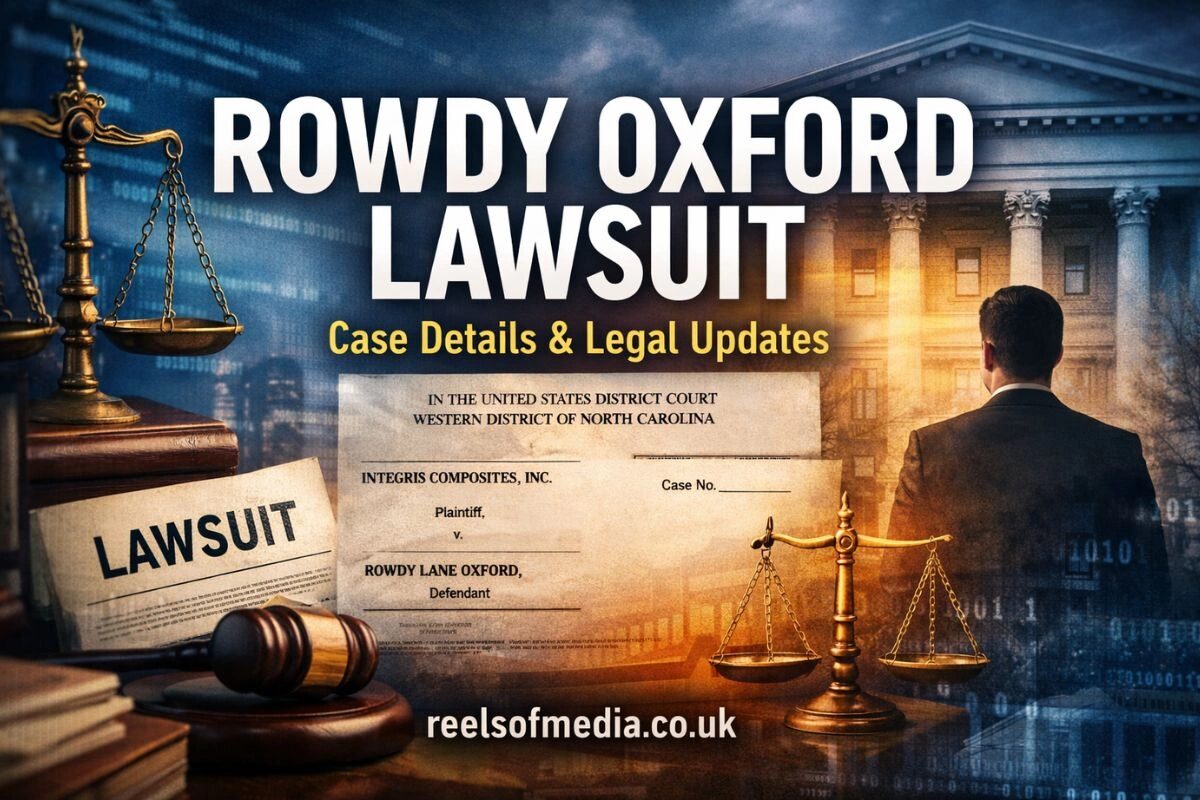
The rowdy oxford lawsuit is a federal civil case that has attracted attention online because it involves allegations related to confidential business information, employment obligations, and trade secret protection. People are searching for clear, fact-based details because many websites mention the case but don’t explain what is actually happening in plain language.
In this guide, you’ll find a structured breakdown of the rowdy oxford lawsuit, including who is involved, what the claims mean, how court processes like injunctions work, and how to separate verified court facts from rumors. The goal is to give you accurate, practical clarity without speculation or hype.
What Is the Rowdy Oxford Lawsuit?
What the lawsuit is about (plain-English summary)
The Rowdy Oxford lawsuit is a civil business dispute alleging that an individual improperly took or used confidential company information after leaving a job.
In plain terms, the case centers on claims that:
Company files were copied, removed, or accessed without permission
Confidential business data may have been retained after resignation
The company believes the information could be used to compete unfairly
This is the type of case that typically falls under:



employment-related contract disputes
trade secret protection
unfair competition claims
Who filed the lawsuit and who is being sued
The lawsuit was filed by Integris Composites, Inc., and the defendant is Rowdy Lane Oxford.
This is not framed as a consumer lawsuit.
It’s a company-versus-individual civil case involving business and information security allegations.
Where the case is being heard (court + jurisdiction)
The case is in U.S. federal court in North Carolina (Western District of North Carolina, Charlotte Division).
That matters because:
federal civil procedure rules apply
trade secret claims often involve federal and state law
court orders (like injunctions) can move quickly
Who Is Rowdy Lane Oxford?
Background and role connected to the dispute
Rowdy Lane Oxford is an individual connected to the dispute through a professional relationship with Integris Composites.
Based on court-related summaries and filings, the case is tied to:
employment or a senior role with system access
exposure to confidential business and technical data
a separation event (resignation/exit) that triggered the dispute
Why his name is being searched online
His name is being searched because it appears as the named defendant in a federal lawsuit involving trade secrets and business conduct allegations.
This usually happens when:
the case is indexed by court-record platforms
blogs repost summaries without context
people search for “lawsuit + name” to understand the situation
Clarifying confusion with unrelated “Rowdy Oxford” mentions
Some online pages mix this case up with unrelated content that uses a similar name, which causes search confusion.
This is common when:
a name is uncommon but not unique
press-release websites publish unrelated articles
SEO blogs copy each other without checking court records
If you’re writing or researching, the safest approach is:
treat the lawsuit as a specific legal case
confirm the parties and the court
avoid assuming it involves a “brand” unless filings show that
Who Is Integris Composites and Why They Filed the Case
Company overview (only what’s relevant to the case)
Integris Composites is a business entity that filed the lawsuit to protect proprietary information and enforce contractual obligations.
For this type of dispute, what matters is that the company likely has:
internal systems containing sensitive files
proprietary processes, customer information, or technical data
confidentiality requirements tied to employment
Relationship between Integris and Oxford
The relationship appears to be employer-to-employee (or employer-to-worker with access), which is typical in trade secret cases.
This matters because it usually means:
the worker had authorized access while employed
the dispute is about what happened during exit or after exit
agreements (NDA, confidentiality, employment contract) may apply
What Integris says triggered the legal action
Integris claims the legal action was triggered by improper handling of confidential files and data access around the time of resignation.
In cases like this, companies often point to:
unusual downloads or transfers
file copying to personal devices
access outside normal business needs
refusal to return devices or confirm deletion
Rowdy Oxford Lawsuit Timeline (Key Dates and Events)
Events leading up to the filing
The dispute appears to have escalated after Oxford’s departure from the company and alleged file activity connected to that exit.
A typical pre-filing timeline looks like this:
resignation or termination
internal IT review or audit triggered
discovery of suspicious access or downloads
legal demand letters (return, delete, certify)
lawsuit filed if demands are not resolved
Major court actions and procedural steps
A key court step in this case involved requests for immediate court protection, including injunctive relief.
Common procedural steps include:
complaint filed (the lawsuit begins)
motion for temporary restraining order (sometimes)
motion for preliminary injunction
early discovery requests
protective orders for confidential evidence
Current status and what’s expected next
The case has been treated as an active civil dispute, with early-stage court orders being a major feature of the public record.
In most cases like this, the next steps include:
continued discovery (emails, devices, system logs)
depositions
expert analysis (forensics, damages)
settlement discussions
possible summary judgment motions
What Are the Main Legal Claims in the Rowdy Oxford Lawsuit?
Breach of contract claim
The breach of contract claim argues that Oxford violated an agreement tied to employment or confidentiality obligations.
That contract is usually one of these:
employment agreement
confidentiality agreement (NDA)
IP assignment agreement
policy-based contract acknowledged during onboarding
What the plaintiff typically must show:
a valid contract existed
the defendant had obligations
those obligations were breached
damages or harm resulted
Trade secret misappropriation claim
The trade secret claim alleges that protected business information was taken, retained, disclosed, or used without authorization.
Trade secret claims often focus on:
whether the information was truly secret
whether the company protected it reasonably
whether the defendant acquired it improperly
whether it was used to gain an unfair advantage
This is often the most serious part of the lawsuit.
Conversion and related civil claims
Conversion is a civil claim alleging wrongful control or use of property that belongs to someone else.
In modern business lawsuits, “property” may include:
physical devices (laptops, drives)
business documents
copied files treated as company assets
Related civil claims may also cover:
interference with business relationships
negligence tied to mishandling data
unauthorized access allegations
Unfair and deceptive trade practices claim
This claim argues the conduct was unfair or deceptive in a way that violates North Carolina’s business protection laws.
These claims often appear when a company believes:
the conduct goes beyond a simple contract breach
the behavior involved deception or unfair competition
the plaintiff wants enhanced remedies under state law
What Evidence Typically Matters in Trade Secret and Contract Lawsuits
What counts as a “trade secret” in real court standards
A trade secret is information that has economic value because it is not publicly known and is protected through reasonable safeguards.
Examples that often qualify:
customer lists and pricing strategy
proprietary manufacturing processes
product formulas, designs, or specs
vendor terms and supply chain data
internal cost models and forecasting
Examples that often do not qualify:
public marketing materials
general industry knowledge
skills someone carries in their head
information already widely available online
Common evidence used in these disputes
The strongest evidence usually comes from digital records, not personal statements.
Common evidence includes:
access logs (SharePoint, Google Drive, OneDrive)
download history and timestamps
USB insertion logs
email forwarding records
screenshots, exports, or printed documents
forensic imaging of devices
Companies also often use:
signed agreements and policy acknowledgments
exit interview notes
HR and IT offboarding records
What courts look for when evaluating intent and harm
Courts usually focus on whether the conduct looks deliberate and whether real business harm is likely.
Courts often evaluate:
how much was taken
how close the timing was to resignation
whether there was a legitimate business reason
whether the person tried to hide activity
whether the information could be used competitively
Even without proven “use,” courts may act if:
the risk of misuse is credible
the information is highly sensitive
there is no clean way to “unsee” it
What Is a Preliminary Injunction and Why It Matters in This Case
What a preliminary injunction means (simple definition)
A preliminary injunction is a court order issued early in a case that temporarily restricts actions to prevent harm before the final outcome.
In this kind of dispute, an injunction may order someone to:
stop using confidential information
return or delete files
preserve devices for forensic review
avoid contacting certain customers or vendors
What a court must find to grant one
A court typically grants a preliminary injunction only if the plaintiff shows a strong likelihood of harm without immediate action.
Courts generally consider:
likelihood of success on the merits
likelihood of irreparable harm
balance of hardships
public interest
Trade secret cases often qualify because:
once secrets are disclosed, they can’t be “undisclosed”
How injunctions can impact the defendant immediately
An injunction can restrict work, business activity, and communications right away, even before trial.
Practical impacts can include:
restrictions on working in similar roles
mandatory device turnover
forensic inspections
limitations on using certain tools, files, or contacts
This is why early litigation strategy matters in these cases.
What Could Happen Next: Possible Outcomes of the Case
Settlement (what it usually includes)
Most cases like this settle, often with confidentiality terms and strict return-and-delete requirements.
A typical settlement may include:
certification that files were deleted
agreement not to use or disclose information
restrictions on contacting customers
payment terms (sometimes)
dismissal of claims
Sometimes the biggest settlement term is:
permanent injunctive obligations without admitting fault
Case dismissal or narrowing of claims
The court may dismiss some claims if the legal standards are not met or if evidence is weak.
Common reasons include:
the contract is unenforceable
the information is not a trade secret
the complaint lacks specificity
the plaintiff cannot show actual harm
It’s also common for:
some claims to survive while others are dropped
Trial outcomes and potential damages
If the case goes to trial, damages can include actual losses, unjust enrichment, and sometimes enhanced remedies depending on the claim.
Potential damages categories include:
lost profits
investigation and response costs
value of misappropriated information
harm to competitive position
In trade secret cases, courts may also consider:
whether conduct was willful or malicious
Permanent injunction and long-term restrictions
A permanent injunction can impose long-term restrictions even after the case ends.
Permanent orders may require:
ongoing confidentiality compliance
continued prohibition on use of specific data
restrictions tied to customer solicitation
monitoring or certification requirements
For professionals, this can be the most lasting consequence.
What This Lawsuit Means for Employees, Contractors, and Executives
Risks when leaving a company with sensitive access
The biggest risk is leaving with files you think are “yours” but legally belong to the company.
High-risk actions include:
emailing work files to personal accounts
copying templates, decks, or pricing sheets
downloading customer lists “for reference”
saving files to personal cloud storage
Even if your intent is harmless, it can look bad because:
the timing is usually the problem
How non-disclosure and confidentiality terms apply
Confidentiality obligations usually survive employment and apply even if you created the document yourself.
Most NDAs cover:
any non-public business information
technical processes and designs
pricing, margin, and sales strategy
customer and vendor data
Key reality:
“I helped build it” does not equal “I own it”
Real-world career and reputation impacts
Even without a final judgment, being named in a lawsuit can affect career options and professional trust.
Real-world impacts include:
hiring friction due to background checks
legal fees and time loss
restrictions on future roles
reputational damage online
A lot of harm comes from:
incomplete summaries posted by third-party sites
What This Lawsuit Means for Businesses Protecting Confidential Data
Internal access controls and audit trails
Strong access controls and logging are often the difference between a manageable dispute and a costly lawsuit.
Best practices include:
least-privilege access (role-based permissions)
centralized file storage (not local drives)
logging downloads, exports, and shares
alerts for bulk downloads and unusual access
A business can’t protect trade secrets if it:
can’t prove who accessed what and when
Offboarding and device return best practices
A clean offboarding process reduces risk more than almost any policy document.
Best practices include:
disabling accounts immediately at exit
retrieving laptops and storage devices
confirming removal of company data from personal devices
written certifications of return and deletion
reviewing access logs for 30–90 days pre-exit
The most common failure is:
waiting too long to lock down access
Vendor, contractor, and BYOD exposure risks
Contractors and BYOD setups increase trade secret exposure because control is weaker.
High-risk areas include:
personal phones with email access
personal cloud storage synced to work accounts
contractors using unmanaged devices
shared credentials or weak MFA
To reduce risk, companies often use:
mobile device management (MDM)
endpoint detection and response (EDR)
data loss prevention (DLP) tools
Common Misunderstandings and Online Rumors About the Rowdy Oxford Lawsuit
Why some websites report different “Rowdy Oxford lawsuit” stories
Different stories appear online because many sites recycle content without using official court filings.
This happens when:
blogs scrape each other’s posts
AI-generated summaries are published without verification
press-release sites use similar names
unrelated “Rowdy Oxford” content gets indexed together
In legal topics, small errors spread fast because:
readers rarely check the docket
How to verify lawsuit information correctly
The only reliable way to verify a lawsuit is to confirm the parties, the court, and the case number through official records.
A correct verification process is:
Identify the court (federal vs state)
Confirm the case caption (plaintiff vs defendant)
Confirm docket entries (motions, orders, filings)
Cross-check with reputable legal databases
What is confirmed vs. what is unverified
Confirmed information comes from court filings and court orders; unverified information comes from blogs without citations.
Typically confirmed:
case caption and jurisdiction
claims filed
major court orders (like injunctions)
procedural status
Typically unverified:
motivations, personal accusations, rumors
settlement amounts (unless filed publicly)
claims about unrelated companies or brands
How to Verify Court Case Details (Without Misinformation)
Using official court dockets and filings
Official dockets and filed documents are the primary source of truth for U.S. lawsuits.
Best places to check include:
PACER (official federal system)
court listener platforms that mirror filings
reputable legal databases (not blogs)
When reviewing filings, focus on:
the complaint
injunction motions and orders
any amended pleadings
scheduling orders
How to read case numbers and court records
Case numbers tell you where and when a lawsuit was filed, and whether it’s federal or state.
A practical way to read them:
federal cases often show district + year
docket entries show the sequence of filings
“order” and “memorandum” documents are usually the most informative
If you’re not a lawyer, the best approach is:
read the court’s order first, then the complaint
Red flags that a source is unreliable
A source is usually unreliable if it makes strong claims but doesn’t cite court documents.
Major red flags:
no case number listed
no court name listed
dramatic accusations with no filings linked
mixing multiple people with similar names
claiming a “criminal case” when it’s civil
A simple test:
if you can’t locate the docket, don’t treat it as fact
Practical Compliance Checklist to Prevent Similar Lawsuits
Checklist for employers (policies + controls)
Employers prevent these disputes by controlling access, documenting exits, and enforcing clear data rules.
Core checklist:
Written confidentiality and IP agreements for all roles
Role-based access controls and least privilege
MFA and centralized identity management
Logging for file access, downloads, and shares
DLP rules for email forwarding and cloud sync
Clear exit procedures triggered automatically
Device return and account deactivation same day
Written certification of return/deletion
Checklist for employees (safe exit steps)
Employees avoid legal exposure by leaving cleanly and keeping personal devices free of company data.
Core checklist:
Do not email work files to personal accounts
Do not copy files to USB or personal cloud storage
Return all devices and storage media
Ask HR/IT what you are allowed to keep
Remove company accounts from personal devices (with IT approval)
Keep a record of what you returned
Sign certifications only if they are accurate
Most people get in trouble because:
they try to “save work samples” the wrong way
Checklist for IT/security teams (technical safeguards)
IT teams reduce lawsuit risk by having strong audit trails and automated offboarding controls.
Core checklist:
Enable centralized logging (SIEM)
Monitor bulk downloads and unusual access
Lock down exfiltration paths (USB, personal email, external drives)
Maintain endpoint forensic readiness
Use EDR to track file movement
Deploy DLP for cloud storage and email
Run an exit audit for high-access roles
Preserve evidence legally (chain of custody)
Technical reality:
if logs are missing, the legal case becomes harder to prove or defend
FAQs
What is the Rowdy Oxford lawsuit about?
The Rowdy Oxford lawsuit involves allegations that confidential company information was improperly accessed or used by the defendant after leaving employment.
Who are the parties involved in the Rowdy Oxford lawsuit?
The lawsuit is filed by Integris Composites, Inc. against Rowdy Lane Oxford, an individual connected to the company.
Where is the Rowdy Oxford lawsuit being heard?
The case is being heard in federal court in the Western District of North Carolina, Charlotte Division.
Has the Rowdy Oxford lawsuit been resolved or settled?
Public records do not indicate a final settlement; the Rowdy Oxford lawsuit remains active with ongoing court proceedings.
How can I verify details about the Rowdy Oxford lawsuit?
Official updates can be verified through court dockets, filings, and orders in federal court; blogs or rumor sites may be inaccurate.