

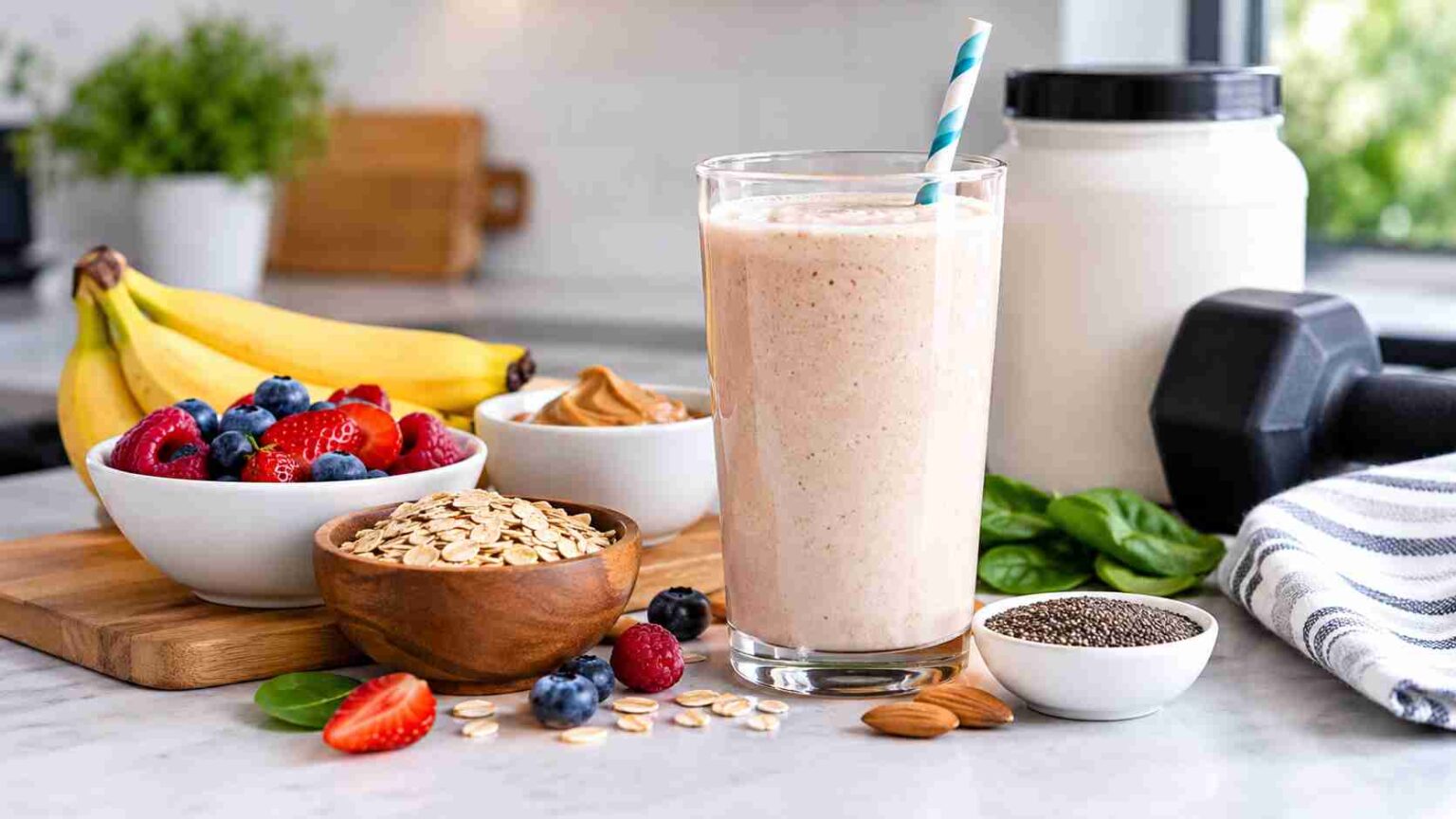
Yes, drinking a protein shake for breakfast is good for most people, as long as it’s not the only thing you’re eating and it contains enough protein, some fat, and a fiber source. A shake alone, made with just powder and water, skips fiber and micronutrients your body needs in the morning. Add fruit, nut butter, or oats, and it becomes a genuinely balanced meal.
What a Protein Shake Actually Does for Your Morning
Protein is the most filling macronutrient of the three. When you start the day with 20 to 30 grams of it, you blunt the hunger spikes that usually hit around 10 or 11 a.m. This matters more than people realize: a breakfast heavy in refined carbs (white toast, sugary cereal, pastries) spikes blood sugar fast, then crashes it just as fast, leaving you reaching for a snack before lunch.
A protein shake avoids that swing. It digests slower than sugar, keeps blood glucose steadier, and gives your body amino acids early, which supports muscle repair and growth if you train regularly. Muscle protein synthesis works best when protein intake is spread across the day rather than saved for one big dinner portion, so a morning dose isn’t wasted, it’s doing real work.
Who Benefits Most
- People who train in the morning or fasted – amino acids on board help reduce muscle breakdown during exercise.
- Anyone trying to manage weight – higher protein at breakfast tends to reduce total calorie intake later in the day because it keeps you fuller longer.
- People with low appetite in the morning – a shake goes down easily when solid food feels like too much.
- Busy people who’d otherwise skip breakfast – a shake takes two minutes and is far better than eating nothing.
Where a Plain Protein Shake Falls Short
A scoop of powder mixed with water gives you protein and little else. It’s missing:
- Fiber – needed for digestion and to slow how fast the protein and any sugar hits your bloodstream.
- Healthy fats – support hormone production and help you absorb fat-soluble vitamins.
- Micronutrients – vitamins and minerals that whole foods like fruit, seeds, and vegetables provide, which most protein powders don’t contain in meaningful amounts.
- Chewing satisfaction – liquid meals are processed differently by the brain’s hunger signals than solid food. Some people report feeling less satisfied after a liquid breakfast even when the calorie and protein content match a solid one, and end up eating more later.
None of this means a protein shake is a bad breakfast. It means a shake by itself is an incomplete one.
How to Build a Shake That Actually Works as a Full Breakfast
Instead of powder and water, aim for four components:
| Component | Purpose | Examples |
| Protein | Satiety, muscle support | Whey, casein, or a plant-based blend (pea, soy, rice) |
| Fat | Hormone support, nutrient absorption | Peanut or almond butter, chia seeds, avocado |
| Fiber/carb | Digestion, steady energy | Banana, oats, berries, spinach |
| Liquid base | Texture, hydration | Milk, unsweetened plant milk, water |
This turns a protein shake into what’s closer to a smoothie meal, and it covers most of the gaps a plain shake leaves behind.
Common Mistakes People Make
Using it as a sugar bomb. Many flavored protein powders and pre-made shakes are loaded with added sugar. Check the label. A quality shake should have most of its carbs coming from fiber or whole-food additions, not sweeteners.



Relying on it for every single meal. A protein shake for breakfast is fine daily. Replacing every meal with shakes long-term isn’t, because you lose out on the broader range of nutrients whole food provides.
Ignoring digestion issues. Whey protein causes bloating or discomfort in people with lactose sensitivity. If that’s you, a plant-based protein blend is usually easier on the gut.
Skipping protein amount checks. Some ready-made shakes marketed for breakfast contain as little as 10 grams of protein, which isn’t enough to meaningfully affect satiety. Look for at least 20 grams per serving if fullness is your goal.
Protein Shake vs. Traditional Breakfast
| Protein Shake (built well) | Eggs & Toast | Cereal & Milk | |
| Protein | High (20-30g+) | Moderate (12-15g) | Low (6-8g) |
| Fiber | Depends on additions | Low unless whole grain toast | Depends on cereal type |
| Prep time | 2-5 minutes | 10-15 minutes | 2 minutes |
| Blood sugar impact | Stable | Stable | Spikes with sugary cereal |
| Micronutrient range | Moderate to good with additions | Good | Limited, often fortified |
A well-built shake competes closely with a solid cooked breakfast on nutrition, while beating it on speed. A bowl of sugary cereal, by comparison, loses on almost every count except convenience.
Does It Matter What Time You Drink It?
Not significantly for most people. The idea that you must eat protein within a strict window after waking up isn’t well supported. What matters more is total daily protein intake and consistency. If a shake right after waking works for your schedule, it works. If you’d rather have it two hours later, that’s fine too.
Frequently Asked Questions (FAQs)
Can a protein shake replace breakfast completely?
Yes, on an occasional or daily basis it can, as long as it includes fat and fiber alongside the protein. Using it as your only meal type for extended periods, day after day with no whole food, isn’t ideal long-term.
Will a protein shake alone keep me full until lunch?
A shake with 20-30 grams of protein and no fiber or fat will keep you fuller than sugary cereal, but not as long as one with added fruit, oats, or nut butter. Fiber and fat slow digestion and extend fullness further.
Is it bad to drink a protein shake on an empty stomach?
No, this is safe for most people and is actually common among those who train fasted in the morning. If you have a sensitive stomach, adding it after a small snack or mixing it with oats can reduce any discomfort.
Does the type of protein powder matter for breakfast?
Yes, whey digests faster and suits people who tolerate dairy well, while plant-based blends (pea, soy, rice) are gentler for those with lactose sensitivity. Casein digests slower, which can extend fullness if that’s your priority.
Can drinking a protein shake for breakfast help with weight loss?
It can, mainly because higher protein intake early in the day tends to reduce overall calorie intake later. This effect comes from improved satiety, not from any special fat-burning property of the shake itself.
How much protein should a breakfast shake actually contain?
Aim for at least 20 grams per serving if your goal is fullness or muscle support, since smaller amounts have a weaker effect on satiety. Ready-made shakes with only 10-12 grams often fall short of this target.
The Bottom Line
A protein shake for breakfast is a smart choice when it’s built with protein, fat, and fiber together, not just powder and water. It beats skipping breakfast, and it beats a sugar-heavy cereal breakfast on almost every practical measure: satiety, blood sugar stability, and convenience. The only real mistake is treating it as nutritionally complete on its own when it’s missing fiber or micronutrients. Add a piece of fruit, a spoon of nut butter, or a handful of oats, and you’ve got a breakfast that holds up nutritionally and keeps you full until lunch.