
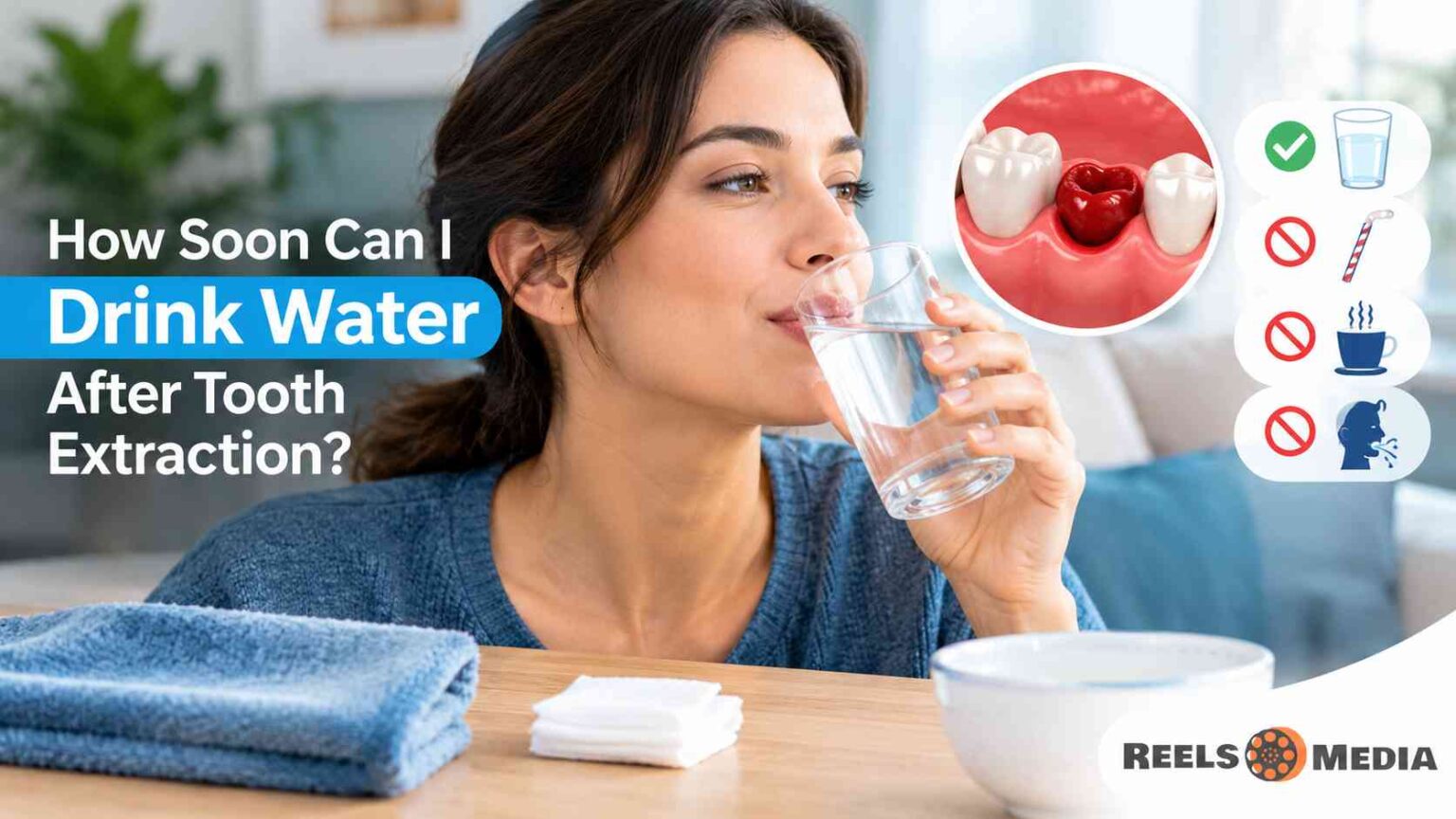
You can usually start sipping water within the first hour after a tooth extraction, once the gauze has done its job and your mouth is no longer bleeding heavily. Take small sips, keep the water cool or room temperature, and do not use a straw. If your dentist or oral surgeon gave you different timing, follow theirs, because it is based on your specific procedure.
The reason for the caution is simple. A blood clot forms in the empty socket, and it acts as a natural bandage over bone and nerve endings. Water is not the threat. Suction, swishing, heat, and pressure are.
Quick Timeline: Drinking Water After an Extraction
| Time after extraction | What you can do |
| First 30 to 60 minutes | Bite on the gauze with steady pressure. Avoid drinking until the bleeding slows, unless your dentist said otherwise. |
| 1 hour onward | Take small, slow sips of cool or room temperature water once the gauze is out and you can swallow normally. |
| Rest of day 1 | Keep drinking regularly, gently. No spitting, swishing, or straws. |
| After 24 hours | Drink normally. Begin warm salt water rinses if your dentist approves. |
| Days 2 to 7 | Keep avoiding straws, smoking, and vigorous rinsing. |
| After about a week | Most simple extractions feel comfortable with normal drinking habits. Surgical cases can take longer. |
These are general windows, not strict rules. A single simple extraction and a deeply impacted wisdom tooth removal heal on different schedules.
Why the First Hours Matter
When the tooth comes out, the socket fills with blood. That blood clots, and the clot becomes the foundation for new tissue. If the clot is lost too early, the bone inside the socket is exposed to air, food, and fluids. This is called dry socket, or alveolar osteitis.
Dry socket is not an infection by itself, but it is painful, and the pain often arrives two to four days after the procedure, usually after the initial soreness has started to ease. It can delay healing and usually needs a dentist to clean and dress the socket.
Nothing about plain water damages a clot. What can damage it:
- Suction from a straw or from sucking on the area
- Forceful swishing or spitting
- Very hot liquids, which can dissolve or loosen the clot and increase bleeding
- Smoking and vaping, which combine suction with heat and chemicals
- Poking the socket with a tongue, finger, or utensil
How to Drink Water Safely After an Extraction
The technique matters as much as the timing.
- Wait until the numbness is manageable. If your lip or cheek is still very numb after local anesthesia, you can bite yourself or let water dribble out. Sip slowly and watch for leaks.
- Use a glass or cup, not a bottle with a sports cap. Squeezing or sucking from a bottle nozzle creates pressure and suction.
- Take small sips and let the water slide down. Do not hold water in your mouth or move it around.
- Tilt your head slightly toward the opposite side. This keeps most of the liquid away from the socket.
- Swallow before you breathe in again. Gasping while drinking can create a small suction effect.
- Keep the water cool or at room temperature on day one. Ice cold can irritate sensitive areas, and warm or hot drinks can encourage bleeding.
Think of it as drinking the way you would with a cut lip: gentle and unhurried.



What About Straws?
Avoid straws for at least a week, and longer if you had surgical removal or a bone graft. Suction is the single most common reason people dislodge a clot while trying to do the right thing and stay hydrated. If you feel it is too awkward to drink from a glass, a spoon works well for smoothies and soups.
When Can You Rinse Your Mouth?
Drinking and rinsing are different. For the first 24 hours, do not rinse or spit at all. After that, many dentists recommend a gentle rinse with warm salt water, using about half a teaspoon of salt in a glass of warm water. The method is to tilt your head and let the water fall out of your mouth into the sink instead of spitting. Do this after meals to keep food out of the socket.
If your dentist prescribed a medicated mouthwash, use it as directed, and do not substitute an alcohol-based mouthwash, which can sting and dry the area.
What Else Can You Drink?
Water is the best choice, but you may want variety. In the first few days:
- Fine: Water, milk, diluted fruit juice, cool herbal tea, and cool smoothies without seeds, taken from a spoon or glass
- Better to avoid: Alcohol, which can interfere with healing and does not mix with many pain medications
- Better to avoid: Fizzy drinks, since bubbles and acidity can irritate the area
- Better to avoid: Very hot coffee or tea, mainly in the first day
- Use caution: Sugary drinks, because sugar feeds bacteria around a healing wound
If you take prescription pain medication, check with your pharmacist or dentist before drinking anything other than water.
Situations That Change the Advice
Wisdom teeth and surgical extractions. If the dentist cut the gum, removed bone, or placed stitches, the recovery instructions are usually stricter. Follow the written sheet you were given, and ask whether your water timing differs.
Sedation or general anesthesia. After sedation, start with small sips of water only when you are fully awake and steady, and only if your care team said it is fine. Some people feel nauseous, and drinking too fast can trigger it.
Bone grafts and implants. Graft material and implant sites can be sensitive to pressure. Ask for specific instructions, especially about rinsing and straw use.
Blood thinners and bleeding conditions. If you take anticoagulants or have a bleeding disorder, bleeding may last longer. Do not stop any medication on your own. Call your dentist or prescribing doctor for guidance.
Children. Children may swallow gauze, bite their lip while numb, or insist on a straw. Supervise drinking until the numbness fades.
Diabetes. Healing can be slower, and staying hydrated matters. Ask your dentist about any extra precautions.
Common Mistakes People Make
- Rinsing too soon. Feeling that your mouth tastes of blood is normal. Resist the urge to rinse hard.
- Switching gauze too often. Constantly checking the socket interrupts clotting. Keep firm pressure for the time advised, usually 30 to 45 minutes, then replace gauze only if bleeding continues.
- Drinking nothing because of fear. Dehydration can make you dizzy, tired, and sore. Small, frequent sips are safer than avoiding fluids.
- Using a straw because it feels easier. It feels easier, but it is the riskiest choice.
- Smoking or vaping. Even a short delay in the first 72 hours is better than none. A longer break is better.
Normal Healing vs Signs of a Problem
Some discomfort is expected. Mild bleeding or pink saliva during the first day, swelling for two to three days, and tenderness that gradually improves are all normal.
Contact your dentist if you notice:
- Pain that gets worse after day two or three instead of better
- An empty-looking socket with visible whitish bone
- A persistent bad taste or smell not cleared by gentle rinsing
- Bleeding that continues after 30 minutes of firm, steady pressure
- Fever, pus, or swelling that grows after the third day
Seek urgent care if you have trouble swallowing or breathing.
Frequently Asked Questions (FAQs)
Can I drink water right after tooth extraction?
Only after the bleeding has slowed and your dentist’s instructions allow it. For most people that means around an hour, once the gauze is out. Take small sips.
Can I drink water with gauze in my mouth?
It is better to wait. Sipping around gauze is awkward and can disturb it, and the first 30 to 45 minutes are when the clot is forming.
Is cold water okay?
Cool water is fine. Ice-cold water may bother a sensitive socket, so room temperature is a safe middle ground for the first day.
How long should I avoid a straw?
At least a week for most extractions. Surgical extractions and bone grafts may need longer, so check with your dentist.
Can I drink water while still numb?
Yes, carefully. Go slowly, because reduced feeling makes it easy to dribble, bite your cheek, or choke.
Can I swish water after 24 hours?
A gentle rinse is usually fine after 24 hours, ideally with warm salt water, if your dentist agrees. Let the water fall out of your mouth instead of spitting.
How much water should I drink during recovery?
There is no special target for extraction recovery. Drink enough to keep your urine pale and avoid feeling thirsty, in small, regular sips.
The Bottom Line
So, how soon can you drink water after a tooth extraction? Usually within an hour, in gentle sips, from a glass, at a cool or room temperature. Avoid straws, spitting, hot drinks, alcohol, and smoking, and begin salt water rinses only after the first 24 hours. If your pain worsens after the first few days or bleeding does not settle, call your dentist.
This article is general information and does not replace advice from your dentist or oral surgeon, who knows the details of your procedure.