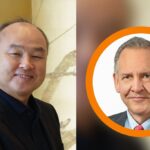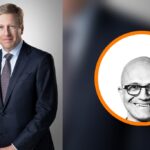

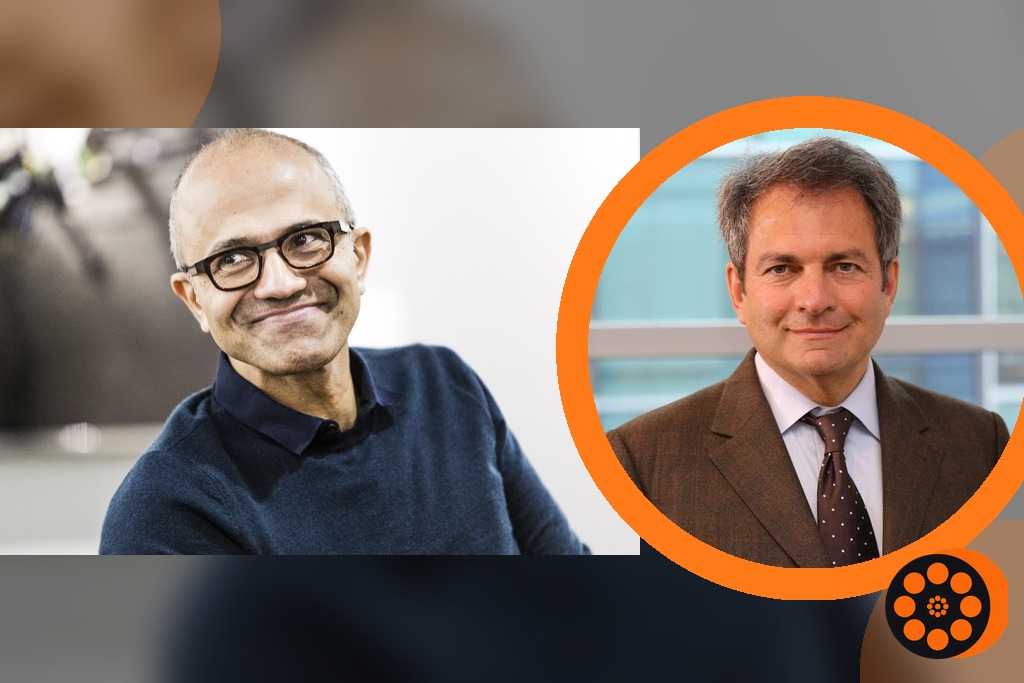
Satya Nadella and Michel Vounatsos have never run a company together, signed a deal together, or sat on the same board. The only documented link between the Microsoft chairman and the former Biogen chief executive is a shared signature. In November 2021, both men put their names to an open letter from the International Leadership Group for a Net Zero NHS, a coalition of major suppliers backing a cleaner health service in England.
Beyond that signature, their stories run in very different directions. One rebuilt a software giant around cloud computing and artificial intelligence, and still holds the top job more than a decade later. The other built a career selling medicines across three continents, took charge of a neuroscience specialist in Boston, bet the company on a contested Alzheimer's drug, and was gone within eighteen months of its approval.
This article sets out who each man is, what he actually did in the chief executive's chair, what connects them and what does not, and where both of them stand in 2026.
Quick Facts
| Detail | Satya Nadella | Michel Vounatsos |
|---|---|---|
| Full name | Satya Narayana Nadella | Michel Pericles Vounatsos |
| Born | 19 August 1967, Hyderabad, India | 1961 (reported); born and raised in Morocco, a French national of Greek extraction |
| Known for | Chairman and CEO of Microsoft | Former CEO of Biogen; co-founder of Golden Age Health |
| Education | Electrical engineering at Manipal; master's in computer science at Wisconsin-Milwaukee; MBA at Chicago Booth | Medical certificate at Bordeaux; MBA at HEC Paris |
| Became CEO | Microsoft, 4 February 2014 | Biogen, 6 January 2017 |
| Defining bet | Cloud computing, then artificial intelligence | A neuroscience focus, then the Alzheimer's drug Aduhelm |
| Status in 2026 | Still chairman and CEO of Microsoft | Executive Chairman of Golden Age Health and a board director at several health companies |
Who Is Satya Nadella?
Satya Nadella was born in Hyderabad, India, on 19 August 1967. His father, Bukkapuram Nadella Yugandhar, was an officer in the Indian Administrative Service, and his mother, Prabhavati, taught Sanskrit. He studied electrical engineering at the Manipal Institute of Technology, then moved to the United States, taking a master's degree in computer science at the University of Wisconsin-Milwaukee in 1990 and an MBA at the University of Chicago Booth School of Business in 1997.
His first job in America was on the technology staff at Sun Microsystems. In 1992 he joined Microsoft, the company he would eventually lead. He was not a celebrity hire or an outside turnaround specialist. He was a career insider who spent more than two decades learning how the company's biggest platforms were built and sold.
The climb ran through some of Microsoft's most technical businesses:
- He led engineering for online services, including the Bing search engine.
- In 2011 he became president of the Server and Tools business, the division behind Windows Server and the early Azure cloud.
- He then ran the Cloud and Enterprise group as executive vice president, which made him the executive most closely tied to Microsoft's cloud future.
On 4 February 2014, Microsoft named him chief executive, only the third in its history after Bill Gates and Steve Ballmer. In June 2021 he added the chairman's title, the first person since Gates to hold both roles at the same time.
Nadella: The Insider Who Rebuilt Microsoft
Nadella inherited a company that was rich, powerful, and widely seen as slow. Windows still printed money, but the smartphone era had passed Microsoft by, and its culture was famous for internal rivalry. His answer was a strategy summed up as mobile first, cloud first, and a cultural reset built on what he called a growth mindset: a company of learn-it-alls rather than know-it-alls.
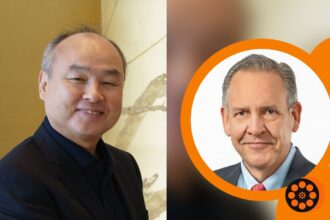
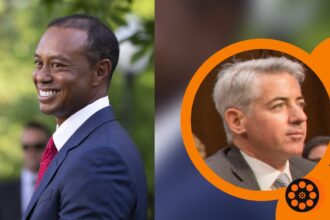
On his first day as CEO he wrote to every employee, and one line from that email has followed him ever since:
"Our industry does not respect tradition. It only respects innovation."
He backed the words with deals and with patience. Microsoft bought LinkedIn in 2016 for about $26 billion, GitHub in 2018 for about $7.5 billion, and closed its purchase of Activision Blizzard in October 2023 for about $69 billion. Azure grew from a challenger into one of the two dominant cloud platforms in the world. His 2017 book, Hit Refresh, set out the philosophy in his own words, and its proceeds went to Microsoft Philanthropies. The result is now studied as a model corporate turnaround: a legacy giant that regained its place at the centre of the industry without being broken up or sold.
Nadella: The AI Years and Where He Stands in 2026
The second half of Nadella's tenure has been defined by one partnership. Microsoft began working with OpenAI in 2019, deepened the relationship in January 2023, and then rewrote it twice as both companies grew. In October 2025 the two signed a definitive agreement under which Microsoft holds roughly 27 percent of OpenAI Group PBC, an investment valued at about $135 billion, while OpenAI committed to buy a further $250 billion of Azure services. In April 2026 an amended agreement kept Microsoft as OpenAI's primary cloud partner, with OpenAI products shipping first on Azure, but allowed OpenAI to serve its products on any cloud and made Microsoft's licence to OpenAI technology non-exclusive through 2032.
Nadella has also reshaped his own job. In October 2025 he made Judson Althoff chief executive of Microsoft's commercial business, a move Nadella said would let him and the engineering leaders stay focused on the company's deepest technical work, from data centres to AI science. He remains chairman and chief executive of Microsoft itself, and the numbers under him are still rising: for the year ended 30 June 2026, Microsoft reported revenue of $331.8 billion, up 18 percent, and said Azure revenue passed $100 billion for the first time.
In October 2026 the White House awarded him the National Medal of Technology and Innovation, the highest American honour for technology achievement, citing his rejuvenation of Microsoft for the cloud era and the hyperscale infrastructure he built for artificial intelligence. Few chief executives anywhere have held one of the world's largest companies for so long, and fewer still have bet so completely on artificial intelligence as its next foundation.
Also Read: Oliver Zipse and Satya Nadella: The Engineer Who Ran BMW and the Man Who Refreshed Microsoft
Who Is Michel Vounatsos?
Michel Vounatsos is a pharmaceutical executive whose career ran through Saudi Arabia, Poland, China, and the United States before it reached the top of Biogen. He was born and raised in Morocco, a French national of Greek extraction, and he speaks six languages. A Boston Globe profile published as he took the Biogen job also noted a private passion that fits the travelling life: he has run marathons on three continents.
His training was unusual for a drug company chief. He earned a C.S.C.T. certificate in medicine from the Université Victor Segalen, Bordeaux II, then added an MBA from HEC Paris, one of France's leading business schools. He began his career in 1990 at Ciba-Geigy, the Swiss drug maker that later became part of Novartis, where he held management posts for six years.
That mix of medicine and marketing shaped everything that followed. Vounatsos was never a laboratory scientist or a finance chief. He was a commercial leader: the executive who works out how a medicine reaches doctors, hospitals, insurers, and patients in very different health systems.
Vounatsos: Twenty Years at Merck
In 1996 Vounatsos joined Merck and Co., known as MSD outside North America, and stayed for twenty years. The posts rose steadily in scale:
- He ran Merck businesses in Poland, then in Belgium and Luxembourg, and held senior commercial roles across Europe.
- From 2008 he led MSD in China, first as president and then as chairman and president, giving him rare experience of the world's most complex drug market.
- He returned to global roles as President of Merck Customer Centricity, then President of Primary Care and Merck Customer Centricity, responsible for the company's huge primary care portfolio.
Two decades of that work made him one of the industry's most experienced international operators. What he had never done, when Biogen came calling, was run a whole company.
Vounatsos: The Biogen Years
Biogen hired Vounatsos in April 2016 as executive vice president and chief commercial officer. His first assignment was a triumph: he led the commercial organisation through the launch of Spinraza, which won approval in December 2016 as the first treatment for spinal muscular atrophy, a rare and devastating genetic disease. On 19 December 2016, Biogen's board named him chief executive, and he took over from George Scangos on 6 January 2017.
His strategy was focus. Biogen would aim to be the leader in neuroscience, protecting its multiple sclerosis franchise while expanding in Alzheimer's disease and other brain disorders, and it would redirect about $400 million a year toward research and commercial priorities. For the first years the plan held together: Spinraza grew worldwide, the MS business stayed resilient, and Biogen remained one of the most profitable biotech companies in the world.
Then came Aduhelm. The antibody drug aducanumab was meant to slow Alzheimer's disease by clearing amyloid plaques from the brain. On 7 June 2021 the US Food and Drug Administration granted it accelerated approval, the first new Alzheimer's treatment approved in almost two decades. It was also one of the most contested approvals in the agency's history: outside advisers had questioned whether the drug worked, the launch price was set at about $56,000 a year and later halved, and many doctors and hospitals declined to use it.
The end came quickly. In April 2022 the US Centers for Medicare and Medicaid Services ruled that Medicare would cover Aduhelm only for patients in clinical trials, which closed off most of its potential market. On 3 May 2022, Biogen announced that Vounatsos would step down once a successor was found, that the sales operation built for Aduhelm would be substantially eliminated, and that a further $500 million of annual costs would be cut. On 14 November 2022, Christopher Viehbacher, a former Sanofi chief executive, succeeded him. Biogen discontinued Aduhelm itself in January 2024, under Viehbacher, saying the decision was not based on safety or efficacy concerns. The defining bet of Vounatsos's tenure had failed commercially, and his time at Biogen is inseparable from it.
Vounatsos After Biogen
Leaving Biogen did not end Vounatsos's career; it changed its shape. In 2023 he co-founded Golden Age Health, a Singapore-headquartered company that brings approved and near-approved medicines for rare and specialty diseases to patients in Greater China, Southeast Asia, and the Gulf, regions he knows well from his Merck years. He serves as its co-founder and executive chairman, and in October 2026 the company announced a strategic investment from Kos Biotechnology Partners to speed up that work.
His own statement of purpose on the company's profile explains the mission in one line:
"Science only fulfils its promise when patients can reach it. Golden Age Health exists to collapse that distance."
Around that main role sits a portfolio of board seats that keeps him inside global healthcare:
- Independent director of Zai Lab since 2023, where he chairs the commercial committee.
- Director of Revvity, the life sciences and diagnostics company, since 2020.
- Chairman of the board of Lys Therapeutics since 2024, and a director of AIVITA Biomedical since 2024.
- Board member of Quris-AI since January 2024, a company using artificial intelligence to predict whether new drugs will be safe and effective in humans.
- Chairman of the supervisory board of Liryc, the heart rhythm research institute at the University of Bordeaux, and an adviser to Tsinghua University's School of Pharmaceutical Sciences.
It is a second career built on access and commercialisation rather than on running one giant company, and it sits in the same territory as digital health innovation: the unglamorous work of getting proven science to the patients and systems that need it.
Also Read: Tyra Banks and Greg Hayes: The Supermodel Mogul and the Aerospace Chief
The Connection Question
So what actually connects Satya Nadella and Michel Vounatsos? One document, and a shared belief that big companies had a duty to clean up the supply chain behind the health service they sold into.
The International Leadership Group for a Net Zero NHS brought together the chief executives of the health service's biggest global suppliers, and was led by Lord Prior, then chairman of NHS England. On 5 November 2021 the group published an open letter in The BMJ to the NHS's 80,000 suppliers. It committed its members to reach net zero emissions by 2045 or earlier across their operations and supply chains, supporting the NHS goal of a net zero health service: 2040 for the emissions the NHS controls directly, and 2045 for those in its supply chain. Nadella signed for Microsoft. Vounatsos signed for Biogen. Executives from AstraZeneca, GSK, Apple, Unilever, Johnson and Johnson, and others signed the same letter.
That membership is the whole of the documented connection. There is no record of the two men negotiating together, launching a product together, investing together, or serving on a board together, and no Microsoft and Biogen partnership led by the two of them has ever been announced. They also appeared on the same White House roster in April 2020, when President Trump named industry groups to advise on reopening the economy during the pandemic, but even there they sat in different groups: Nadella for technology, Vounatsos for healthcare. Two names on one list is a link worth explaining. It is not a partnership, and it should never be written up as one.
Personal Lives
Nadella married Anupama, who trained as an architect, in 1992, the year he joined Microsoft. They have three children and live in Bellevue, Washington. Their son Zain, who was born with cerebral palsy, died in February 2022 at the age of 26, a loss Nadella has spoken about publicly and one that shaped his writing on empathy in Hit Refresh. His best-known passion outside work is cricket; he is a co-owner of the Seattle Orcas, a Major League Cricket team.
Vounatsos keeps his family far from his corporate biographies, but one detailed profile exists. The Boston Globe reported in 2017 that his wife, Martine, is a doctor, that they have three children, two of whom studied at universities in Boston, and that the family spent about 25 years moving around the world with his postings. Beyond that, he has kept his private life private, and this article respects that line: what is set out here is what reputable reporting has already placed on the public record.
What They Share, and What They Do Not
For all the distance between Redmond and Boston, the two careers rhyme in a few places:
- Both men were insiders in style if not in fact: Nadella rose through Microsoft for 22 years before leading it, while Vounatsos spent 20 years at Merck learning the drug business market by market.
- Both were handed mature giants and told to find the next era: Nadella had to move Microsoft beyond Windows, and Vounatsos had to move Biogen beyond multiple sclerosis.
- Both staked their reputations on bold bets: Nadella on cloud and then AI, Vounatsos on neuroscience and one Alzheimer's drug.
- Both signed the 2021 Net Zero NHS letter as chief executives of NHS suppliers.
The differences matter more:
- Nadella's bet compounded. Azure and AI made Microsoft more valuable than ever, and he remains in post after more than a decade.
- Vounatsos's bet collapsed. Aduhelm won approval but not a market, and he left Biogen within eighteen months of its launch.
- Nadella leads from the centre of the world's technology industry. Vounatsos now works at its edges, chairing a young company and advising boards.
- There is no personal, family, or business relationship between them on any public record.
What Is Known and What Is Not Public
| Claim | Status |
|---|---|
| Both men signed the Net Zero NHS open letter in November 2021 | Documented |
| The two are business partners | Not documented |
| A Microsoft and Biogen deal was led by both men | Not documented |
| Michel Vounatsos is still the CEO of Biogen | False; he stepped down in November 2022 |
| Satya Nadella still leads Microsoft in 2026 | Documented in Microsoft's 2026 annual report |
| The two are related or close friends | Not documented |
| Michel Vounatsos's exact birth date | Not published in authoritative sources |
Also Read: Tim Dove and Shari Redstone: The Oil Chief and the Media Heir
Frequently Asked Questions
Are Satya Nadella and Michel Vounatsos business partners?
No partnership between them is documented. They have never run a company together, and no joint venture, investment, or contract links them. Their names appear together because both were members of the International Leadership Group for a Net Zero NHS in 2021.
What is the connection between Satya Nadella and Michel Vounatsos?
The connection is a shared signature on the group's open letter of 5 November 2021, in which major NHS suppliers committed to net zero emissions by 2045. Nadella signed as Microsoft's chief executive and Vounatsos as Biogen's chief executive. Nothing in the public record shows a closer working relationship.
Is Michel Vounatsos still the CEO of Biogen?
No. Biogen announced in May 2022 that he would step down, and Christopher Viehbacher succeeded him on 14 November 2022. Vounatsos had led Biogen since January 2017.
What does Michel Vounatsos do now?
He is co-founder and executive chairman of Golden Age Health, which he helped start in 2023 to bring rare and specialty disease medicines to underserved markets in Asia and the Gulf. He also sits on the boards of Zai Lab, Revvity, Lys Therapeutics, AIVITA Biomedical, and Quris-AI.
How long has Satya Nadella been CEO of Microsoft?
Since 4 February 2014, which makes him one of the longest-serving chief executives in big technology. He became chairman as well in June 2021, and Microsoft's 2026 annual report still carries his name in both roles.
Was Aduhelm approved while Michel Vounatsos led Biogen?
Yes. The FDA granted Aduhelm accelerated approval on 7 June 2021, during his tenure, and he led the company through its difficult launch. After Medicare limited coverage in April 2022, Biogen announced his departure the following month. Biogen discontinued the drug in January 2024, after he had left, and said the decision was not based on safety or efficacy concerns.
Conclusion
Satya Nadella and Michel Vounatsos make an instructive pair precisely because they are not partners. One shows what a decade of compounding bets can do to a giant that learns to move again. The other shows how quickly a chief executive can fall when a single product carries the whole strategy and the market says no.
Their one documented meeting point, a 2021 letter about cleaning up the carbon footprint of healthcare, says something real about both of them: at that moment, each stood at the head of a company the NHS depended on, and each was willing to sign his name to a long-term promise. Everything beyond that shared signature belongs to two separate careers, and that is exactly how their story should be told.