
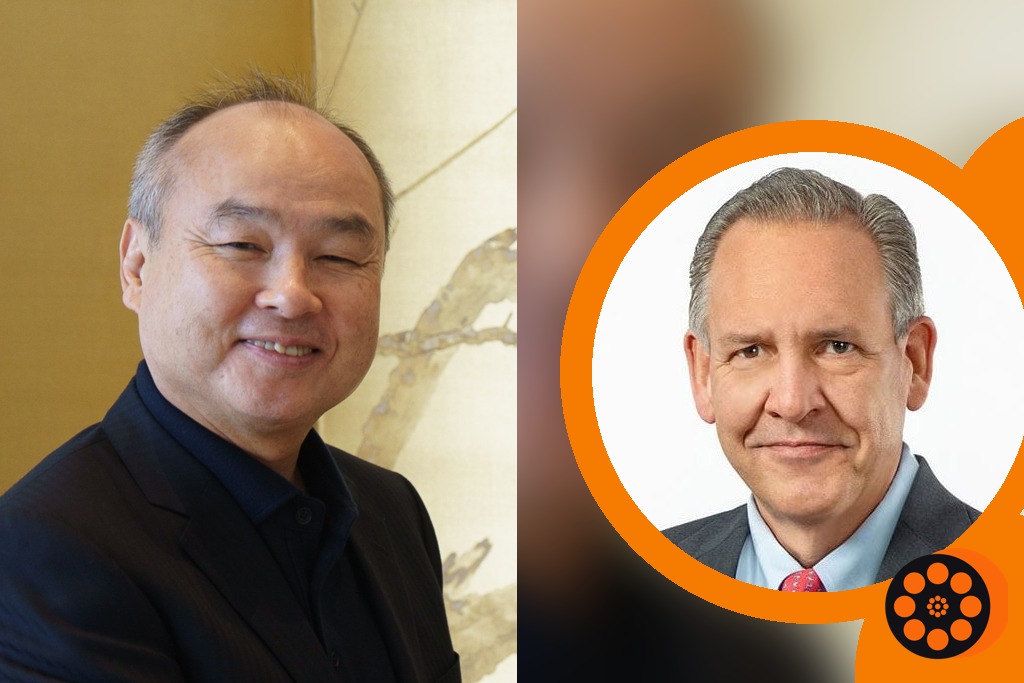
Masayoshi Son and Greg Hayes have never worked together, never sat on the same board, and have no documented meeting of any kind. One is a founder who owns roughly a third of the company he built and bets it, repeatedly, on single ideas: the internet, Alibaba, and now artificial intelligence. The other is a career finance man who was handed one of America’s oldest industrial conglomerates and spent a decade taking it apart and rebuilding it as RTX, the largest aerospace and defence company in the world. Search engines pair their names because both are architects of enormous transactions. The honest comparison is a study in opposites: the gambler who owns the casino, and the engineer of mergers who never owned the machine at all.
In 2026 the contrast is sharper than ever. Son, at sixty nine, has just completed the largest single investment programme of his life, more than sixty billion dollars into OpenAI, and chairs Stargate, the half trillion dollar project to build America’s AI infrastructure. Hayes, at sixty five or so, has left the chief executive’s office behind: his advisory role at RTX ended in January 2026, and his working life now runs through other people’s boardrooms. One man is making his biggest bet. The other has finished making his, and is living with what it built.
Quick Facts
| Detail | Masayoshi Son | Greg Hayes |
|---|---|---|
| Known for | Founding SoftBank and making the boldest technology bets of his era, from Alibaba to OpenAI | Breaking up United Technologies and merging its aerospace arm with Raytheon to create RTX |
| Born | 11 August 1957, Tosu, Saga, Japan | 1960 or 1961, United States |
| Defining role | Chairman and chief executive of SoftBank Group; chairman of Arm and of Stargate | Former chief executive and chairman of United Technologies and of RTX |
| Signature achievement | A 20 million dollar Alibaba stake in 2000 that was worth about 75 billion dollars by 2014 | The 2020 merger that formed RTX, and the separations of Otis and Carrier |
| Family | Wife Masami; two daughters | Married; family kept out of public life |
Who Is Masayoshi Son?
Masayoshi Son was born Masayoshi Yasumoto on 11 August 1957 in Tosu, a small city in Saga Prefecture, to a Zainichi Korean family whose poverty was of the absolute kind. His grandfather had come from Daegu, in Korea, to work as a miner. His father raised pigs and chickens, built the family home without permission on railway land, and eventually made the family the first in town to own a car through a sake business that was itself not entirely legal. The family used a Japanese surname in public, and the boy learned early what it cost to be Korean in postwar Japan.
Two decisions made him. The first was a schoolboy’s nerve: idolising Den Fujita, the founder of McDonald’s Japan, he flew to Tokyo uninvited, appeared at the company’s headquarters, and got fifteen minutes. Fujita told him to learn English, study computers, and go to America. The second was following that advice to the letter. Son left school, moved to California at sixteen, finished high school in three weeks, and studied economics at the University of California, Berkeley. Still a student, he co-created an electronic translator and sold it to Sharp for 1.7 million dollars, then made more money importing used video game machines from Japan. In 1981, back in Japan and having taken his Korean surname Son for professional life despite his family’s fears, he founded a software distribution company called SoftBank. He was twenty four.
Son: The Bets That Made and Nearly Broke Him
Son’s career is a sine wave drawn in billions. In 1995 he was an early investor in Yahoo. In 2000, after a meeting with a young Chinese entrepreneur named Jack Ma that reportedly lasted minutes, he put twenty million dollars into Alibaba. By Alibaba’s New York listing in 2014 that stake was worth about seventy five billion dollars, the most profitable venture investment ever made at that time. In between came the crash: at the peak of the dot-com bubble in early 2000 Son was briefly the richest person in the world, and as SoftBank’s shares collapsed he lost more than fifty nine billion dollars, then the largest personal loss in history.
The pattern never changed, only the numbers grew. He bought control of Sprint in America in 2013 and lived to see it merged into T-Mobile in 2020. In 2016 he bought the British chip designer Arm for about twenty four billion pounds, the largest technology acquisition in European history at the time. In 2017 he launched the Vision Fund, at about one hundred billion dollars the largest technology investment fund ever raised, and sprayed capital across the world’s startups. Its most notorious holding, WeWork, collapsed in value and forced a rescue package of about nine and a half billion dollars in 2019. For the year ended March 2022 the Vision Fund lost a record three and a half trillion yen, and Son told his investors, in public, that he was ashamed of the euphoria that had driven him.
Most men lose their nerve, their job, or both after a sequence like that. Son kept his shareholders, kept control, and did the only thing he has ever done: he found the next wave and bet the company on it earlier and bigger than anyone else. It is why, in any account of his life, the word comeback has to be used in the plural.
Son: All In on Artificial Intelligence
The current bet is total. SoftBank listed Arm in New York in 2023 and kept about ninety percent of it, making Son the chief executive who controls the chip architecture inside nearly every smartphone on earth, at the moment chips became the currency of the AI age. In January 2025 he stood at the White House beside President Trump as chairman of Stargate, a joint venture of SoftBank, OpenAI, Oracle and MGX planning to invest up to five hundred billion dollars in American AI infrastructure. He has since bought the chip designer Ampere Computing for six and a half billion dollars, acquired the data centre investor DigitalBridge for about three billion, and agreed to buy ABB’s robotics business for about five and a half billion, a deal he framed in a single sentence:
More Read
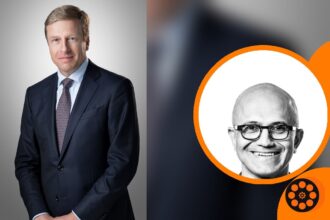
“SoftBank’s next frontier is Physical AI.”
Above all there is OpenAI. SoftBank began investing in the ChatGPT maker in 2024, sold its entire stake in Nvidia in November 2025 for nearly six billion dollars to help fund the position, and on 1 October 2026 completed a further thirty billion dollar investment, taking its cumulative commitment to about sixty four point six billion dollars for a stake of roughly thirteen percent. The market, for now, is applauding: SoftBank reported a record annual profit of about five trillion yen for the year ended March 2026, and in June its market value briefly passed Toyota’s, making it Japan’s most valuable listed company. Reports in October described a further fifty billion dollars of planned AI investment in Malaysia, a figure announced by Malaysia’s prime minister and not confirmed by SoftBank. Son, who owns roughly a third of SoftBank’s shares, is sixty nine years old and behaving like a man of thirty.
Also Read: Wayne Gretzky and Larry Culp: The Great One and the Turnaround Chief
Who Is Greg Hayes?
Gregory J. Hayes is the opposite kind of corporate animal: a steward, not a founder. He grew up in Williamsville, New York, took a bachelor’s degree in economics from Purdue University in 1982, qualified as a certified public accountant, and joined the industrial company Sundstrand. When United Technologies acquired Sundstrand in 1999, Hayes came with it, and UTC, a conglomerate of elevators, air conditioners, helicopter makers and jet engine builders, became the whole of his career. He was its chief financial officer from 2008 to 2014, the numbers man through the financial crisis, and in November 2014 he became its chief executive. In September 2016 he added the chairmanship.
Where Son’s gift is conviction about the future, Hayes’ is arithmetic about the present. He believes conglomerates hide weak businesses inside strong ones, that focus is worth more than size, and that a chief executive’s job is to put every asset where it is worth most, including out of the company entirely. His decade at the top of UTC and its successor is the most complete demonstration of that philosophy in modern American industry.
Hayes: Breaking Up and Building RTX
The dismantling began almost immediately. In 2015 Hayes sold Sikorsky, the helicopter maker and an American icon, to Lockheed Martin for nine billion dollars. He then bought in the opposite direction, acquiring Rockwell Collins in a deal worth about thirty billion dollars including debt, which closed in November 2018 and created Collins Aerospace, a giant of avionics and aircraft systems. Then came the break-up itself: the elevator business Otis and the air conditioning business Carrier, names that had defined United Technologies for a century, were separated as independent companies in April 2020.
On the same day those separations completed, 3 April 2020, the transformation closed: UTC’s aerospace businesses, Pratt & Whitney and Collins Aerospace, merged with Raytheon to form Raytheon Technologies, the largest aerospace and defence company in the world, with Hayes as its first chief executive. A merger of equals negotiated in peacetime had closed in the first month of a pandemic that grounded the world’s airlines, the company’s core customers. Hayes chaired the board from 2021, handed the chief executive’s office to Christopher Calio in May 2024, served as executive chairman until April 2025, and remained a special advisor to his successor until that role ended on 2 January 2026.
Hayes After the Corner Office
Retirement, for Hayes, is a portfolio of boardrooms. He joined the board of BD, the medical technology company Becton, Dickinson and Company, in March 2025, as that company prepares a separation of its own, precisely the kind of transaction he spent a decade executing. He serves on the board of Phillips 66, the energy company, and chairs the board of NAF, the education non-profit formerly known as the National Academy Foundation. There is no memoir, no fund, no comeback vehicle: the man who owned nothing of UTC while he ran it now lends the experience of running it to companies facing their own break-ups and mergers. His public profile, always low, has gone quieter still since his advisory role at RTX ended in January 2026.
Also Read: Nelson Peltz and Amancio Ortega: The Activist and the Founder
The Connection Question
Stated plainly: there is no connection to report. No corporate record places Hayes at any SoftBank company or Son at United Technologies or RTX. Neither man has ever served on a board the other sat on, invested publicly in the other’s company, or been photographed or quoted about the other. They operate in different industries, on different continents, in different corporate traditions: Son in Tokyo, building an investment empire he personally controls; Hayes in American industry, a professional manager who rose through finance. The pairing exists because search engines and readers group together the men who sign the largest cheques, not because the two stories have ever touched. What they share is a method, and a scale, and that comparison is the real subject of this article.
Personal Lives
Son married Masami Ohno in 1979, while he was still building his first businesses in America, and they have two daughters. Almost nothing about the family is public, by design: no interviews, no public appearances, no photographs in circulation that a publisher can freely use. His younger brother, Taizo Son, is the family’s other public figure, a technology entrepreneur and investor in his own right in Tokyo and Singapore. Son lives in Tokyo, in a life arranged entirely around SoftBank, whose shareholders’ meetings double as his public stage.
Hayes is, if anything, more private. He is married, and his wife and family are not named in the mainstream profiles of him and do not appear at his public events. A decade running one of America’s largest companies produced almost no personal publicity at all, which for a chief executive of his generation was a choice, and a successful one: the record of Greg Hayes is a record of transactions, not of a personality. On this, the gambler and the engineer are in rare agreement. Both men are famous. Neither man’s family is.
What They Share, and What They Do Not
They share the belief that a company should be remade by a small number of enormous decisions rather than a thousand small ones. Son’s Alibaba cheque, his Arm acquisition, and his OpenAI commitment; Hayes’ Sikorsky sale, his Rockwell Collins purchase, and the Raytheon merger: each man has a short list of transactions that define everything else he did. They share, too, the experience of signing the deal of a lifetime at the worst possible moment, Son as the bubble burst in 2000, Hayes as the merger closed into a pandemic in 2020, and of being proved broadly right over the years that followed. And they work in the two industries where the stakes of those decisions are now highest, one in artificial intelligence and one in aerospace, the twin technologies on which national power in this century is being built.
They do not share risk, and this is the deepest difference. Son bets his own money first: roughly a third of SoftBank is his, he has personally owed the company billions on side investments when the Vision Fund soured, and when his bets fail he is poorer by sums that would bankrupt nations. Hayes never owned a meaningful part of UTC or RTX. His risk was reputational, and his discipline, the accountant’s refusal to confuse the company’s balance sheet with his own convictions, is precisely what Son’s career argues against. One man is the argument for the owner gambler. The other is the argument for the professional steward. American and Japanese capitalism have been running both experiments for forty years, and in 2026, both experiments are still on the board.
What Is Known and What Is Not Public
| Known and confirmed | Not public or not verified |
|---|---|
| Son is SoftBank’s chairman and chief executive, owns roughly a third of its shares, and chairs both Arm and Stargate | Any meeting, partnership, or business dealing between Son and Hayes, for which no evidence exists |
| SoftBank’s cumulative investment in OpenAI reached about 64.6 billion dollars in October 2026, for roughly 13 percent | SoftBank’s reported 50 billion dollar Malaysia plan, announced by Malaysia’s prime minister and not confirmed by the company |
| Hayes led United Technologies from 2014, broke it up, and merged its aerospace arm with Raytheon in April 2020 to form RTX | Greg Hayes’ exact date of birth, which authoritative sources give only as 1960 or 1961 |
| Hayes’ advisory role at RTX ended on 2 January 2026; he serves on the boards of BD and Phillips 66 | Any plan by Hayes to return to an executive role, or by Son to retire |
| Son lost more than 59 billion dollars in the dot-com crash, then the largest personal loss in history | The private lives of either man’s family, which both keep out of the public record |
Also Read: Tim Dove and Shari Redstone: The Oil Chief and the Media Heir
Frequently Asked Questions
Who is Masayoshi Son?
Masayoshi Son is a Japanese entrepreneur and investor, born on 11 August 1957 in Tosu, Saga, to a Zainichi Korean family. He founded SoftBank in 1981 and remains its chairman and chief executive and largest shareholder. His twenty million dollar investment in Alibaba in 2000 became the most famous venture bet of its era, and after surviving the dot-com crash and the Vision Fund’s record losses, he has committed SoftBank to artificial intelligence, including about sixty four point six billion dollars invested in OpenAI and the chairmanship of the Stargate infrastructure project.
Who is Greg Hayes?
Greg Hayes is an American corporate executive who led United Technologies from 2014 and became the first chief executive of RTX, the aerospace and defence giant formed in April 2020 when UTC’s aerospace businesses merged with Raytheon. A Purdue economics graduate and certified public accountant, he had been UTC’s chief financial officer from 2008 to 2014. He retired as RTX chief executive in May 2024, served as executive chairman until April 2025, and now sits on the boards of BD and Phillips 66.
Are Masayoshi Son and Greg Hayes connected?
No. There is no evidence of any meeting, partnership, shared board, or business dealing between Masayoshi Son and Greg Hayes. Son has never held a role at United Technologies or RTX, and Hayes has never held a role at SoftBank. The two are compared because both reshaped giant companies through a small number of enormous transactions, Son as a founder and owner in technology investment, Hayes as a professional chief executive in American industry.
What is Masayoshi Son’s biggest bet now?
OpenAI. SoftBank completed a further thirty billion dollar investment in October 2026, bringing its cumulative investment in the ChatGPT maker to about sixty four point six billion dollars for a stake of roughly thirteen percent. Son also chairs Stargate, the SoftBank, OpenAI, Oracle and MGX venture planning up to five hundred billion dollars of AI infrastructure in the United States, and SoftBank owns about ninety percent of the chip designer Arm.
What did Greg Hayes build at RTX?
Hayes took United Technologies apart and rebuilt its aerospace half into RTX. As chief executive he sold Sikorsky in 2015, bought Rockwell Collins in 2018, separated the Otis elevator and Carrier businesses in April 2020, and closed the merger of Pratt & Whitney and Collins Aerospace with Raytheon on 3 April 2020. The result, renamed RTX in 2023, is the world’s largest aerospace and defence company.
Is Greg Hayes retired?
From executive office, yes; from work, no. Hayes stepped down as RTX chief executive in May 2024, as executive chairman in April 2025, and his role as a special advisor to his successor ended on 2 January 2026. He remains a director of BD, the medical technology company, which appointed him in March 2025, and of Phillips 66, and he chairs the board of the education non-profit NAF.
Conclusion
Masayoshi Son and Greg Hayes never met on any record that exists, and they did not need to. Between them they wrote the two operating manuals of the modern mega-deal: Son’s says that the future belongs to whoever believes earliest and borrows biggest, and Hayes’ says that a company is worth most when every part of it is somewhere it belongs. In 2026 the gambler’s manual is being tested at the largest scale of his life, on artificial intelligence, while the engineer’s masterwork, RTX, flies and defends under other hands. Two men, two balance sheets, one shared conviction: that a handful of decisions, made at full size and defended for years, are what a career at the top actually consists of.