
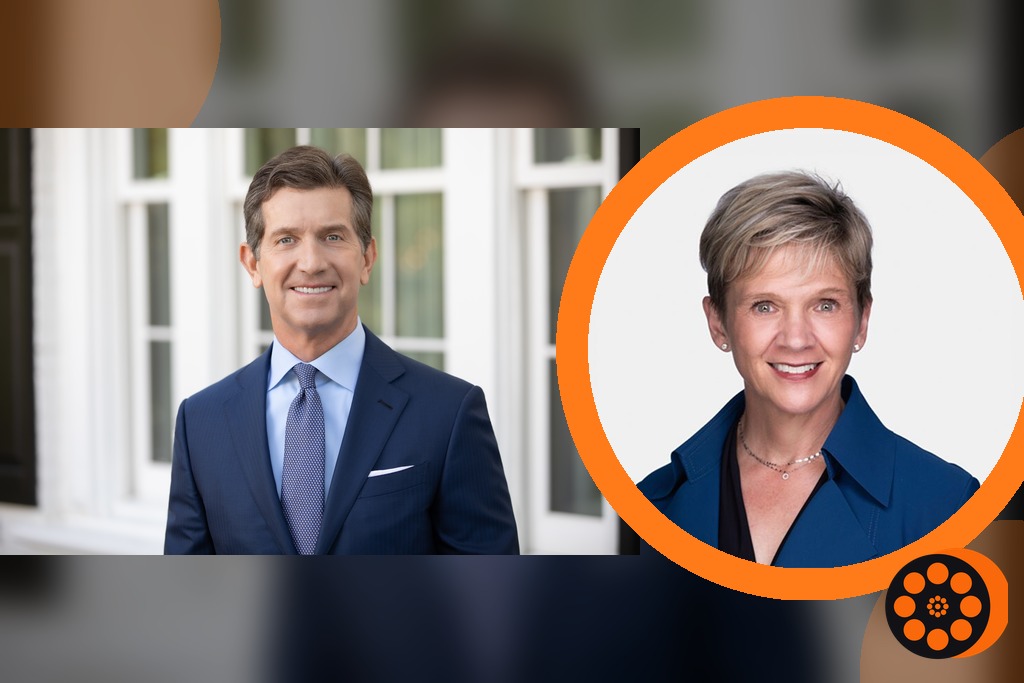
Alex Gorsky and Heidi Capozzi have never worked together, never sat on the same board, and are not related. No reliable source records a meeting, a partnership, or any professional dealing between them. What links their names is a theme rather than an event: both built careers at the very top of American business around one subject, people, at a scale few executives ever handle.
Gorsky is the former chairman and chief executive of Johnson & Johnson, the world’s largest healthcare company, which he led for almost a decade after starting his career as an Army officer and then as a pharmaceutical sales representative. Capozzi is the chief people officer of CVS Health, and before that held the same job at McDonald’s and Boeing. He was the man at the top of the chart. She is the specialist who looks after everyone on it.
Here is who each of them is, what each actually did, why their names are searched together, and what the public record does and does not show.
Quick Facts
| Detail | Alex Gorsky | Heidi Capozzi |
|---|---|---|
| Full name | Alexander Michael Gorsky | Heidi B. Capozzi |
| Born | 1960, Kansas City, Kansas | Not publicly documented |
| Known for | Former chairman and CEO of Johnson & Johnson | Chief people officer of CVS Health |
| Education | West Point (BS, 1982), Wharton (MBA, 1996) | Oberlin College (BA), University of Minnesota (MA) |
| Route to the top | Army officer, then a sales representative in 1988 | Human resources specialist across three industries |
| Peak role | Chairman and CEO of Johnson & Johnson, 2012 to 2022 | People chief at Boeing, McDonald’s, then CVS Health |
| In 2026 | Director of Apple, JPMorgan Chase and IBM; investor | Still CVS Health chief people officer |
| Documented link | None | None |
Who Is Alex Gorsky?
Alex Gorsky was born in 1960 in Kansas City, Kansas, the third of six children of Albert and Loretta Gorsky. His grandparents had immigrated to the United States from Russia and Croatia. As a schoolboy in Michigan he was chosen for Boys State and then Boys Nation in 1977, and the local congressman, Guy Vander Jagt, nominated him to the United States Military Academy at West Point.
West Point shaped everything that followed. Gorsky graduated in 1982 with a Bachelor of Science degree, having earned the Ranger tab at the Army’s Ranger School the year before. He joined the artillery branch and served six years as an Army officer, leading a platoon as a young lieutenant and leaving the service with the rank of captain. Business school came later: he earned his MBA from the Wharton School at the University of Pennsylvania in 1996, partway through his corporate career rather than before it.
In 1988 he joined Johnson & Johnson as a sales representative at its Janssen pharmaceutical business, the classic bottom rung of the industry ladder. Over the next decade he climbed through sales, marketing and management roles inside the company’s pharmaceutical industry operations, learning the business from the sample bag upward.
Gorsky: The Climb, Novartis and the Top Job
Gorsky’s route to the top was not a straight line inside one company. In 2001 he left Johnson & Johnson for the Swiss drugmaker Novartis, where he rose to lead its pharmaceutical business in North America. In 2003 he came back, and the second spell was the decisive one: group chairman roles, then worldwide chairman of the Medical Devices and Diagnostics group from September 2009, then vice chairman in 2011 as the company prepared its succession.
On 26 April 2012 he became chief executive of Johnson & Johnson, and that December he added the chairmanship. He was only the seventh person to hold the combined chairman and chief executive role since the company listed on the stock exchange in 1944, a measure of how rarely the job changes hands.


Under Gorsky the company became the largest healthcare business in the world, with more than 130,000 employees across pharmaceuticals, medical devices and consumer health. The defining deal of his tenure was the acquisition of the Swiss biotech Actelion for about $30 billion, completed in 2017 and then the largest purchase in the company’s history. In February 2021 the company’s Janssen arm won United States authorisation for its single-shot COVID-19 vaccine, a genuine scientific achievement delivered at pandemic speed.
His tenure also carried a heavy legal burden. Tens of thousands of lawsuits claimed that the company’s talc products caused cancer, and in 2020, on his watch, Johnson & Johnson stopped selling its talc-based baby powder in the United States and Canada. A fair account of his decade includes both halves of that record: the growth and the vaccine, and the litigation that shadowed the company’s most famous consumer product.
His final major decision was structural. In November 2021 he announced the plan to split Johnson & Johnson, separating its consumer health division, the maker of Band-Aids and Tylenol, from the pharmaceutical and medical device businesses. He handed the chief executive role to his successor, Joaquin Duato, on 3 January 2022, stayed on as executive chairman through the transition, and retired from the company in January 2023. The separation he announced was completed later that year under Duato, with the consumer business becoming a separate company called Kenvue.
Gorsky After Johnson & Johnson
Retirement, in Gorsky’s case, means a portfolio of board seats and investing rather than a quieter life. While still running Johnson & Johnson he was elected to the board of Apple in November 2021, a seat that connects his healthcare experience to the technology company’s growing health ambitions. His comment at the time captured how he sees the two worlds:
“I’ve long shared Apple’s belief that technology has the potential to improve lives and create healthier communities.”
He is also a director of JPMorgan Chase, which elected him in December 2022, and of IBM, whose board he joined in 2014. Beyond the corporate boards he serves the Cleveland Clinic and the Travis Manion Foundation, the veterans’ charity named for a Marine killed in Iraq, and he has been a vocal advocate for better mental health services for veterans and their families, a cause that runs back to his own service. In 2026 he was named the lifetime achievement honoree of the PM360 Trailblazer Awards.
His newest chapter is investing. He works as a general partner at ICONIQ Capital and is a co-founder of the Alderline Group, backing companies across healthcare and technology; in September 2026 he appeared as a named investor voice in a $311 million funding round for the biotechnology company Enveda. The sales representative who started in 1988 now helps choose which young health companies get funded.
Also Read: Oliver Zipse and Satya Nadella: The Engineer Who Ran BMW and the Man Who Refreshed Microsoft
Who Is Heidi Capozzi?
Heidi Capozzi is a career human resources executive, one of the small group of people in American business who have run the people function at more than one giant company. She studied at Oberlin College, where she earned her bachelor’s degree, and then took a master’s degree in human resources and industrial relations at the University of Minnesota, the specialist qualification for the profession she went on to lead.
Unlike Gorsky, she keeps her personal background almost entirely out of her professional profile. Her birth date, her birthplace and her family are not documented in reliable public sources, and profiles of her are built from her work record alone. That record, across three very different industries, is substantial enough to stand by itself.
Capozzi: Boeing, McDonald’s and CVS Health
Capozzi joined Boeing in 2009 and rose through its human resources leadership, becoming senior vice president and chief human resources officer in 2016. Running people at Boeing meant responsibility for well over a hundred thousand employees in the aerospace and defence industry, engineers, factory workers and executives spread across the world. Her last year in the job was among the hardest any people chief could face: the worldwide grounding of the 737 MAX from March 2019, followed by the first shock of the COVID-19 pandemic in early 2020.
In April 2020 she moved to McDonald’s as executive vice president and global chief people officer. The change of industry was dramatic, from aircraft factories to restaurants, but the people questions were the same at a larger scale: hiring, training, safety and culture for a system employing people in more than a hundred countries, through the worst disruption the restaurant business has ever seen.
In September 2024 she took her third people chief role, at CVS Health, where she remains executive vice president and chief people officer in 2026. Her remit covers human resources, labour relations, compensation and benefits, and corporate social responsibility, for a workforce of roughly 300,000 colleagues across pharmacies, clinics and health services. The move kept her in healthcare leadership, though she sits in the people seat rather than the chief executive’s chair. She also serves on the advisory board of Cornell University’s Center for Advanced Human Resource Studies, the academic hub of her profession.
Three industries, three workforces counted in the hundreds of thousands, one specialism. Where Gorsky’s career is the story of a generalist who reached the very top, Capozzi’s is the story of a specialist who became the person three different chief executives trusted with their people.
Also Read: Heidi Capozzi and Viola Davis: Two Women, Two Different Worlds
The Connection Question
So do Alex Gorsky and Heidi Capozzi have any real connection? On the public record, no. The checks are straightforward. They have never worked for the same company at the same time, or at any time: Capozzi’s employers are Boeing, McDonald’s and CVS Health, and she has never worked at Johnson & Johnson. They share no boardroom: his directorships at Apple, JPMorgan Chase and IBM do not overlap with any role of hers. No interview, panel, deal, award citation or news report places them together, and there is no family or personal relationship of any kind.
The nearest thing to an overlap is a paper one. In the late 2010s both were named in the same industry surveys of the people who lead Fortune-ranked companies, he as Johnson & Johnson’s chairman and she as Boeing’s human resources chief, and list articles of that kind are the most likely reason their names are searched as a pair.
What genuinely connects them is a subject, not an event. Both careers are arguments that people decisions are business decisions. Apple’s announcement of Gorsky’s board appointment singled out his record on people, noting that he had expanded paid parental leave and mentorship across Johnson & Johnson and made it a recognised leader on diversity and inclusion. Capozzi’s entire career is that same work done from the specialist’s chair. He was the chief executive who set the people agenda; she is the executive other chief executives hire to deliver one.
Personal Lives
Gorsky’s personal life is documented only in outline. He married Patricia Gorsky, a hospital nurse, in 1988, the same year he joined Johnson & Johnson, and the couple have one child. His public life outside business runs largely through service: the veterans’ advocacy he speaks about often, his seat on the board of the Travis Manion Foundation, and his fellowship at the George W. Bush Institute, where he is the April and Jay Graham Fellow.
Capozzi’s personal life is not part of her public record at all. She gives professional interviews about workforce questions and otherwise keeps her family, home and background private, and reliable sources simply do not document them. This article follows the same rule her own profile sets: what is public is her work, and her work is what is described here.
What unites the two personal stories is discretion. For all their seniority, neither has built a public persona outside their roles, and almost everything written about either of them concerns decisions, companies and workforces rather than private life.
What They Share, and What They Do Not
Set side by side, the two careers rhyme in clear ways:
- Both reached the top of American business without founding anything, by mastering large organisations from inside.
- Both made people the centre of their reputations, he as a chief executive praised for culture and inclusion, she as the profession’s own senior practitioner.
- Both worked at the largest scale their roles allow, workforces well over a hundred thousand.
- Both ended up, in different decades of their careers, in healthcare, the industry where the people questions are most human.
The differences are just as clear:
- Gorsky was a generalist and the final decision maker; Capozzi is a specialist who advises decision makers.
- Gorsky’s career centred on one company for over thirty years, with one Swiss detour; Capozzi has carried one specialism across three industries.
- Gorsky’s background is military and operational, formed at West Point; Capozzi’s is academic and professional, formed in the human resources discipline.
- They have never worked together, share no board, and have no documented meeting or personal link of any kind.
What Is Known and What Is Not Public
| Claim | Status |
|---|---|
| Gorsky chaired and led Johnson & Johnson from 2012 to 2022 | Documented |
| Gorsky now sits on the boards of Apple, JPMorgan Chase and IBM | Documented |
| Capozzi has been CVS Health’s chief people officer since September 2024 | Documented |
| Capozzi previously led people at Boeing and McDonald’s | Documented |
| The two worked together or share a board | No evidence; their employers and boards never overlap |
| A personal or family relationship between them | Not supported by any reliable evidence |
| Capozzi’s birth date and family details | Not publicly documented |
| Either person’s net worth | Not reliably documented; not stated here |
Also Read: Tim Dove and Shari Redstone: The Oil Chief and the Media Heir
Frequently Asked Questions
Did Alex Gorsky and Heidi Capozzi ever work together?
No. There is no record of them working together, sitting on the same board, or meeting in any documented professional setting. Gorsky spent his career at Johnson & Johnson and Novartis. Capozzi’s employers are Boeing, McDonald’s and CVS Health. Their careers run in parallel through American business, not together.
Are Alex Gorsky and Heidi Capozzi related?
There is no evidence of any family relationship, and no reliable source suggests one. The pairing appears in search results because both are senior American executives who feature in the same leadership lists and surveys, not because of any personal connection.
Is Alex Gorsky still the CEO of Johnson & Johnson?
No. Gorsky stepped down as chief executive on 3 January 2022 and was succeeded by Joaquin Duato. He remained executive chairman during the transition and retired from the company in January 2023. In 2026 he is a board director of Apple, JPMorgan Chase and IBM, and an investor with ICONIQ Capital and the Alderline Group.
What is Heidi Capozzi’s job in 2026?
She is the executive vice president and chief people officer of CVS Health, a role she took on 9 September 2024. She is responsible for human resources, labour relations, compensation and benefits, and corporate social responsibility for a workforce of roughly 300,000 people. Equity filings in March 2026 confirm she remains in the post.
Did Heidi Capozzi ever work at Johnson & Johnson?
No. Her career has run through Boeing, which she joined in 2009 and where she became chief human resources officer in 2016, then McDonald’s as global chief people officer from 2020, then CVS Health from 2024. Johnson & Johnson does not appear anywhere in her documented career.
Why are Alex Gorsky and Heidi Capozzi searched together?
Most likely because of leadership lists and comparison content. Both were named among the senior leaders of Fortune-ranked companies in the same late 2010s industry surveys, and both are closely associated with the people side of very large companies, his as a chief executive known for culture and inclusion, hers as a career chief people officer. The pairing is thematic, not personal.
Conclusion
Alex Gorsky and Heidi Capozzi are not connected by a deal, a boardroom or a family tree, and this article has not pretended otherwise. He is the Army officer who started as a sales representative and spent a decade running the world’s largest healthcare company. She is the specialist who has been trusted with the workforces of Boeing, McDonald’s and CVS Health in turn.
Read together, their careers show the two halves of leadership in very large companies: the person who carries final responsibility for everyone, and the person whose whole profession is looking after them. That shared subject, and nothing more personal, is why their names travel together.