

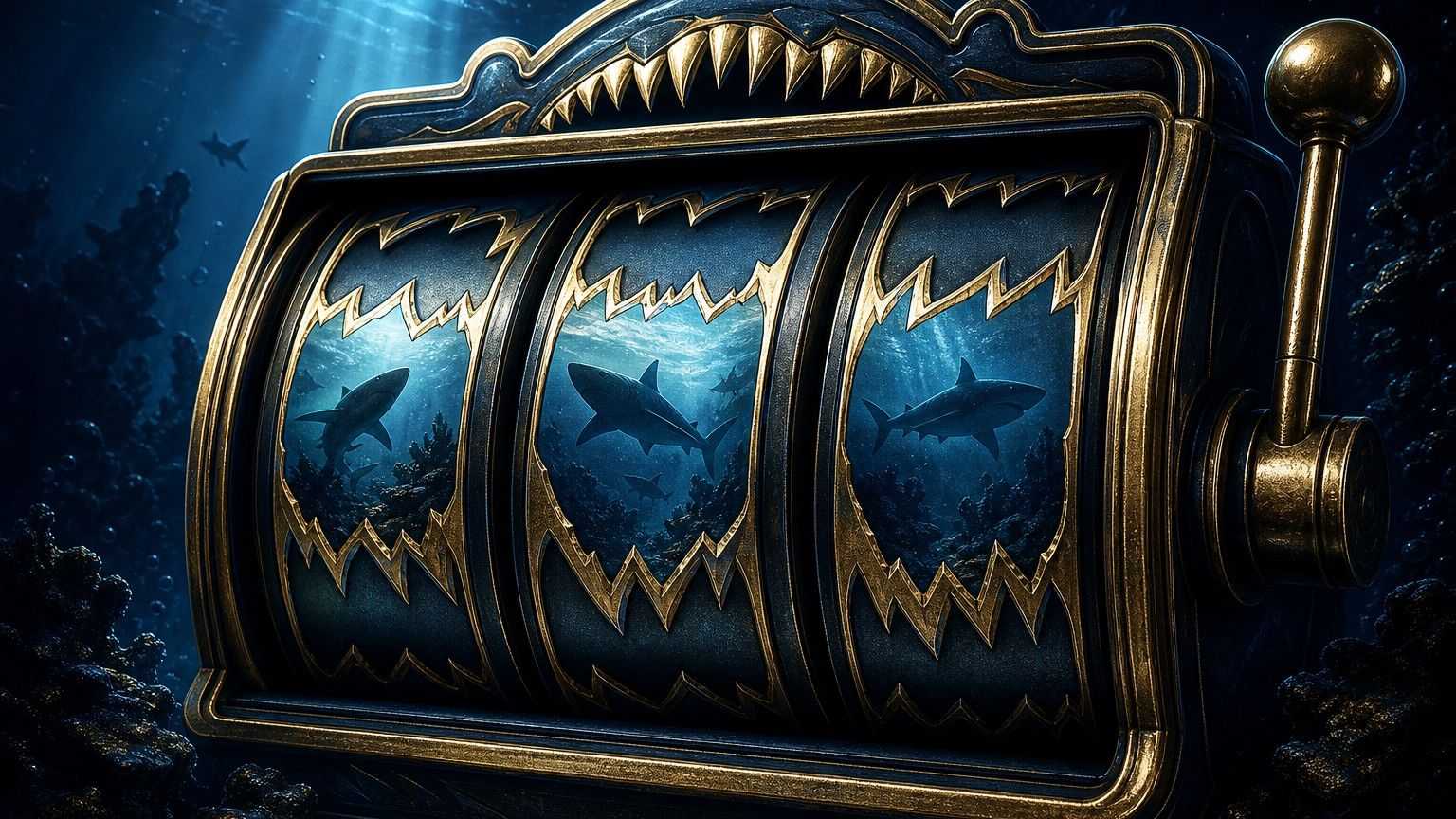
Razor Shark has sat near the top of high-volatility slot rankings for years, and once you look at the math, the reason is obvious. This is a game built to swing hard both ways. “Strategy” here doesn’t mean beating a fixed house edge. It means reading those swings well enough not to get flattened by them. For the full technical breakdown of paytables, symbol values and reel mechanics, see https://slottactics.com/slots/razor-shark/. The rest of this piece is the bigger picture. Who built the game, how it pays, which regulators and corporate owners are in the mix, and what a sane way to play it looks like in practice.
Who’s behind the tank
Push Gaming is a London studio with a second office in Malta, reportedly running since 2010. Around 2012-2013 it moved into HTML5 development, and mobile-first slot design has been its core focus ever since. The timing lines up with when the wider industry started treating mobile as the primary channel rather than a desktop afterthought.
The company holds one of the broader licensing portfolios in the industry, with current approvals that include:
- Malta Gaming Authority (MGA)
- UK Gambling Commission (UKGC)
- Romania’s ONJN
- Ontario’s AGCO and Alberta’s AGLC in Canada
- Greece’s HGC
- Sweden’s Spelinspektionen
- Gibraltar, Denmark, Michigan, and New Jersey
That footprint matters commercially as much as technically. Every jurisdiction on the list is a market Push Gaming’s catalog can legally reach, and regulators like the UKGC and MGA make suppliers clear jurisdiction-specific compliance reviews before a game goes live. That’s a slower, costlier route to market than running in unregulated grey markets, but it’s the one that keeps a studio’s content on licensed casino platforms for the long haul.
The bigger corporate news came in 2023. Push Gaming was acquired by LeoVegas Group, itself a subsidiary of MGM Resorts International. The deal was announced in spring 2023 and closed on August 31, 2023, folding one of the industry’s more consistently well-regarded slot studios into a much larger, casino-operator-backed portfolio. Financial terms were never made public, so any figure circulating online is speculation, not fact, and worth treating that way.
Grid, theme and the numbers that count
Razor Shark reportedly launched on August 20, 2019, dropping players into an underwater treasure hunt where sharks guard sunken loot. Subtle it isn’t. But the mechanics underneath are where the real substance sits.
| Attribute | Detail |
| Developer | Push Gaming |
| Release date | Reportedly August 20, 2019 |
| Theme | Underwater shark treasure hunt |
| Grid | 5 reels x 4 rows |
| Paylines | 20 |
| RTP (official) | 96.70% or 94.06%, depending on configuration |
| Volatility | High |
| Max win (stated cap) | 50,000x stake |
| Documented real-world win | 85,475x stake (October 2020, Sweden) |
Two things in that table deserve a second look before you spin a single reel.
Why the RTP figure isn’t as simple as it looks
Push Gaming officially lists two RTP configurations for Razor Shark, 96.70% and 94.06%. Operators pick which version to run, and nothing on the game screen necessarily flags which one you’ve landed on. That’s standard across the industry, driven by each operator’s own margin targets rather than anything specific to this title. Still, it’s worth checking with your casino. A two-and-a-half-point RTP gap compounds meaningfully over thousands of spins, and that’s not something to shrug off. If a site lets you see the paytable’s RTP disclosure before you deposit, look before committing real money.
Volatility, unlike RTP, isn’t split into configurations. Push Gaming rates Razor Shark High, no exceptions. In practice that means long stretches of nothing broken by short bursts where the game pays out wildly out of proportion to what you’ve staked. It’s the opposite of a slow, steady grinder slot.
The three mechanics doing the actual work
Razor Shark’s payouts come almost entirely from three mechanics stacked on top of one another. They work together like this:
| Feature | How it works |
| Mystery Stacks | Stacks of 4 seaweed symbols land on the reels and shift down one position with every spin, eventually revealing what’s underneath |
| Razor Reveal | Golden sharks turn Mystery Stacks into mini-reels, awarding instant multipliers ranging from 1x to 2,500x, or scatter symbols |
| Free Games | Triggered by landing 3 or more scatters; reels 2 and 4 fill with Mystery Stacks, and multipliers stack across the round |
The chain reaction is the point. A Mystery Stack sitting quietly on reel 3 might do nothing for four spins, then a golden shark hits, converts it into a mini-reel, and suddenly you’re looking at a four-figure multiplier out of nowhere. Free Games tends to produce the biggest numbers, since forcing Mystery Stacks onto reels 2 and 4 every spin concentrates several of them into one sustained run instead of scattering them thinly across ordinary base-game spins. The base game exists mainly to build toward that state, not to deliver the bulk of a session’s value on its own.
A word on fairness. Push Gaming says it uses only accredited testing labs across its catalog, but it doesn’t name a specific lab for Razor Shark by title. Worth flagging plainly. The general certification claim holds up; the lab attribution for this particular title just isn’t published anywhere.
The win that broke the official ceiling
This is the part that shows up in every Razor Shark writeup, and for good reason. Push Gaming’s own materials cap the game’s maximum win at 50,000x the stake. In October 2020, a player in Sweden reportedly landed 85,475x their stake on a €5 bet, walking away with a documented win north of €400,000. The win has been referenced across gambling-industry outlets ever since, though as with most individual player wins, the original session logs were never made public.
A number that sails past the stated maximum isn’t a marketing trick or a rounding error. Stated max-win figures are usually theoretical ceilings calculated over enormous sample sizes, and real results can occasionally land outside the modeled range in either direction. Plainly, it’s a rare one-off, not a preview of a typical session. Treat it as a curiosity about how unpredictable high-volatility math gets. Not as evidence of what’s coming on your next spin, and not as a reason to chase a repeat.
Building a strategy around the volatility
RTP and house edge are fixed by design, so no betting pattern changes the underlying math. That part isn’t up for debate, and any operator or affiliate implying otherwise is misrepresenting how the math works. What you can control is how you’re positioned when the volatility inevitably bites.
A few practical habits make a real difference with a game shaped like this one:
- Find out which RTP configuration your casino runs before committing real money. 96.70% and 94.06% aren’t interchangeable over a long session, and the gap widens the longer you play.
- Long dry spells are normal here, not a sign the game’s gone “cold”. Size your bets so one bad run doesn’t wipe the bankroll before a feature hits.
- Free Games is the session’s real engine. Base-game spins mostly exist to get you there, so judge the game over full sessions rather than isolated stretches of base-game play.
- Set a loss limit and a win target before starting, and write both down if that’s what it takes to actually stick to them.
- Treat the stake as entertainment money only. The swings run too far in either direction for this to double as anything else.
There’s a broader industry pattern worth knowing, and it explains why games like Razor Shark keep landing on “best slots” lists. Industry trade coverage estimates that high-volatility titles make up roughly 22% of typical slot libraries but generate somewhere around 31-35% of total slot revenue. Players gravitate toward the bigger potential payouts even as wins get rarer. That same coverage notes the bar for an “attractive” max win has climbed sharply over the past decade, from around 5,000x up to the 20,000x-50,000x-plus range now common among newer releases. Razor Shark’s 50,000x cap sits right at the upper edge of where that bar had landed at launch, which helps explain why it has aged well against slots released years later. Push Gaming picked up an EGR B2B Award for Mobile Gaming Software in 2019, the same year Razor Shark launched. That was a nod to the studio’s broader mobile engineering, not to this title specifically.
Where that leaves you
Razor Shark rewards patience more than any betting system. The Mystery Stacks and Razor Reveal combo means value builds quietly on the reels between the moments that actually pay, and Free Games is where it tends to cash out. None of this guarantees a result on a given session. High volatility cuts both ways, and the 85,475x Sweden win is the exception that proves it, not the rule. Know your RTP configuration, size bets to survive the dry stretches, and go in with a budget you’re genuinely fine losing. That’s the whole strategy, nothing more dramatic, and it’s the only one that holds up against math that isn’t going anywhere.