

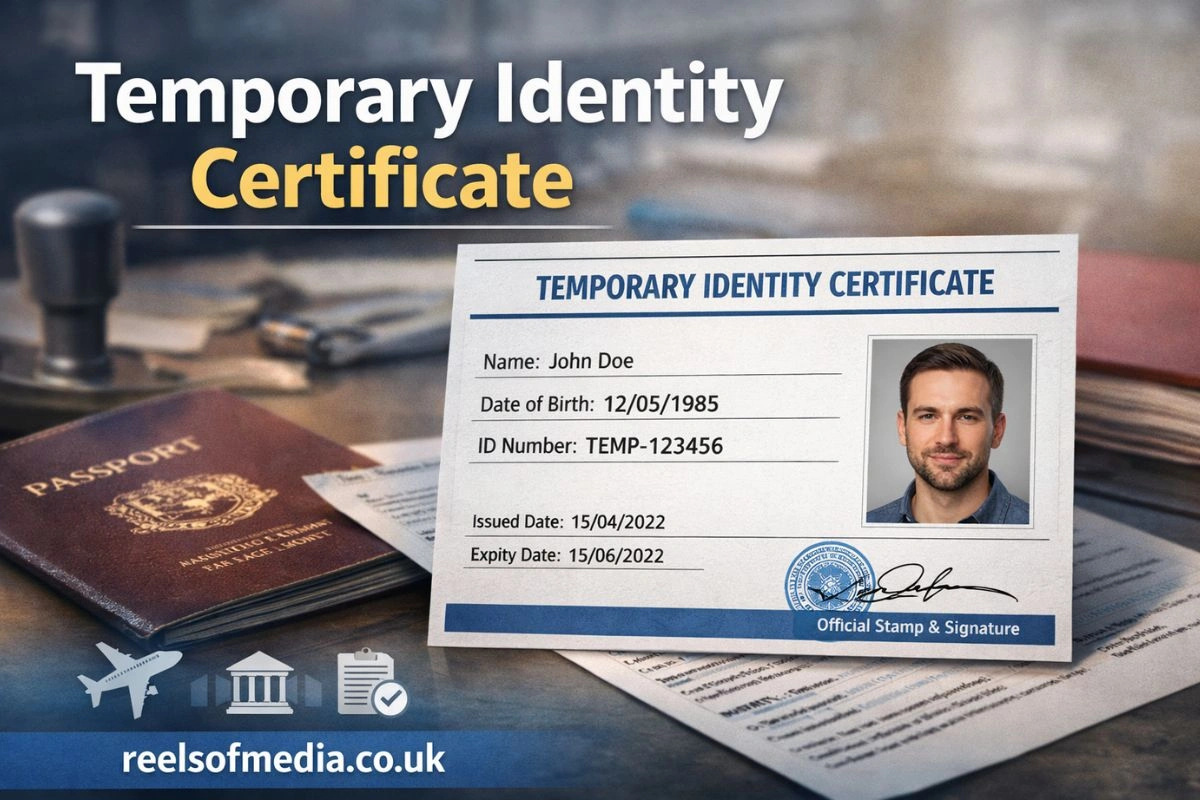
A Temporary Identity Certificate is an official document issued by a government authority or authorized institution to confirm a person’s identity for a limited period. It is commonly provided when a permanent identification document, such as a national ID card or passport, is not yet available. This certificate allows individuals to verify their identity and continue important administrative, legal, or personal activities without interruption.
In many situations, people may lose their identification documents, apply for a new one, or need immediate verification for official procedures. During such times, a Temporary Identity Certificate serves as a practical solution. It ensures that individuals can still access services, complete documentation processes, and prove their identity while waiting for their permanent identification to be issued.
What Is a Temporary Identity Certificate?
A Temporary Identity Certificate is a provisional identification document that verifies a person’s identity for a short duration. It is usually issued by government departments, immigration authorities, educational institutions, or other official organizations. The document acts as a temporary substitute for permanent identification.
This certificate is particularly useful when someone has applied for a new identity document but has not yet received it. Instead of leaving the individual without proof of identity, authorities issue a temporary document that confirms the person’s identity details. This helps prevent disruptions in essential processes such as employment verification, travel arrangements, or administrative tasks.
The certificate typically includes key personal information along with an official stamp or signature from the issuing authority. Although it does not replace a permanent identification card, it provides enough verification for certain official purposes during the interim period.
Why Temporary Identity Certificates Are Issued
Authorities issue temporary identification documents for several reasons. The most common reason is when a person has applied for a permanent identification card and must wait for processing. Since these processes can take weeks or even months, a temporary certificate helps bridge the gap.
Another common situation is when an individual loses or damages their official identification document. In such cases, a temporary certificate may be issued while a replacement ID is being prepared. This ensures that the person can continue using essential services that require identity verification.
Temporary certificates may also be issued to refugees, migrants, or individuals undergoing legal identity verification processes. In these circumstances, the document helps authorities manage identity records while the individual’s status is being reviewed or finalized.



Educational institutions and workplaces sometimes issue similar certificates to students or employees who require temporary proof of identity until their official identification cards are ready.
Key Information Included in the Certificate
Although the format of a Temporary Identity Certificate may vary depending on the issuing authority, most documents include several standard pieces of information. These details help ensure the certificate can reliably confirm the holder’s identity.
Typically, the document includes the full legal name of the individual and their date of birth. A photograph of the certificate holder is often attached to provide visual verification. In many cases, a temporary identification number is also assigned for record-keeping purposes.
The certificate normally displays the name of the issuing authority and the date of issue. An expiration date is also included because the document is only valid for a limited time. Official signatures, stamps, or seals are often added to confirm authenticity.
Some certificates may also contain additional details such as the person’s address, gender, nationality, or application reference number. These elements help authorities link the temporary certificate with the individual’s pending permanent identification.
How a Temporary Identity Certificate Is Used
A Temporary Identity Certificate allows individuals to perform various tasks that require identity verification. While it does not provide all the privileges of a permanent identification document, it can still be accepted in several official situations.
For example, people may use it to confirm their identity when dealing with government offices or administrative services. It may also help individuals complete employment documentation, register for educational programs, or verify their identity for legal procedures.
In some cases, a temporary certificate may also be accepted for limited travel or local identification purposes, depending on the country’s policies. However, it is important to note that not all organizations accept temporary identification documents, particularly for high-security or international travel requirements.
Because of these limitations, individuals are usually encouraged to obtain their permanent identification as soon as possible.
Validity and Duration
The validity of a Temporary Identity Certificate is intentionally limited. Most certificates remain valid for only a short period, often ranging from a few days to several months. The exact duration depends on the reason for issuance and the policies of the issuing authority.
For example, if a person is waiting for a new identification card to be printed, the certificate may remain valid until the permanent card is issued. In other cases, it may have a fixed expiration date regardless of the processing timeline.
Once the permanent identification document becomes available, the temporary certificate usually becomes invalid. Authorities may require the individual to return or discard the temporary document after receiving the official identification.
This limited validity helps prevent misuse while ensuring that people still have access to temporary identity verification when needed.
Benefits of Temporary Identity Certificates
Temporary identity documentation offers several advantages for both individuals and institutions. The most important benefit is that it allows people to continue their daily activities even when their permanent identification is unavailable.
For individuals, the certificate provides peace of mind by ensuring they can still verify their identity for essential services. This can be especially helpful during urgent situations such as job applications, legal procedures, or administrative appointments.
For governments and organizations, issuing temporary certificates helps maintain efficient record-keeping. It allows authorities to confirm a person’s identity while official documents are still being processed.
Another advantage is that temporary certificates reduce delays in administrative procedures. Without such documents, many official processes could be paused until permanent identification is issued.
Differences Between Temporary and Permanent Identification
Although both documents confirm a person’s identity, temporary and permanent identification serve different purposes. Permanent identification cards are long-term documents designed for regular use in a wide range of situations.
A Temporary Identity Certificate, on the other hand, is designed only for short-term verification. It usually has stricter limitations regarding where and how it can be used. Many institutions may accept permanent ID as the primary proof of identity but treat temporary certificates as secondary documentation.
Another difference is durability and security features. Permanent identification cards often include advanced security elements such as embedded chips, holograms, or barcodes. Temporary certificates are usually simpler documents with fewer security features because they are intended for short-term use.
Despite these differences, temporary certificates play an important role in ensuring that individuals remain identifiable during transitional periods.
Conclusion
A Temporary Identity Certificate is an essential document that helps individuals verify their identity when permanent identification is unavailable. Whether someone has applied for a new ID card, lost their previous identification, or is undergoing official identity verification, this certificate provides a reliable temporary solution.
By including essential personal details and official authentication, the document allows individuals to continue important administrative, legal, and personal activities without interruption. Although it has a limited validity period and cannot fully replace permanent identification, it serves as a practical bridge during the waiting period.
As identity verification remains a critical part of modern administrative systems, temporary documentation ensures that individuals can maintain access to essential services while their permanent identification documents are being processed.