

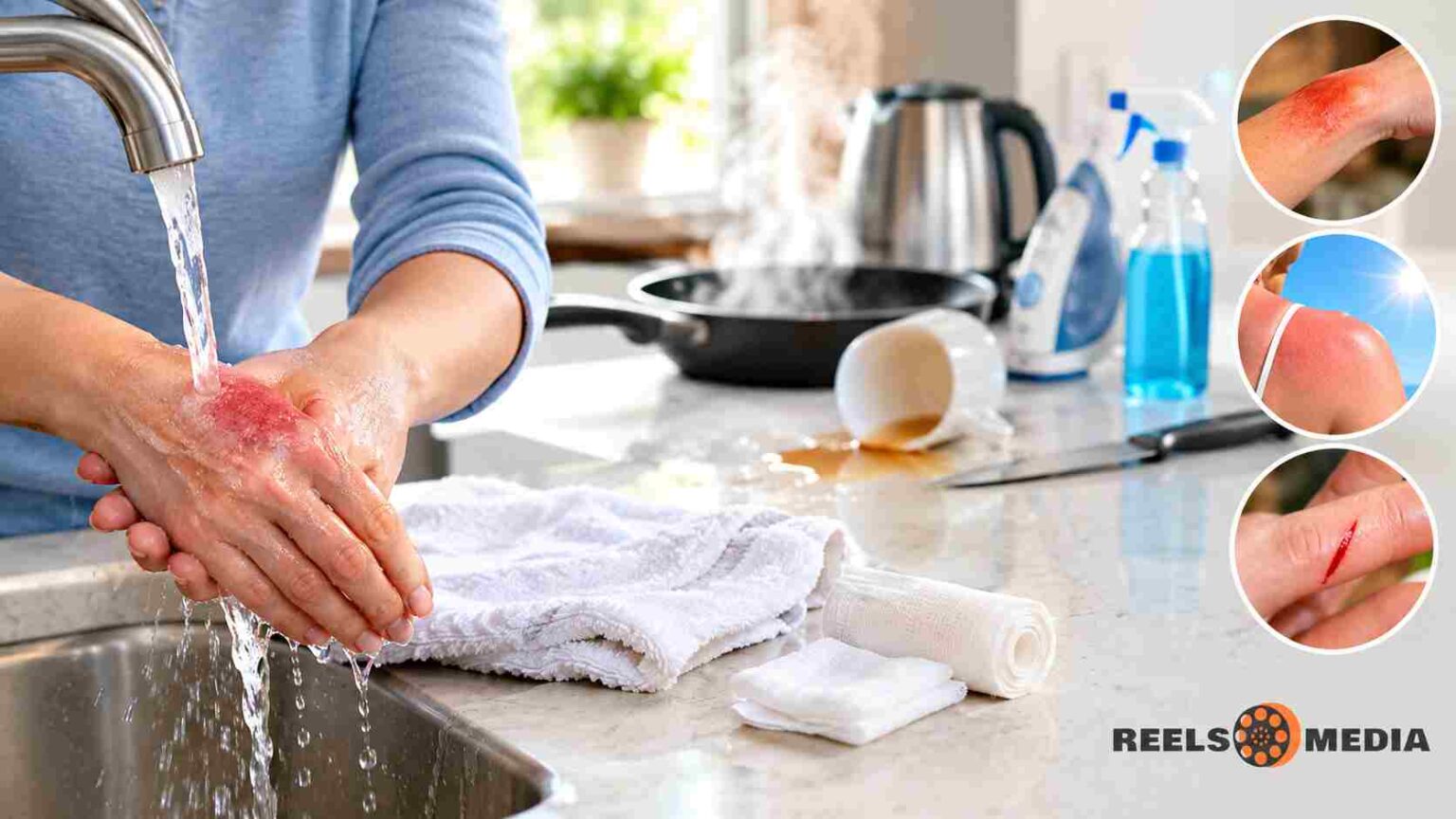
Most significant skin injuries don’t happen in dramatic circumstances. They happen in kitchens, bathrooms, and gardens: a pan handle that’s hotter than expected, steam from a kettle, a spilt mug of tea, a chemical cleaning product that splashes, a steam iron that stays in contact a second too long. These everyday accidents are common enough that most people have experienced at least one, and they’re often mismanaged, so the outcomes are worse than they need to be.
Understanding what’s actually happening to the skin in these situations, and what the correct immediate response is, produces better results than the instincts most people rely on in the moment.
Burns: The Most Common Skin Injury
Burns are among the most frequent causes of skin injury in domestic settings, and the first aid response to them is inconsistent enough to be worth addressing directly.
After any burn, the immediate priority is cooling. Running cool (not cold, not ice) water over the affected area for at least twenty minutes is the single most effective first aid measure for burns, and it works up to three hours after the injury. The cooling reduces ongoing tissue damage by removing heat from the skin and underlying tissue.
What not to do is at least as important as what to do. Ice and very cold water cause vasoconstriction and can damage tissue, worsening a moderate burn. Butter, toothpaste, egg white, and other household remedies are counterproductive: they trap heat, increase infection risk, and make clinical assessment harder. Bursting blisters removes a natural sterile dressing and significantly increases infection risk.
After cooling, cover the burn loosely with cling film or a clean, non-fluffy material (not cotton wool, which adheres to wounds) while you decide whether to seek medical assessment.
When Burns Require Medical Assessment
Many minor burns can be managed at home with appropriate first aid. When to seek professional burns treatment depends on several factors.
Depth is the primary consideration. Superficial burns that affect only the outer layer of skin (the epidermis) are characteristically red, painful, and dry, and typically heal within a week or two without scarring. These can usually be managed at home with appropriate wound care. Superficial partial thickness burns that extend into the upper dermis are more painful (paradoxically, as nerve endings in the dermis register pain more acutely than destroyed epidermal nerve endings), moist, and may blister. These benefit from professional assessment to ensure appropriate wound management that minimises scarring risk.



Full-thickness burns that destroy all skin layers are characteristically pale or waxy, dry, and often less painful than expected because the nerve endings have been destroyed. These are medical emergencies regardless of size.
Location matters independently of depth. Burns affecting the face, hands, feet, genitals, or joints, and any burn that encircles a limb, require professional assessment regardless of apparent severity. So do chemical burns, electrical burns, and any burn in a child under five or an adult over sixty.
Size provides a rough guide: any burn larger than the palm of the affected person’s hand that isn’t clearly superficial warrants assessment.
Cuts and Lacerations
Cuts from kitchen knives, broken glass, and sharp tools are the other common category of everyday skin injury. The immediate response is to apply pressure with a clean cloth or dressing and maintain it until bleeding slows or stops. Elevating the injured area helps.
Wounds that require medical assessment include those that are deep, gaping, and not closing under pressure; affect joints or tendons; involve significant contamination (particularly soil or animal contact); or don’t stop bleeding with appropriate pressure after fifteen minutes. Tetanus vaccination status is relevant for deep or contaminated wounds.
Wounds that heal with significant scarring, particularly those that gape, are closed under tension, or become infected, benefit from professional assessment once healed for options to improve the appearance of the resulting scar.
Chemical Splashes
Chemical injuries from cleaning products, solvents, and other household chemicals are underestimated as a cause of significant skin injury. The correct immediate response is the same as for heat burns: run water for at least twenty minutes, and longer for strong alkalis, which continue to penetrate tissue. Remove the injured area from contact with the chemical immediately, which may mean removing clothing.
Alkali burns (from oven cleaners, drain unblocking products, and some fertilisers) are typically more serious than acid burns because they penetrate deeper and continue to damage tissue longer after the initial contact. They may appear deceptively minor immediately and worsen over the following hours.
Any chemical burn to the face, eyes, or a significant area of the body warrants emergency assessment. Identify the chemical and tell the treating team its name.
Sun Damage: The Slow Burn
Ultraviolet radiation causes a different category of skin injury, slower in onset and cumulative in nature. Acute sunburn, particularly blistering sunburn, causes both immediate tissue damage and contributes to the long-term DNA damage that increases skin cancer risk. Immediate sunburn management includes cooling (cool compresses, cool baths), hydration, and aloe vera or moisturiser for comfort. Severe or widespread sunburn, particularly with systemic symptoms such as nausea, dizziness, or significant blistering, warrants medical assessment.
The cumulative effects of repeated UV exposure without adequate protection manifest over decades as pigmentation changes, collagen damage, skin texture changes, and increased cancer risk. Sun protection prevents acute injury and supports long-term skin health.
The Common Thread
Everyday skin accidents range from minor and self-limiting to significantly consequential depending on the injury mechanism, the area affected, and how the immediate response is managed. Getting the first response right, and knowing when professional assessment is needed, produces better outcomes than the most common alternatives, which are typically inadequate cooling, inappropriate home remedies, and underestimating injuries that warrant medical attention.