

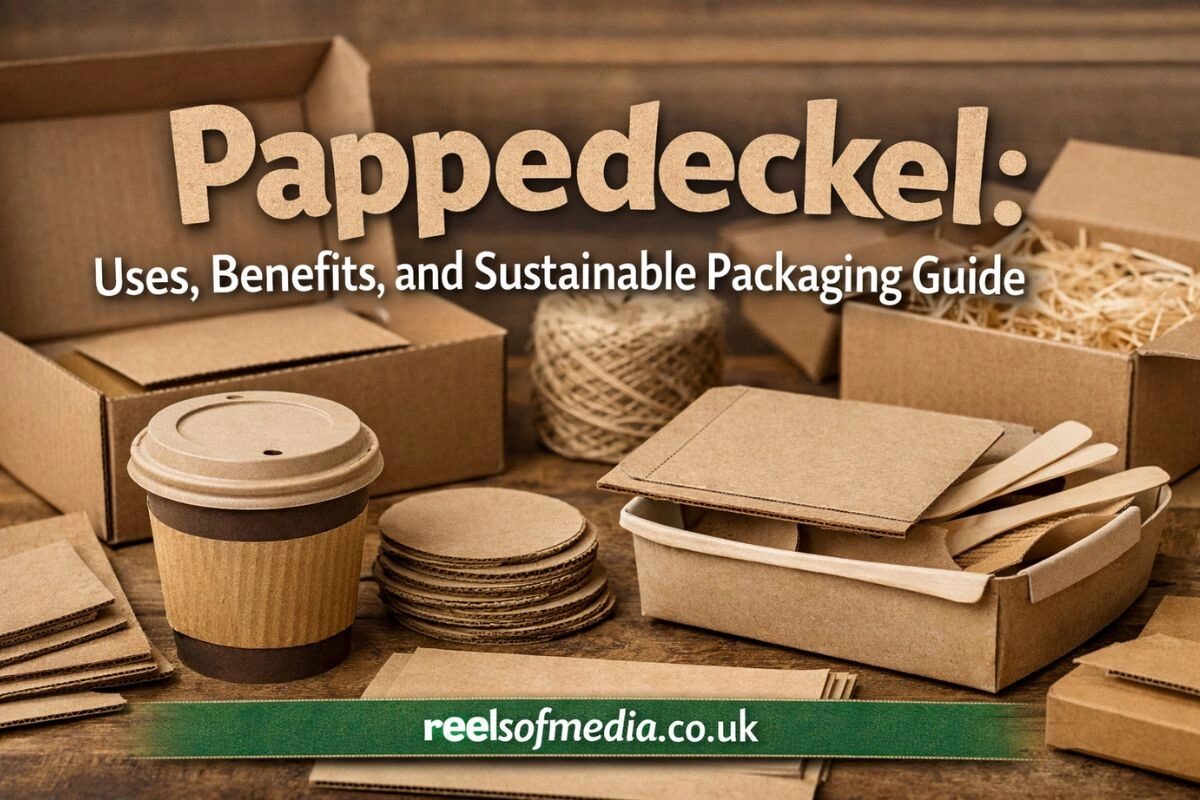
Pappedeckel is a cardboard lid or cover designed to protect, separate, or support products in food service, packaging, and industrial settings. It is made from pressed paper fibers and provides a lightweight, recyclable alternative to plastic, combining strength with environmental benefits. Businesses often choose it for its practicality and ease of integration into existing packaging workflows.
In modern operations, pappedeckel plays a key role in cost management, hygiene compliance, and sustainability efforts. Manufacturers, food operators, and logistics teams rely on it to meet regulatory standards, reduce waste, and maintain product integrity. Its simple design allows for consistent performance across applications while supporting recycling and circular material strategies.
What Is Pappedeckel?
Pappedeckel is a cardboard or paperboard lid, cover, or flat protective piece used across packaging and food-related applications.
It refers to a functional component made from pressed paper fibers, designed to cover, separate, or protect items.
Literal Meaning and Language Origin
The term comes from German and translates directly to “cardboard lid.”
Pappe means cardboard or thick paper
Deckel means lid or cover
The word describes function and material, not a brand or product class
How Pappedeckel Is Defined Today
Today, the term covers a broad category of cardboard-based covers and inserts.



Used beyond its original beer-related context
Applies to food service, logistics, and industrial packaging
Recognized as a material type, not a single format
Common Materials Used in Pappedeckel
Pappedeckel is typically made from compressed paper fibers.
Solid board and paperboard
Recycled fiber blends
Virgin pulp for food-contact uses
Optional surface treatments for durability
How Pappedeckel Is Made
Pappedeckel is produced by pressing paper fibers into rigid, flat, or shaped forms.
The process balances strength, cost, and environmental impact.
Raw Materials and Cardboard Types
The base materials are paper fibers sourced from recycled or virgin pulp.
Recycled cardboard for general packaging
Virgin fiber for hygiene-sensitive uses
Mixed-fiber boards for strength and consistency
Manufacturing and Pressing Process
Production relies on pressure, heat, and controlled drying.
Fibers are pulped and formed into sheets
Sheets are pressed to reach target density
Final drying stabilizes shape and strength
Thickness, Shape, and Coating Variations
Pappedeckel can be customized for different use cases.
Thickness adjusted for load and rigidity
Die-cut shapes for lids or inserts
Coatings added for moisture or grease resistance
Where Pappedeckel Is Commonly Used
Pappedeckel appears wherever lightweight, disposable covers or separators are needed.
Its flexibility makes it suitable for many sectors.
Food and Beverage Applications
In food service, it functions as a hygienic cover or liner.
Cup and container lids
Bakery and takeaway packaging
Beer coasters and tray liners
Packaging and Shipping Use Cases
In logistics, it protects products during transport.
Box dividers and separators
Top and bottom protective layers
Inserts to prevent movement or damage
Industrial and Commercial Uses
Industrial settings use it for separation and surface protection.
Component layering
Temporary covers
Work-in-progress protection
The Role of Pappedeckel in Sustainable Packaging
Pappedeckel supports packaging strategies that reduce plastic use.
It fits well into circular material systems.
Environmental Impact Compared to Plastic
Its footprint is lower than most single-use plastics.
Derived from renewable resources
Lower persistence in the environment
Easier end-of-life handling
Recyclability and Biodegradability
Most forms are recyclable and biodegradable.
Accepted in standard paper recycling streams
Breaks down naturally if untreated
Performance depends on coatings and additives
Alignment With Global Sustainability Goals
It aligns with waste-reduction and material-reuse policies.
Supports plastic reduction targets
Fits extended producer responsibility models
Helps meet corporate sustainability reporting needs
Why Pappedeckel Matters for Businesses
For businesses, it balances function, cost, and compliance.
It offers a practical alternative to more complex materials.
Cost Efficiency and Scalability
Production and sourcing are relatively low-cost.
Established supply chains
Scalable manufacturing
Predictable pricing compared to plastics
Brand Perception and Eco-Friendly Messaging
Using paper-based materials supports sustainability claims.
Signals environmental awareness
Meets customer expectations for packaging choices
Reduces reputational risk tied to plastic use
Regulatory and Market Pressure Factors
Regulation increasingly favors fiber-based packaging.
Restrictions on single-use plastics
Public procurement standards
Retailer packaging guidelines
Benefits of Pappedeckel for Different Stakeholders
Its advantages vary depending on who uses it.
The same material serves different priorities.
Benefits for Manufacturers
Manufacturers benefit from predictable processing.
Compatible with existing equipment
Easy customization
Stable raw material supply
Benefits for Food and Beverage Businesses
Food operators gain a practical, compliant solution.
Suitable for single-use contexts
Supports hygiene requirements
Simplifies waste handling
Benefits for Consumers and End Users
End users get a familiar, low-impact material.
Easy to dispose of responsibly
Perceived as cleaner and safer
Aligns with environmental expectations
Best Practices for Using Pappedeckel
Correct selection and handling determine performance.
Misuse often leads to avoidable failures.
Selecting the Right Thickness and Grade
Thickness should match the load and environment.
Light grades for covers and liners
Heavier boards for stacking or separation
Avoid overengineering that adds cost
Ensuring Food Safety and Hygiene
Food-contact uses require controlled materials.
Use certified virgin fiber where needed
Avoid non-food-safe coatings
Maintain clean storage conditions
Storage and Handling Guidelines
Proper storage preserves strength and shape.
Keep dry and well-ventilated
Avoid prolonged pressure or bending
Protect from direct moisture exposure
Compliance, Safety, and Industry Standards
Compliance depends on use case and region.
Food and packaging rules vary by market.
Food-Contact and Packaging Regulations
Food applications must meet material safety rules.
Limits on inks, adhesives, and coatings
Migration and contamination controls
Traceability requirements
Sustainability Certifications and Labels
Certifications help verify material claims.
Recycled content labeling
Forest management certifications
Compostability marks where applicable
Regional Compliance Considerations
Requirements differ across jurisdictions.
EU packaging and waste directives
Local recycling standards
Import and labeling rules
Common Mistakes and Risks When Using Pappedeckel
Most issues come from incorrect assumptions about performance.
Understanding limits prevents failure.
Choosing the Wrong Material Type
Not all cardboard performs the same.
Insufficient strength for load
Incorrect fiber mix for moisture exposure
Overuse of coatings that limit recyclability
Moisture and Heat Resistance Issues
Cardboard reacts to water and heat.
Loss of rigidity in damp conditions
Warping under high temperatures
Reduced lifespan in wet environments
Misuse in Unsuitable Environments
Some uses exceed the material’s limits.
Long-term outdoor exposure
Direct liquid containment
High-friction industrial processes
Tools, Systems, and Technologies Related to Pappedeckel
Production relies on standard paper-processing equipment.
Technology focuses on consistency and precision.
Die-Cutting and Shaping Equipment
Die-cutters define size and form.
Flatbed and rotary systems
High repeatability
Custom tooling for specific designs
Coating and Lamination Technologies
Surface treatments improve performance.
Water-based coatings
Grease-resistant layers
Laminations with recyclability constraints
Quality Control and Testing Systems
Testing ensures material reliability.
Compression and load testing
Moisture absorption checks
Visual and dimensional inspection
Practical Checklist Before Choosing Pappedeckel
A structured review avoids mismatches.
Decisions should be based on use, not habit.
Intended Use and Load Requirements
Start with function.
Cover, separator, or support
Static or dynamic load
Single-use or short-term reuse
Environmental and Disposal Considerations
End-of-life matters as much as use.
Local recycling acceptance
Impact of coatings
Compostability expectations
Cost, Supply, and Scalability Factors
Operational fit is critical.
Supplier reliability
Lead times
Cost stability at scale
Pappedeckel vs Alternative Materials
Material choice depends on performance needs.
Each option carries trade-offs.
Pappedeckel vs Plastic Lids
Cardboard offers lower environmental impact but less durability.
Easier disposal and recycling
Lower moisture resistance
Reduced long-term strength
Pappedeckel vs Molded Fiber Products
Molded fiber provides shape, cardboard provides simplicity.
Molded fiber suits rigid forms
Pappedeckel suits flat or cut shapes
Cost and tooling differ significantly
When Alternatives May Be More Suitable
Alternatives work better in specific conditions.
High moisture exposure
Structural rigidity requirements
Reusable packaging systems
FAQs
What is the main purpose of a cardboard lid in packaging?
Cardboard lids are used to protect products, separate items, and maintain hygiene. They are lightweight, recyclable, and suitable for food, beverage, and industrial applications.
How is pappedeckel different from regular paperboard?
Pappedeckel refers specifically to a lid or cover made from paperboard, whereas paperboard is the raw material itself. The term emphasizes its function as a protective or separating component.
Can cardboard lids be used in food service safely?
Yes, when manufactured with food-grade fibers and coatings, cardboard lids meet hygiene standards and are safe for direct or indirect food contact.
Are cardboard lids environmentally friendly?
Most cardboard lids are recyclable and biodegradable. They break down faster than plastic alternatives and are often made from renewable or recycled fibers.
What industries commonly use cardboard lids?
Food and beverage, packaging and shipping, and industrial sectors widely use cardboard lids. They are also common in bakeries, coffee shops, logistics operations, and protective product packaging.